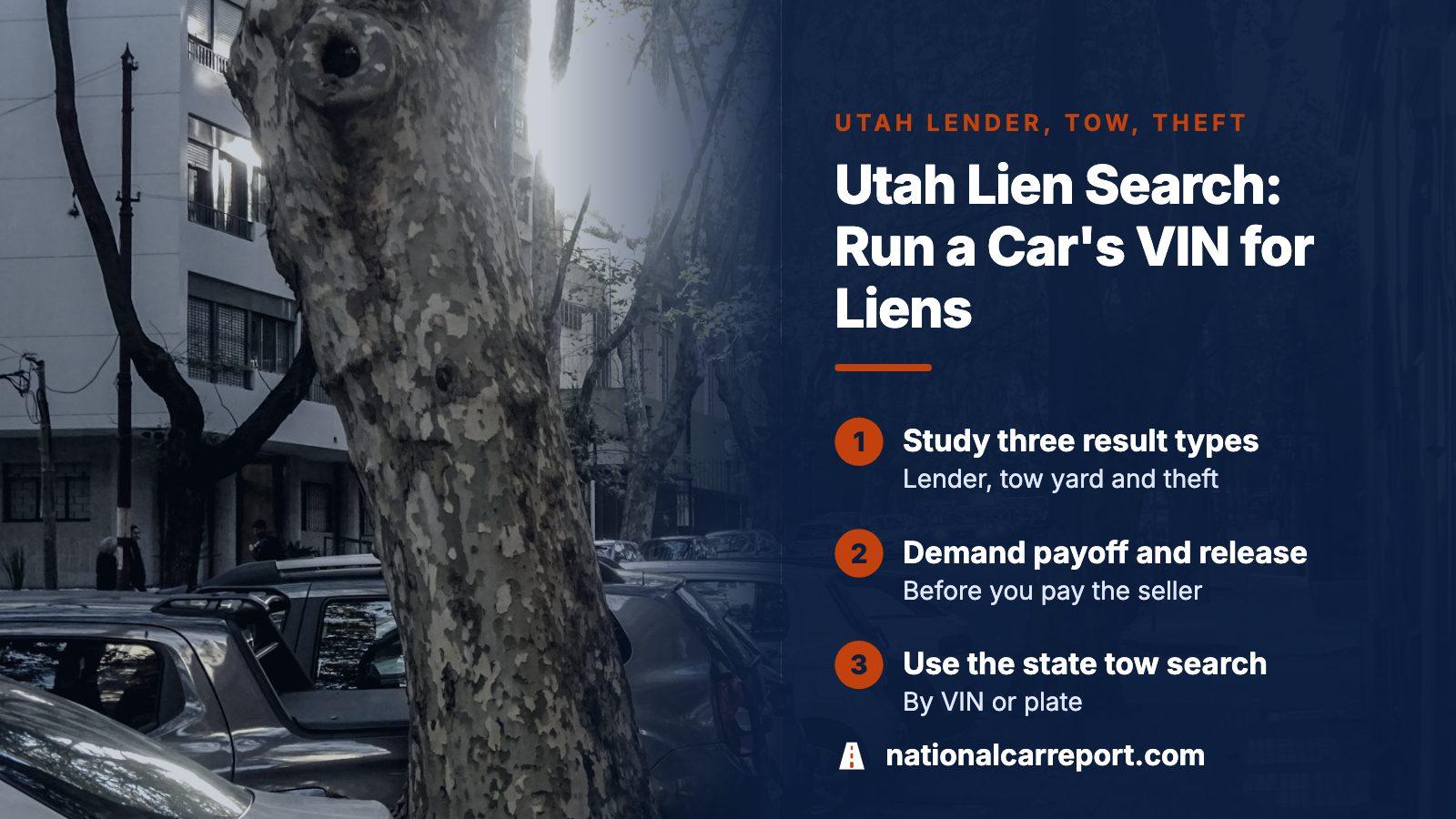
THE SHORT ANSWER
Put the vehicle's VIN into the preview and study three results: lender, tow and theft. If a bank turns up, assume the loan could be unpaid and insist on a payoff amount plus the bank's signed release before paying. Finding nothing does not prove the title is clean.
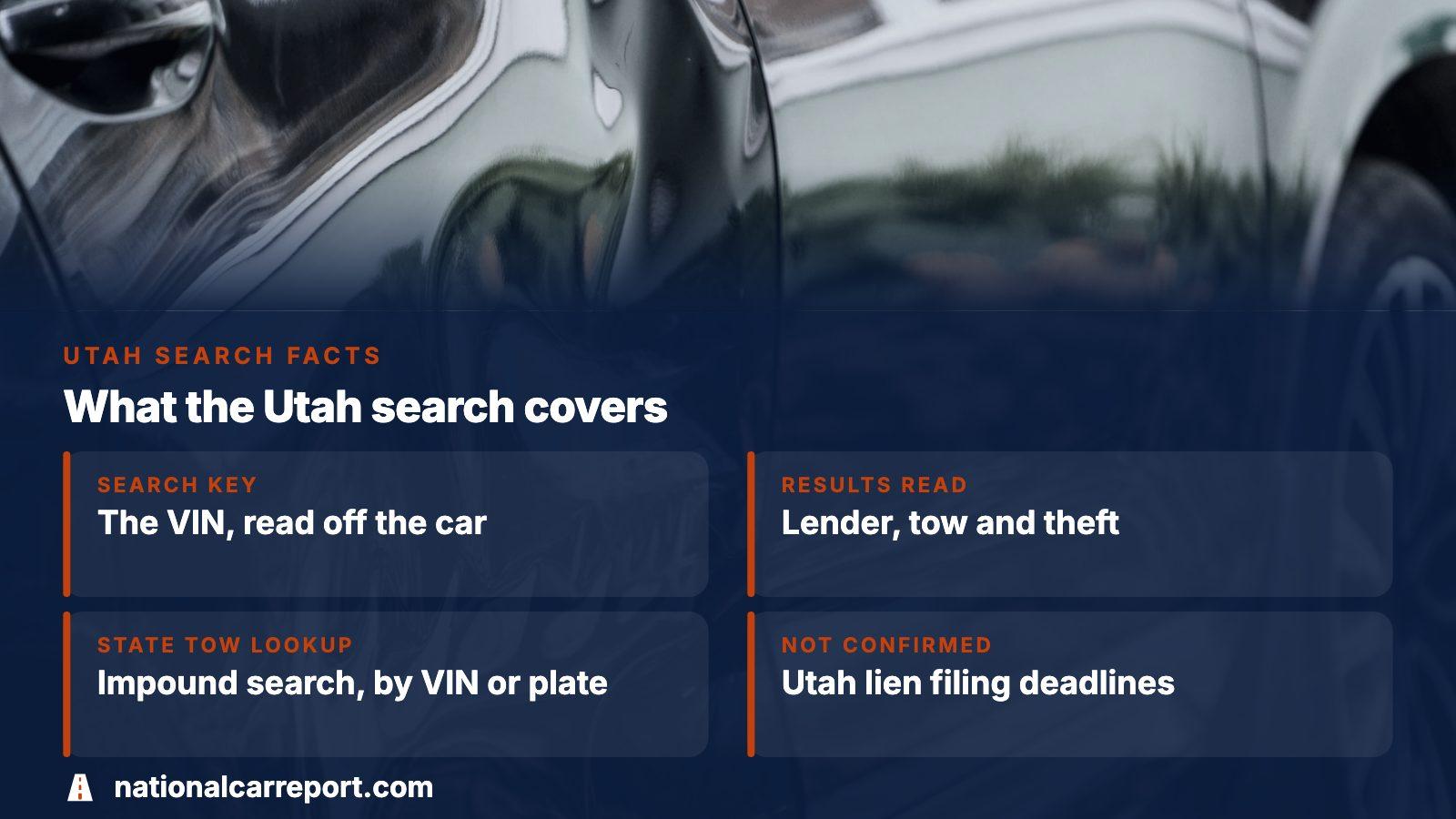
- Search key
- The VIN, read off the car
- Preview
- No-cost preview, then a single payment for the full report
- State tow lookup
- Utah Impound Vehicle Search, by VIN or plate
- Not confirmed here
- Utah's lien filing and release deadlines
What a Utah lien search is looking for
Think of a lien as a lender's hold on a car while debt remains. Federal records note that a bank financing a purchase often owns the vehicle outright as lien holder, which is why a seller handing over keys does not settle who can sign the title.
The preview reads the VIN against lender, tow-yard and theft sources. Those three matter most to a Utah buyer, since each can undo a sale after the money is gone.
- Loan claims: a bank, credit union or finance outfit showing in a source the search reads
- Tow history: evidence a yard once held the car and how that bill was paid
- Stolen reports: a theft entry and the car's fate after it
The preview itself costs nothing. Going further means a separate one-time payment for the full report, and amounts sit on the pricing page.
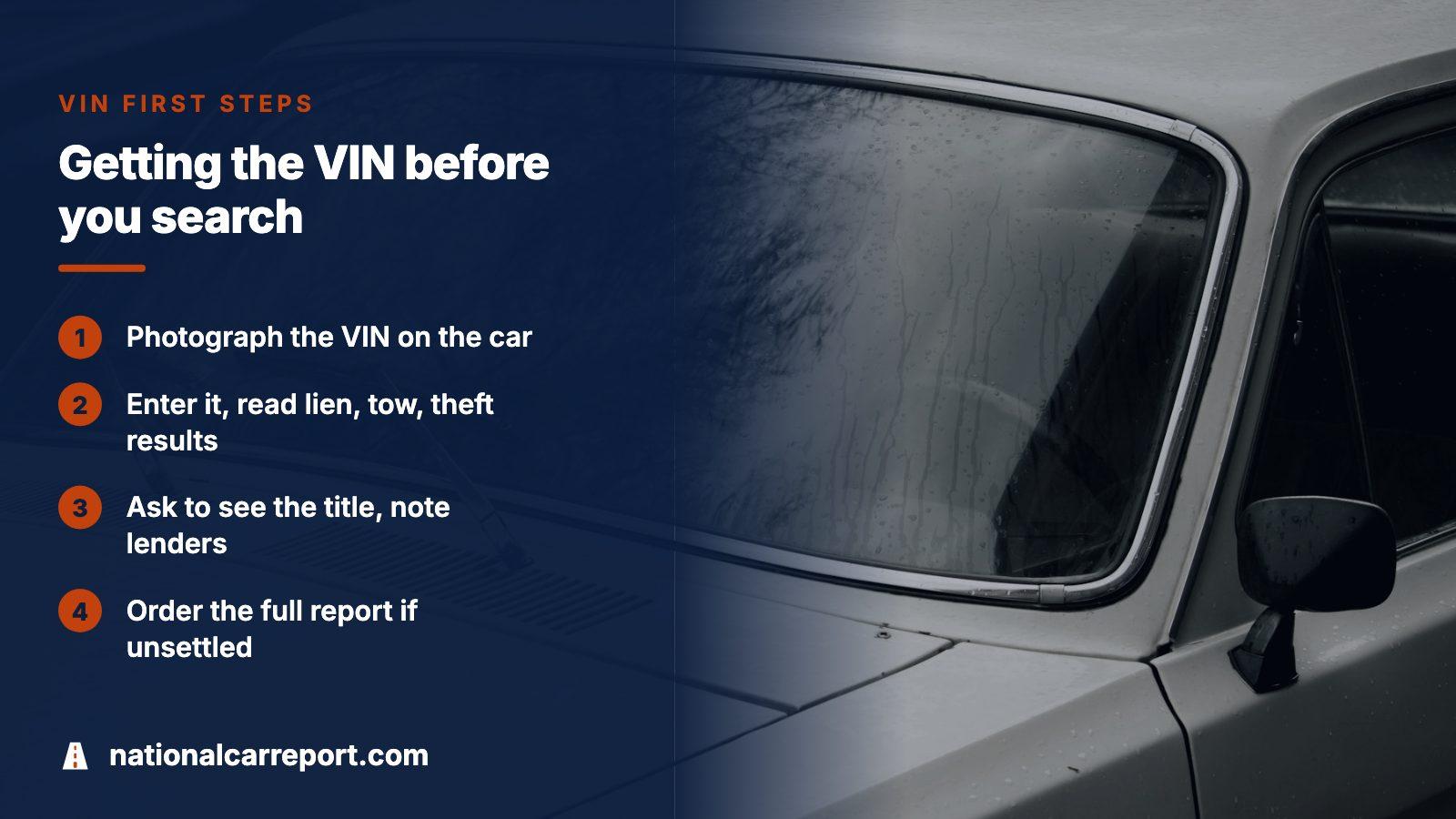
Getting the VIN before you search
Begin at the vehicle. Locate the 17-character code on the dash, set it beside the door-jamb sticker and the paper title or registration the seller offers, and stop if they differ. One wrong character pulls up some other car.
- Photograph the VIN wherever it appears on the car.
- Type it into the preview and read the lien, tow and theft results.
- Ask to see the title and write down any lender named on it.
- Order the full report if any result looks unsettled.
Only the VIN drives this check; no plate-to-owner conversion happens. Holding nothing but a plate, request the code from the seller or copy it from the registration paper.
Reading a hit, and reading a blank
| What the search shows | What to do next |
|---|---|
| A lender is named | Ask for a payoff letter and a written release before paying |
| An impound record | Learn the reason for the hold and who settled the yard's bill |
| A theft record | Hold off buying until the seller documents the explanation |
| Nothing at all | Still inspect the title, since no record is not proof |
A lender on the record does not make the car a bad buy. It means the loan is the lender's business first and yours second, and the sale should be built around paying it off with the lender's confirmation in hand.
An empty result lowers the risk but does not remove it. Data sources update at different speeds, so a loan taken out last week may not appear yet.
Utah's own tow lookup is a second check
The State Tax Commission operates an Impound Vehicle Search on utah.gov. Searches take a VIN, a plate, or a State Impound Form number, and a vehicle found in the system comes back with tow details and its storage location.
The service is built for owners getting a car released, but the same lookup tells a buyer whether a tow is on record. Release steps depend on the type of impound, as the table shows.
| Impound type | How release works |
|---|---|
| Private impound | Visit the tow yard carrying a photo ID and ownership proof, and pay the towing and storage bill |
| State impound | Stop at a local motor vehicle office first, then the yard with the release letter |
Tow fees and a sale
The Tax Commission says it has no authority over towing and storage charges. If a car you are buying sat in a yard, ask who paid those charges and ask for the receipt.
What a VIN search cannot settle
No database sees every loan. The Justice Department says its national title system includes roughly 87 percent of vehicles on U.S. roads, that fewer than all states supply data, and that a search may wrongly come back clean. Its report stays short on purpose and centers on fraud and theft, not on lien terms.
That limit applies to every history service, ours included. The report is a strong first pass on a car you are serious about, and it works alongside the title, not in place of it.
- Compare the title in hand with the VIN on the car
- Ask the lender, not the seller, whether the loan is closed
- Have an independent mechanic inspect the car, since history reports usually do not list mechanical problems
Asking Utah for its own record
The federal list of state record routes says a person qualifying under the Driver's Privacy Protection Act and Utah law may ask the Division of Motor Vehicles for a Utah vehicle record, paying a fee per record. Eligibility is limited, so a casual buyer may not qualify.
For that reason, treat the state record as an extra step for a purchase you cannot let go of. The DMV, reached at 801-297-7780, is the place to ask which form applies, who can use it and what it costs today.
What this page leaves out on purpose
Utah's tax and motor vehicle pages blocked automated access when this page was prepared. As a result, how long a Utah lien lasts, how fast a lender must release it and how electronic titles are handled are not stated here.
Rather than guess, we point you to the DMV for those rules. If a seller claims the loan was paid, the simplest proof is a release from the lender with the VIN on it.
What to do next
Search the VIN first, ideally before you drive across town to see the car. If a loan, tow or theft result appears, settle it in writing before anything else. If nothing appears, still read the title and book an inspection.
When the car becomes a serious candidate, the full report fills in what remains of its history, billed once with no subscription attached.
Where this information comes from
- Utah Tax Commission: Impound Vehicle Search instructions — how the state tow lookup and release steps work
- Utah Highway Patrol: Find a towed vehicle — state impounds need DMV clearance before the yard releases
- DOJ NMVTIS: For consumers — scope of the national title system and its blind spots
- DOJ NMVTIS: Used car buying tips — advice to inspect and check several sources
- DOJ NMVTIS: State vehicle record request information — route for requesting a state motor vehicle record
Sources and photos: Facts checked against the sources above in November 2026. Photos by Nikolai Kolosov, Tigran Shishmanyan and Maxim Tolchinskiy on Unsplash; diagrams by NationalCarReport.
Keep reading
- Vehicle Lien Check by VIN: Nationwide Lien, Theft and Impound RecordsSame search, for a car titled in any state.
- DMV Lien Release Search: How to Confirm a Lien Is GoneCheck that the lender truly released its claim.
- Car Lien Holder Search: How to Find the Lender Behind a VINWork out which lender holds the loan.
- Utah Title Check: State Records, Tow-Yard Trails and VIN ScreensSee what Utah title records can tell you.
Frequently asked questions
How do I do a Utah lien search on a car?
Take the VIN off the car, then run the preview and read the lender, impound and theft results. If a lender appears, request the title plus a payoff letter. Utah's own record request is a different step handled through the DMV.
Can I check a Utah car for liens with a license plate?
Searches here run on the VIN, so a plate by itself yields no lien result. Get the number from the seller, the dash or the registration, then search it instead.
Does a clean result mean no lien on a Utah car?
No. A clean result lowers the odds, but sources report at different speeds and some loans never reach them. Check that the title matches the car and, when a lender is involved, ask the lender directly.
What if the Utah car I want was towed?
Utah's Impound Vehicle Search shows tow and storage details by VIN or plate. A state impound needs DMV clearance before the yard will release it, so ask the seller for proof that the release was completed.
Is the Utah lien check free?
Yes for the preview, which shows whether lender, impound or theft entries exist. The full report is billed once, with no subscription, and prices are on the pricing page.
Now check the car itself
The guide explains what to look for. The report shows what this VIN has on record.