THE SHORT ANSWER
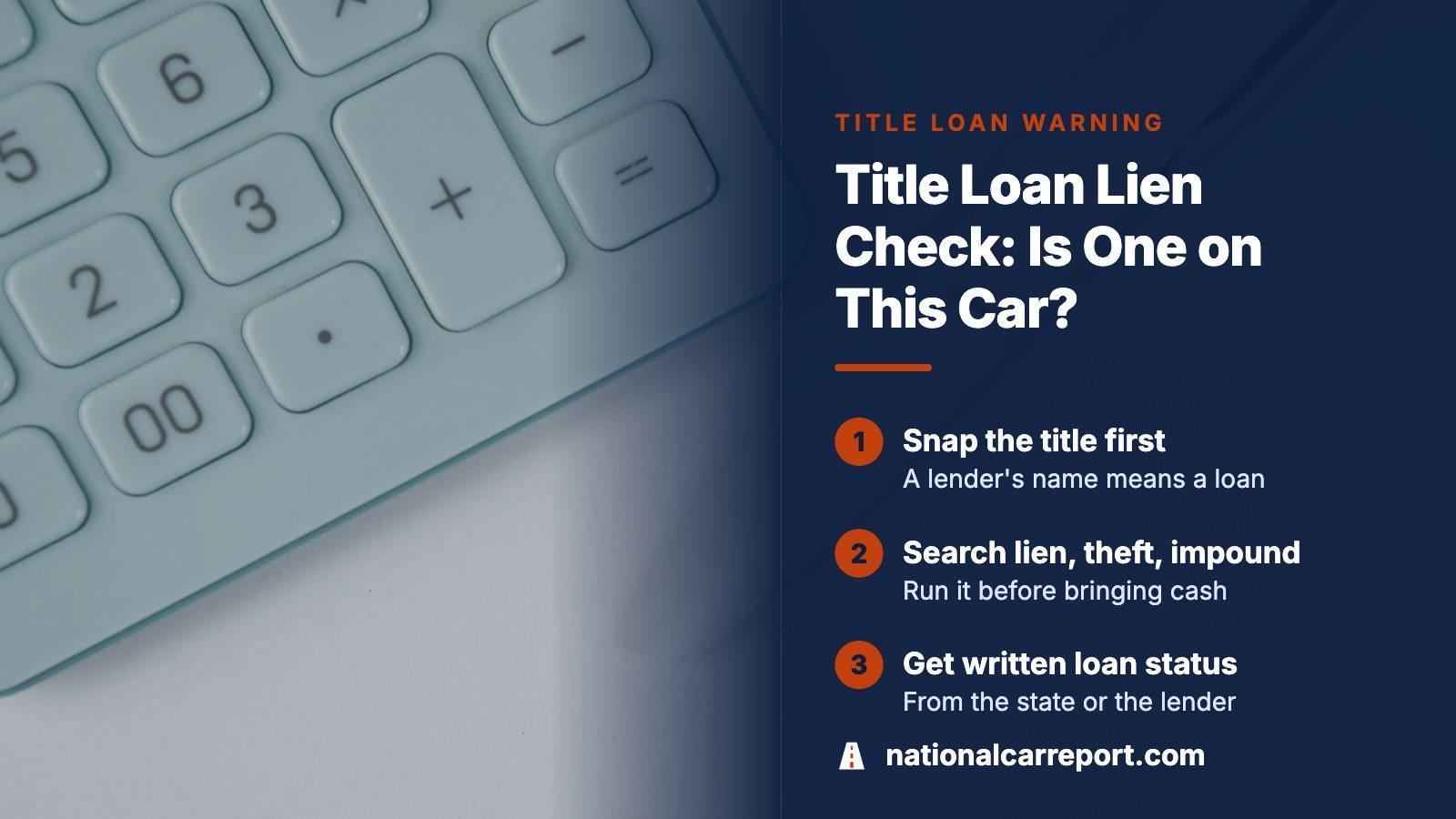
Start with the title in the seller's hand. If the lender holds it, or another lender's name is printed on it, the loan is live. Then run the VIN for reported liens and ask the state to confirm the title record. Pay only at a payoff with the lender, never on a promise that the loan will be cleared later.
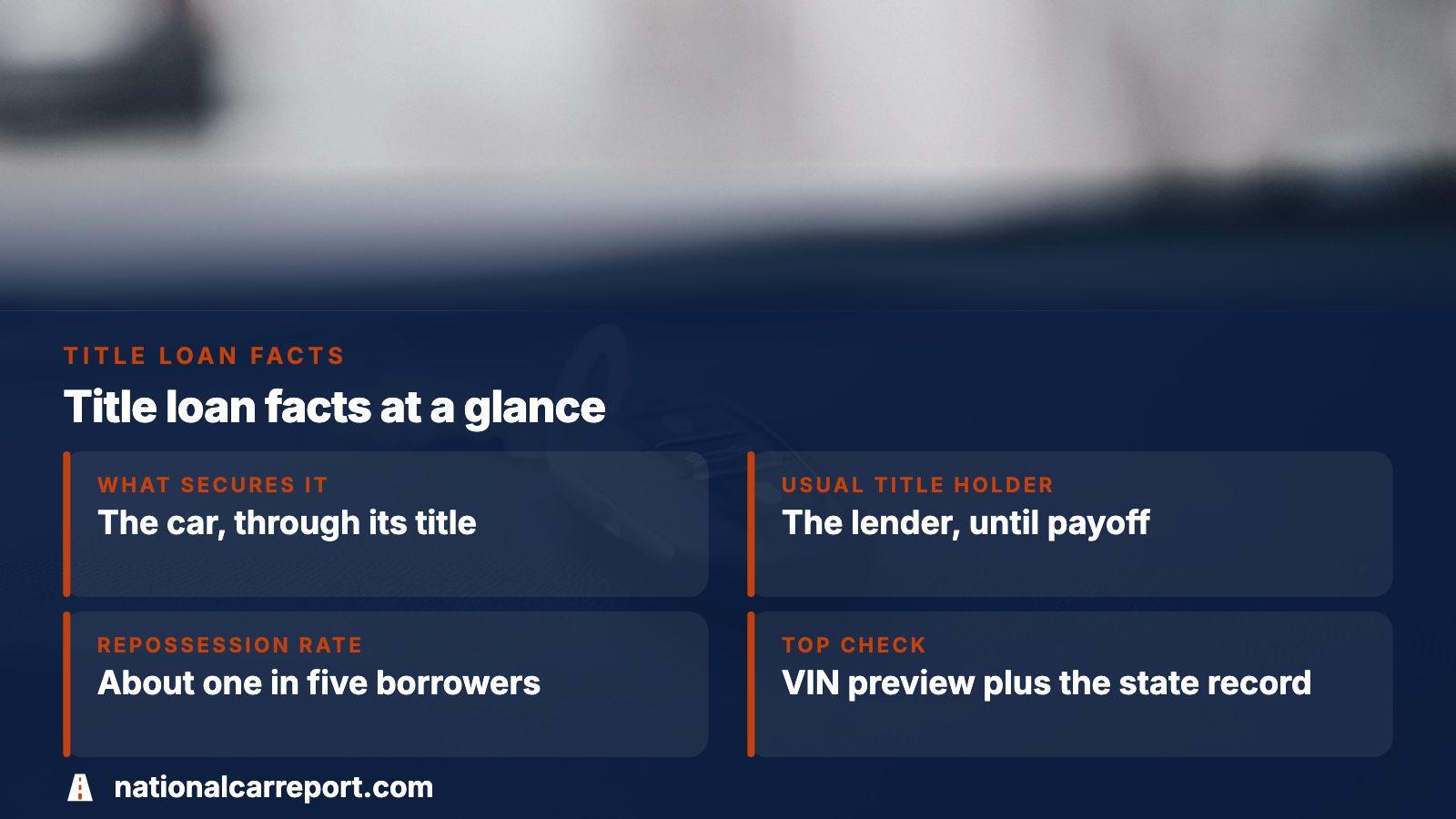
- What secures the loan
- The car, through its title
- Who usually holds the title
- The lender, until payoff
- Repossession rate in CFPB data
- About one in five borrowers
- Best check
- VIN preview plus the state record
Why a title loan is a bigger problem than a normal lien
An ordinary car loan comes with a lender who files a lien and a paper trail most buyers expect. A title loan is the quick-cash cousin. The Consumer Financial Protection Bureau describes it as a loan in which the car becomes the lender's collateral, and the amount offered tracks the car's value far more than the borrower's credit.
That matters to you as a buyer because the loan follows the car. The seller keeps driving it while the debt is open, so nothing about the car looks different on a test drive. If the borrower stops paying, the lender can repossess and sell the vehicle, and that can include a car that has since changed hands.
How the lender holds the car
CFPB research says the borrower gives the lender the title, which generally has to be owned free and clear to qualify. The lender keeps it and hands it back after repayment. Some lenders will even accept a second lien position behind an existing loan, so a car can carry more than one claim.
Florida's Title Loan Act shows how formal this can be. It defines the loan as one secured by bailment of the certificate of title, meaning the paper itself sits with the lender. Whether a given lender also records its claim on the state file varies, which is why one document is never enough to clear a car.
The missing-title tell
A seller who says the title is in the mail, at a relative's house or being replaced is describing the usual picture of a lender-held title. Ask for the title in hand before you discuss price.
A four-part routine before any money moves
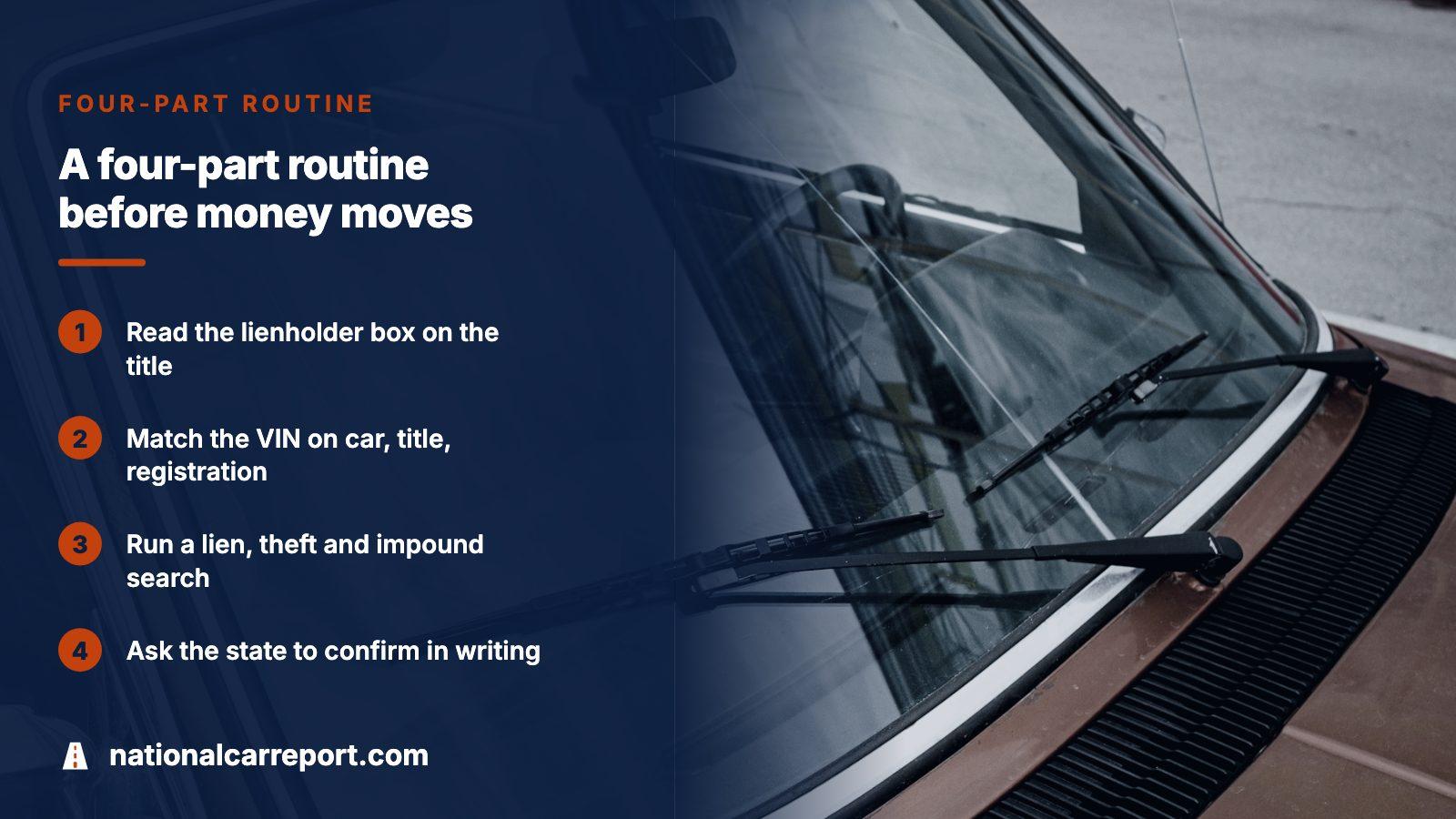
- Snap the title and read the lienholder box. A lender's name there means a loan was recorded at some point, paid or not.
- Find the VIN on the vehicle itself and set it beside the one on the title and the registration. Any difference is a reason to leave.
- Put the VIN through a lien, theft and impound search, with title brands, before you bring cash to the meeting.
- Ask the state title agency, or the lender named on the paperwork, to confirm in writing where the loan stands.
You can start with the preview here at no charge. Going further means a single purchase, with amounts on the pricing page. Treat the result as a lead to verify with the state, because a report shows what was reported to it, not every private arrangement.
How far a clean result can be trusted
The federal title database pools records from state agencies, recyclers, junk yards and insurers. For consumers it offers title details, a recent mileage figure, brands such as salvage or flood, and occasionally an old theft entry. Liens are not on that list. A national lookup alone therefore cannot prove a car is lien free.
| Source | Good for | Gap |
|---|---|---|
| Seller's title | Names any recorded lender | May be a copy or lender-held |
| VIN lien report | Spots reported liens and impounds | Only what was reported |
| State title record | The legal record of ownership | Access rules differ by state |
| Lender call | Current payoff and status | Needs the borrower on the line |
Red flags that point to a title loan
- The seller cannot produce the title, or offers a photocopy.
- The lender listed on the title is a storefront lender rather than a bank or credit union.
- The price sits well below comparable cars and the seller wants cash quickly.
- The seller asks you to pay the lender directly without a written payoff figure.
- The title shows a lender whose name the seller will not discuss.
The pressure is explained by the numbers. CFPB found that over 80 percent of single-payment loans were reborrowed the same day a prior loan was repaid, and the press release for the study put a typical annual rate near 300 percent. A seller in that spot may be selling to escape the debt.
What happens to the car if the loan defaults
The CFPB study found that about a third of loan sequences saw a default and one in five ended in repossession. Rules on timing vary by state. In Florida, a lender may not take the car until the borrower has missed maturity and made no payment for 30 days after it, and then only through a licensed repossession agent.
Florida also routes any sale through a licensed dealer and gives the borrower written notice at least 10 days ahead. None of that helps a buyer who purchased the car without clearing the loan, since the lender's claim attaches to the vehicle. Your fight would be with the lender, and you would be the one without the car.
Closing the deal when a loan is real
Some sellers do have an open title loan and want to sell honestly. That can work if the payoff happens first. Ask the lender for the exact amount in writing, pay it from the sale proceeds with the seller present, and leave with the title or a signed release.
Release timing is set by state. Texas gives a lender 10 days after receiving payoff to release a lien, mails the paper title or processes an electronic release, and a paper-title owner files an application at the county tax office. In Florida, a lender that has been paid in full must hand back the title with its own liens cleared. Do not accept a seller's word that this will follow.
Do not split the payment
Never hand the seller the full price and trust them to pay the lender afterward. Send the lender's payoff directly, then the balance, and get both receipts.
You bought the car and a loan turns up
Contact the lender at once and ask for the loan status and payoff in writing. Keep the bill of sale, messages with the seller and the VIN report you ran. Then speak to your state attorney general or a consumer attorney, since remedies depend on your state's law and on what the seller said about the title.
Next time, run the VIN preview first, ask the state or lender to confirm, and see the related guides on releasing a lien and finding the lienholder before you commit any money.
Where this information comes from
- CFPB: Single-payment vehicle title lending report — how title loans secure the car and how often they end in repossession
- CFPB: Auto title loan findings — lender holds the title; typical rate and reborrowing
- Florida Statutes chapter 537: Title Loans — one state's repossession, sale and title-return rules
- TxDMV: Add or remove a lien on a vehicle — release timing after payoff in Texas
- NMVTIS: Information for consumers — what the national title system does and does not cover
Sources and photos: Facts checked against the sources above in November 2026. Photos by Sasun Bughdaryan, Max Tokarev and Bence Balla-Schottner on Unsplash; diagrams by NationalCarReport.
Keep reading
- Vehicle Lien Check by VIN: Nationwide Lien, Theft and Impound RecordsThe general way to look for liens on any used car.
- DMV Lien Release Search: How to Confirm a Lien Is GoneHow to confirm a paid-off loan was actually released.
- Car Lien Holder Search: How to Find the Lender Behind a VINFinding which lender holds the claim on a car.
- Buying a Private-Party Car That Has a Lien: Safe StepsSteps for buying when the seller still owes money.
Frequently asked questions
Does a title loan show up as a lien?
Often, but not always in the same place. A lender may hold the paper title, record its claim with the state, or both, and practice varies by lender and state. Check the title's lienholder box, run the VIN, and ask the state or the lender to confirm directly.
Can I check a title loan lien by VIN alone?
A VIN lien check can surface reported liens, but it only shows what was reported to its sources. Pair it with the title in hand and written confirmation from the state agency or lender before you pay, especially when the seller's price looks unusually low.
Can a lender take a car I bought from a borrower?
Yes, the lender's security interest attaches to the vehicle, not just to the person who borrowed. If the loan was never cleared, the lender can pursue the car on default. That is why the payoff should come before or alongside the sale, with proof.
What if the seller cannot find the title?
Take that as a warning sign, since a lender may be the one holding it. Ask for a written payoff or a duplicate title obtained through the state, and hold off until the title is physically with you. Never pay on a promise that paperwork will arrive later.
What does the lien check cost?
The first look is a no-cost preview. After that, a person pays one time for the complete report, with no monthly plan, and our pricing page shows the figures. Begin with the preview and see whether anything calls for more.
Now check the car itself
The guide explains what to look for. The report shows what this VIN has on record.