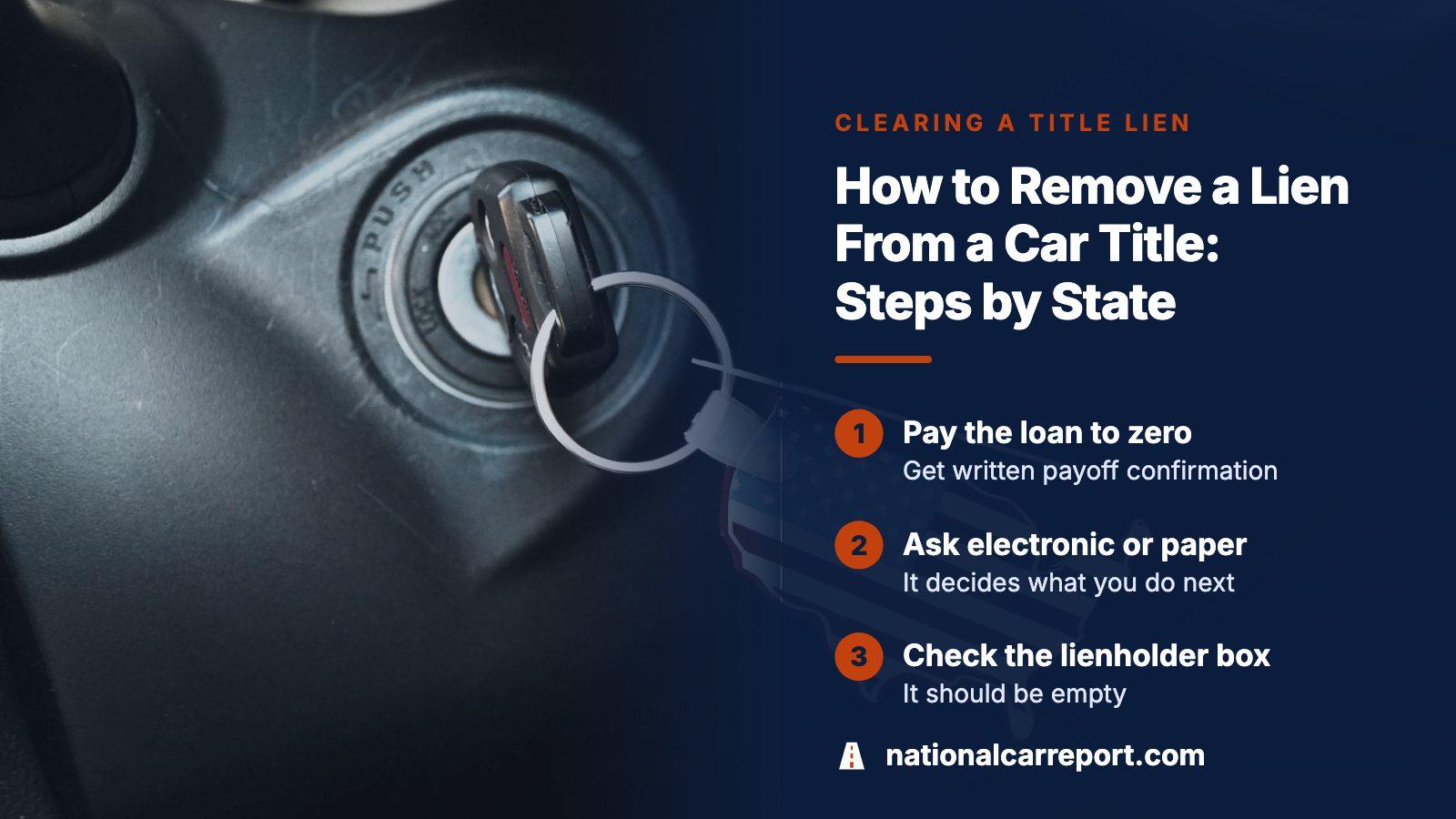
THE SHORT ANSWER
Pay the loan to zero, then confirm the lender has sent its release to your state title office. In electronic states the lender files it and a clean paper title is mailed to you. With a paper title, you carry the lender's release and the title to the DMV or county office and apply for a new one. If the lender stalls, put a demand in writing.
- Who removes it
- The lender, through the state title office
- Texas lender deadline
- 10 days from receiving payment
- Pennsylvania mailing
- Paper title the next business day after release
- Lender gone
- California keeps a list of closed and merged lenders
The lender holds the pen, not you
A lien is the lender's recorded claim on the car. The FTC puts it plainly for borrowers: the creditor has a lien on the title, sometimes holds the physical title as well, and keeps that claim until the contract is paid in full. Nothing you file can cancel it while money is owed, and even after the last payment the entry stays on the record until the lender acts.
NationalCarReport works with lien, theft and impound records across state lines, and the pattern we see most is the same one: a loan that ended years ago and a title record that never caught up. Getting the lien off is mostly a matter of knowing who must send what to which office.
Find which of three situations you are in
Owners searching for this usually land in one of three spots, and the fix differs for each. Work out yours before you call anyone.
- The loan is paid off and you are waiting. The lender may still be inside its window to release the lien, so check the date of your last payment first.
- The loan was paid off a while ago and the lien still shows. The release was never filed, or the title copy you hold is older than the payoff.
- The lender no longer exists under the name on your title. It closed, merged or was bought, and nobody is answering for the old account.
The first needs patience and a calendar. The second needs a written request. The third needs a way to find whoever inherited the loan.
Electronic or paper: what you actually do
Some states keep the lien and title as a database entry, others still issue a paper title that the lender holds or stamps. The official pages we opened show how different the owner's workload is.
| State | Electronic lien | Paper title |
|---|---|---|
| Texas | The lender coordinates with TxDMV and tells you. You do nothing, and the state mails you a paper title after the release lands. | The lender mails the title. You bring the title, the lender's release paperwork and Form 130-U to your county tax office. |
| Pennsylvania | The lender must release it right away, and a paper title goes out in the mail one business day later. | At the counter, a duplicate without the lien needs the lender's Form MV-38O or a notarized release on its letterhead. |
| California | Page does not detail it. | Lien Satisfied/Title Holder Release is Form REG 166, and a title typically reaches you in 15 to 30 days by post. |
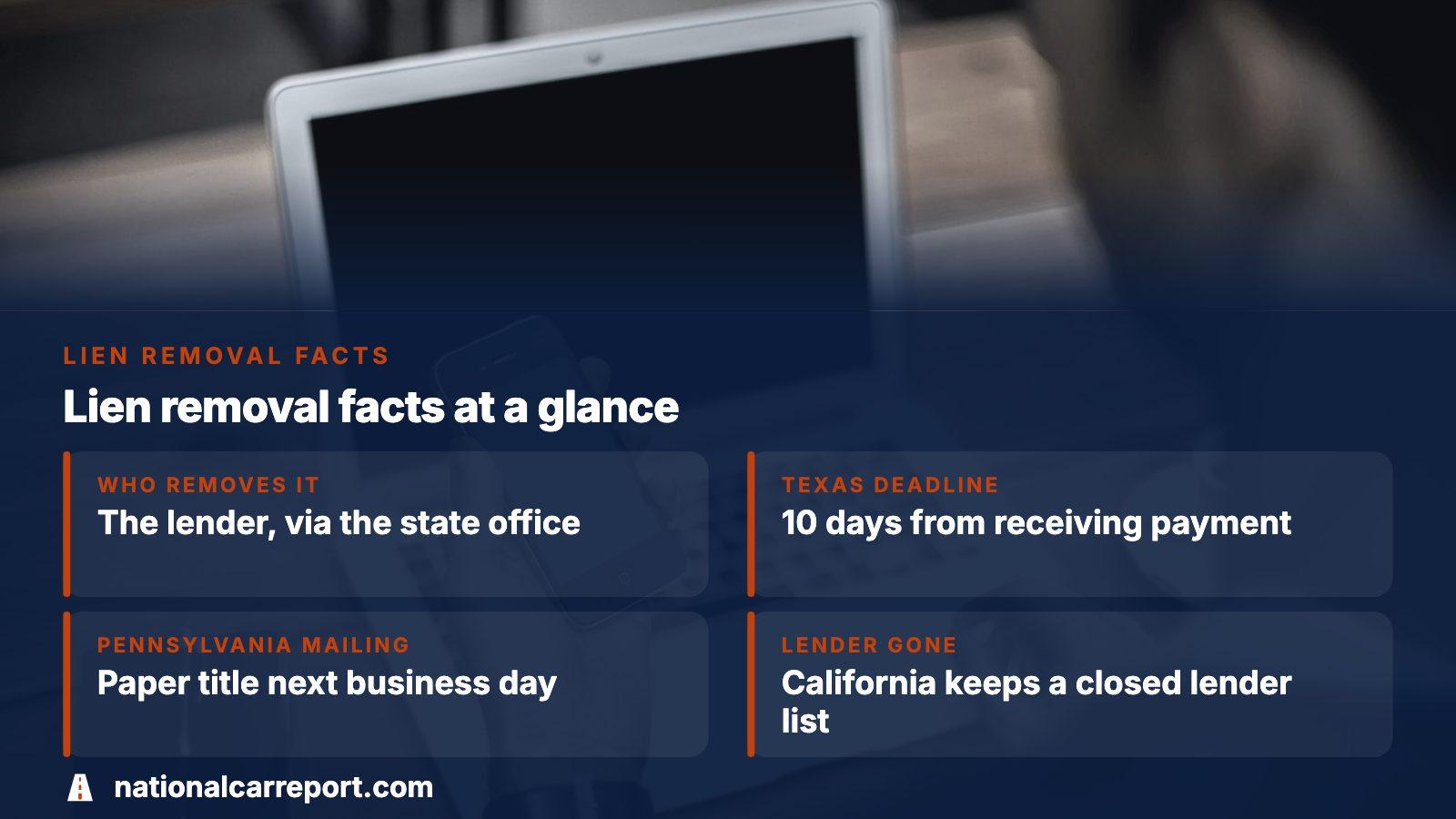
Steps from final payment to clean title
- Pay the loan to zero and ask the lender for a written payoff confirmation with the date it received the money.
- Ask whether your lien is electronic or on paper, and whether the release has gone to the state yet.
- Watch the mail. In an electronic state a clean title should arrive on its own, and in a paper state the lender sends the title and release for you to file.
- If a paper title arrives, take it to your state's title office with the release and the state application form, and pay the title fee.
- When the new title arrives, read the lienholder box. It should be empty. Keep it somewhere safer than the glove box.
Texas lists a title fee of $28 or $33 depending on the county, which shows how much fees vary between offices. Check your own office's current amount instead of relying on a number from another state.
When the lender drags its feet
Some states put a clock on the lender. In Texas the lienholder has 10 days from receiving your payment to release the lien. Washington takes a different route: its statute requires the lender to release once nothing is owed, and it attaches a $100 payment to the owner if the lender fails to act within ten days after proper demand and the owner suffers a loss. The statute sets no fixed payoff deadline, so the written demand is what starts the clock.
Put the demand in writing
Send a dated letter or a message the lender keeps on file. Give your name, the VIN, the date the loan was paid and a request to release the lien with the state. A phone call leaves nothing to show later, and in Washington the demand date matters.
Rules and remedies differ by state, and the pages we read do not cover all fifty. Your DMV can tell you what applies where you live.
The title is lost and the lien is still recorded
Replacing a lost title is harder when a lien is still on file, even if you paid it off. Texas asks for an original release of lien letter in that case, and will not take a fax or photocopy. The lienholder can alternatively complete Form VTR-34, the certified copy application.
Texas also imposes a 30-day gap since the previous certified copy, charges $2 by mail or $5.45 in person, and wants every recorded owner to sign the form. The lesson holds elsewhere: ask the lender for the original release before you apply for any replacement.
The lender has closed, merged or changed names
A name on a title can outlive the business behind it. California DMV publishes a directory of financial institutions that shut down, merged, took new names or were bought out, so an owner can trace the institution now responsible for the old loan. Other states may keep similar lists, and the way to learn is to ask your title office.
California's page does not say what to do when the lender is not on its list, so a call to DMV is the next move. Keep your payoff proof, since a successor lender will want evidence that the loan ended.
If you are selling, or buying a car that shows a lien
A seller who has not cleared the lien cannot hand over a clean title, and a buyer who takes the car anyway inherits a problem. A paid-off loan proves nothing by itself. Only the lender's written release plus the state's record count. When the car is a trade-in, Pennsylvania lets the lender release the lien straight to an approved third party, and the dealer gets the title in the mail a business day later.
Before money changes hands, run the VIN. The NationalCarReport preview costs nothing and shows whether a lien or impound record turns up, and the full report is one purchase, priced on the pricing page. Treat a lien result as a reason to ask for the release in writing, not as a verdict.
Where this information comes from
- FTC: Financing or leasing a car — what a lien is and why it stays until the contract is paid
- TxDMV: Add or remove a lien on a vehicle — Texas paper and electronic lien removal, lender deadline
- TxDMV: Get a copy of your vehicle title — lost title with a recorded lien
- PennDOT: Mandatory electronic lien and titling FAQs — electronic release, mailing and counter duplicates
- California DMV: Title transfers and changes — REG 166 and the list of closed lenders
- Washington Legislature: RCW 46.12.675 — lender's duty to release and the demand penalty
Sources and photos: Facts checked against the sources above in November 2026. Photos by Jake Kling, Owen Michael Grech and Alejandro Escamilla on Unsplash; diagrams by NationalCarReport.
Keep reading
- Car Lien Release Letter: What It Is and How to Get OneWhat the lender's release letter should say and who sends it.
- Electronic Lien and Title (ELT): What a Car Buyer Should KnowHow electronic lien records change the paperwork.
- Car Lien Holder Search: How to Find the Lender Behind a VINFind the lender named on a title.
- Vehicle Lien Check by VIN: Nationwide Lien, Theft and Impound RecordsCheck a VIN for a recorded lien before you buy.
Frequently asked questions
Can I remove a lien from my car title myself?
Not on your own. The lender that recorded the lien must release it with the state. You can speed things up by confirming payoff, asking whether the release was filed, and sending a written request if it was not. Once the release is on record you apply for or receive the clean title.
How long does it take for a lien to come off after I pay the loan?
Timing varies by state and by lender. Texas gives the lienholder 10 days from receiving payment. Pennsylvania requires an electronic release right away and mails the paper title a business day later. California says a title typically arrives within 15 to 30 days.
What if my lender went out of business?
Start with your state title office. California DMV keeps a directory of lenders that shut down, merged, renamed or were bought, which can lead you to the successor. Keep your payoff records, because the new holder of the loan will want proof the debt ended.
Do I need a lien release letter to get a new title?
Often, where the title is on paper. Texas asks for a release of lien letter or lender notices at the county tax office, and an original for a lost title. In electronic states the lender files the release with the state and you may not handle any letter.
Can a VIN check tell me whether a lien is gone?
It can show whether a lien or impound record is reported for the car, which helps a buyer decide what to ask for. It is a reason to request proof from the seller, no stand-in for the title record held by your state or for the lender's release.
Now check the car itself
The guide explains what to look for. The report shows what this VIN has on record.