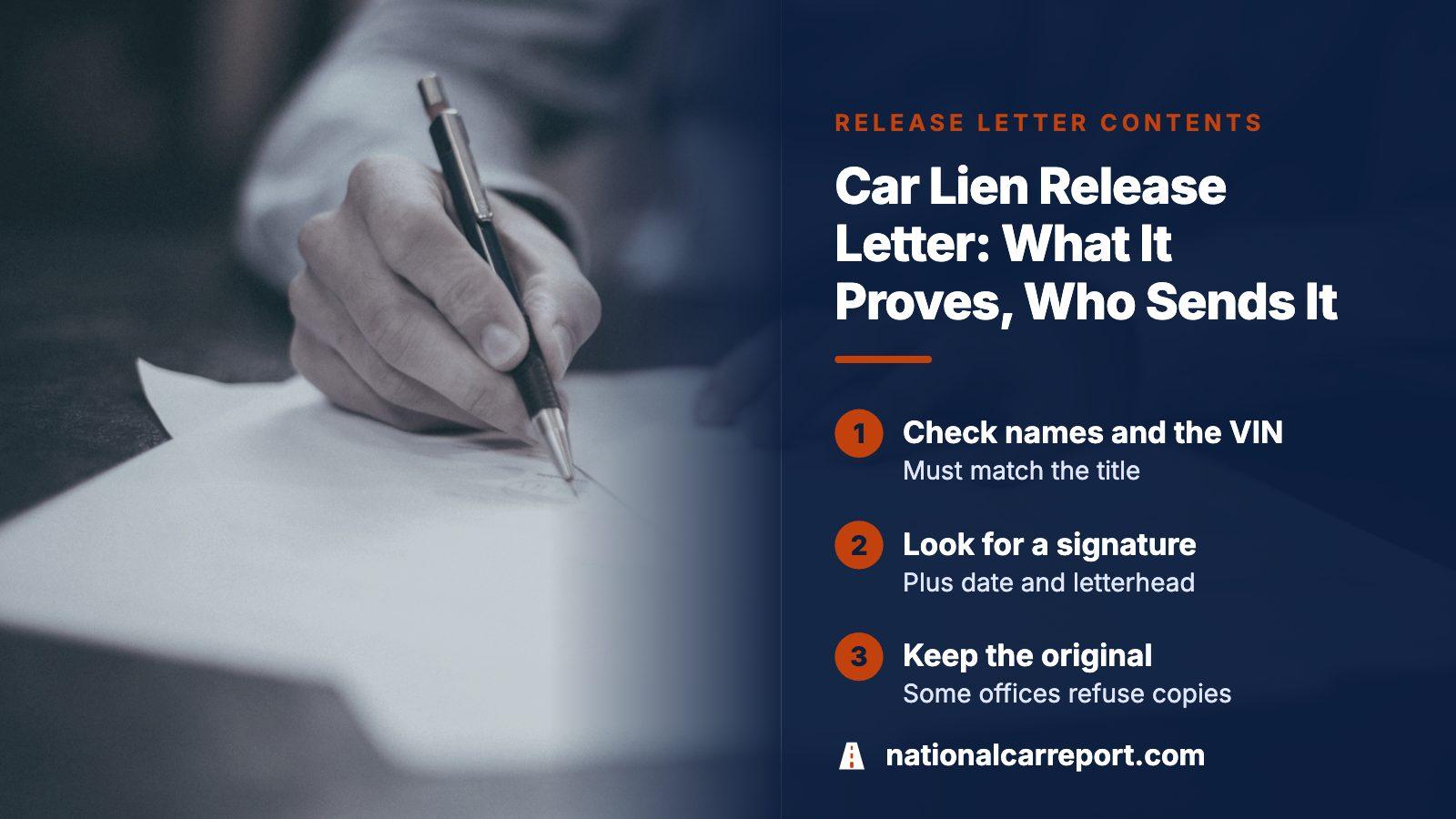
THE SHORT ANSWER
The lender writes the release letter once the loan balance reaches zero, and some states let the lender skip paper and file an electronic release instead. A usable letter names the borrower, the vehicle's VIN and the lender, and carries a signature. Keep the original, because some state offices refuse copies, and run a VIN check to see whether any lien still shows.
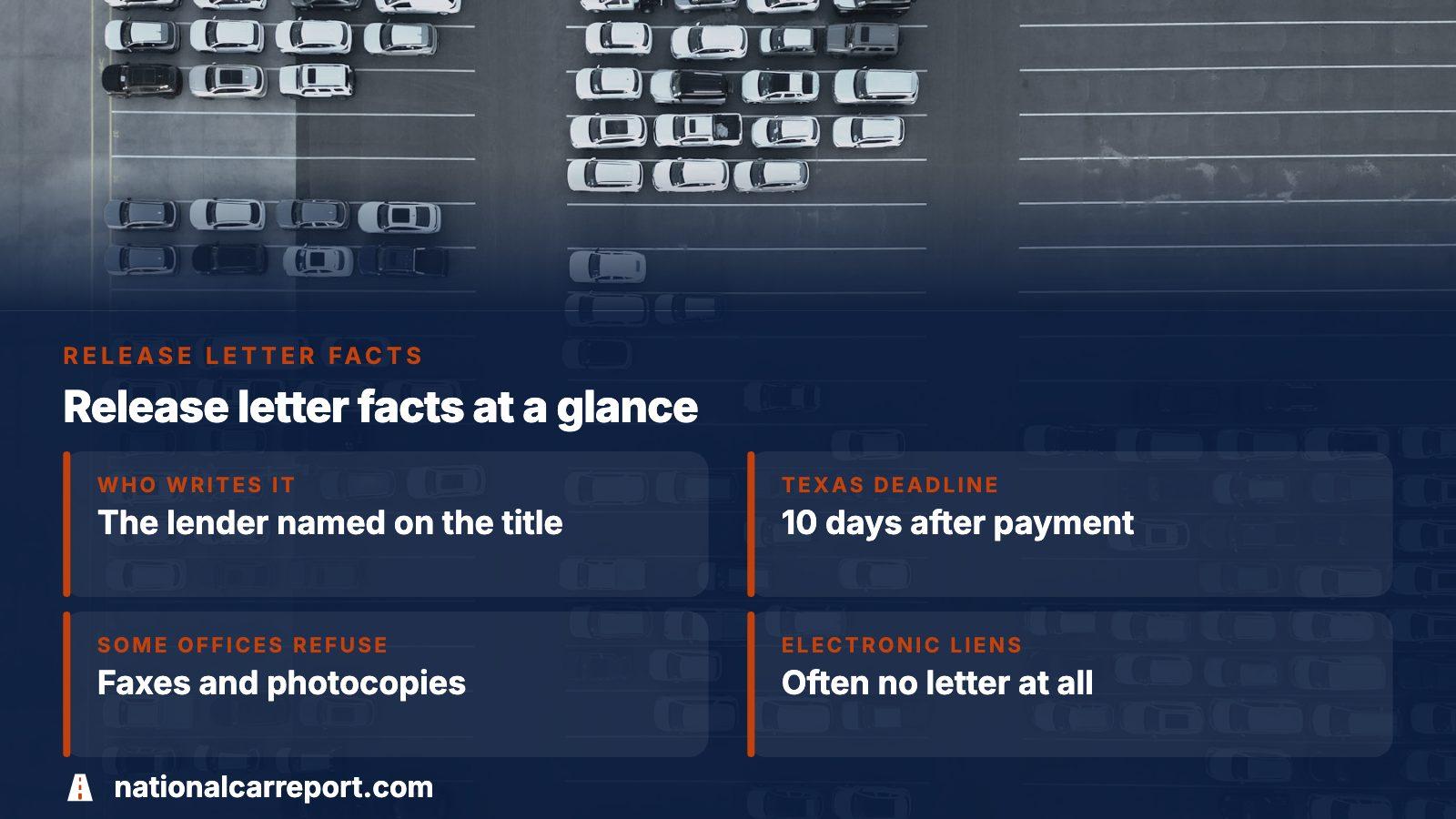
- Who writes it
- The lender named on the title
- Texas lender deadline
- 10 days after payment
- Some offices refuse
- Faxes and photocopies
- Electronic liens
- Often no letter at all
What the letter says and why it matters
When someone finances a car, the lender is recorded on the title as a lienholder. That entry sits between the owner and a clean sale: the car cannot be re-titled cleanly while the lender is still listed. The release letter is the lender's own written statement that the debt is settled and the entry should come off.
NationalCarReport reads lien, theft and impound records for a VIN across state lines, so we see how often a lien outlives the loan it came from. The letter is the paperwork side of that problem. It is not the record itself. The state's title file is what a buyer's next owner will be judged against, and the letter is what gets that file changed.
What a usable letter should show
No official page we opened sets a national template, and states differ on wording, so treat the list below as practical advice rather than a legal standard. The aim is a document a clerk can match to a title in seconds.
- The borrower's name as it appears on the title, and the full VIN.
- The lender's name as it appears on the title, which can differ from the company that now services the loan.
- A plain statement that the obligation is satisfied and the lien is released.
- The date, and a signature from someone at the lender.
- Letterhead, plus a notary stamp when your state or office asks for one.
Pennsylvania, for one, accepts a notarized release statement on the lender's letterhead at the counter, or its own Form MV-38O, when an owner needs a lien-free duplicate title. California's DMV names its REG 166 lien-satisfied form among the paperwork a title change can involve.
How to request one after the last payment
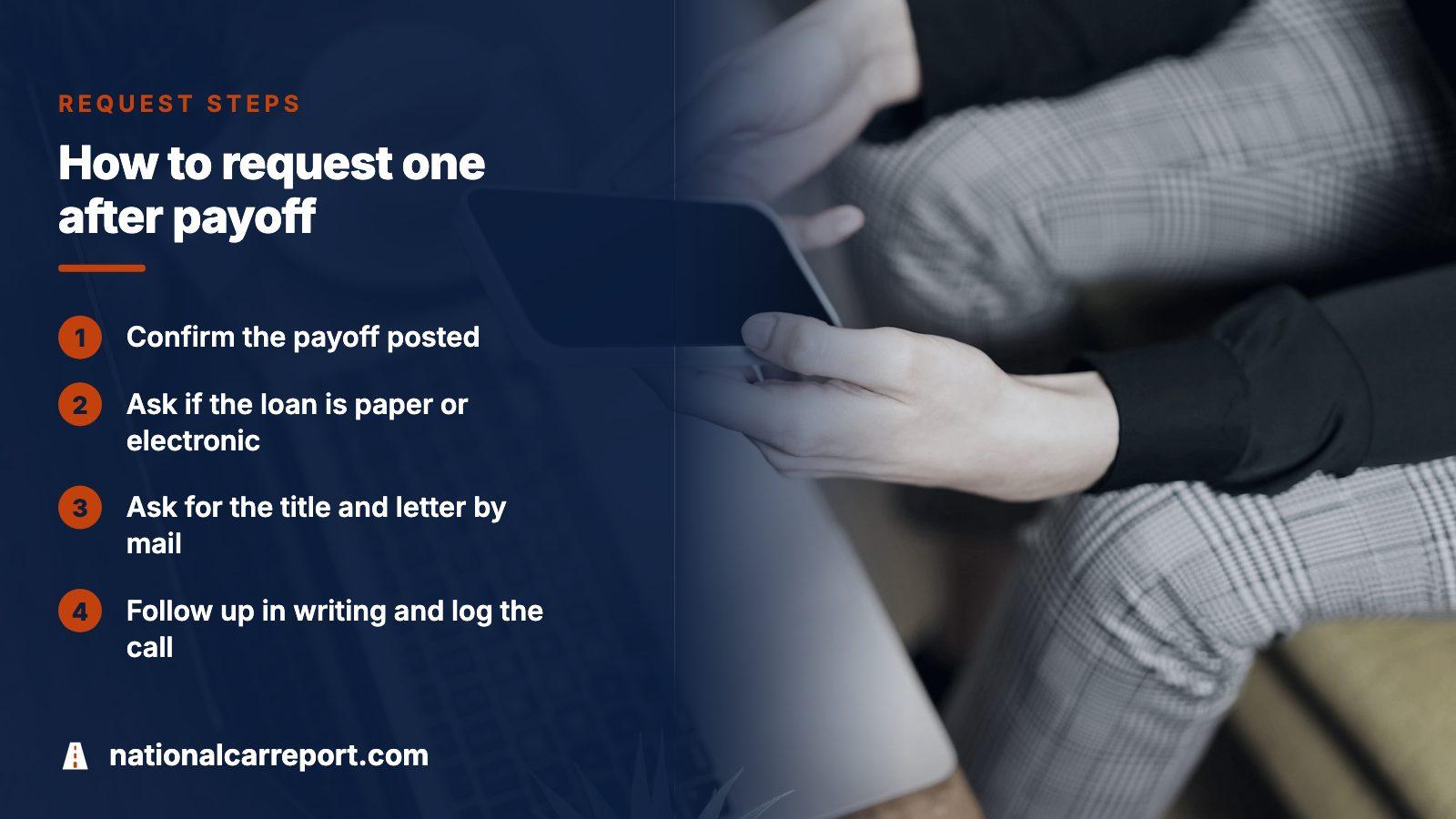
- Confirm the payoff posted. Ask for a zero-balance statement, not just a receipt for the transfer.
- Ask the lender's title or lien release department whether the loan was on a paper title or an electronic record.
- If paper, ask for the title and a release letter by mail, and give your current address in writing.
- If electronic, ask for the date the lender sent the release to the state and any confirmation it gave you.
- Note who you spoke with and when, then follow up in writing.
Washington's statute puts the duty on the lender in plain terms. When the loan terms are fulfilled and no debt remains, the lender has to let go of its interest, by signing the title over to the owner or a person the owner names and filing it with the state, or else by signing it to the new buyer alongside the owner's release.
How long lenders get, and what happens if they miss it
| State | What the official page says | Source |
|---|---|---|
| Texas | Lender has 10 days after receiving the payoff to release the lien | TxDMV |
| Pennsylvania | Electronic release runs immediately on payoff; paper title mailed the next business day | PennDOT |
| Washington | Lender must assign or apply for a new title within ten days after a proper demand; a $100 penalty applies if a loss results | RCW 46.12.675 |
| California | Changes of owner or lienholder reported to DMV within 10 days | California DMV |
These are the states we opened, not a national rule. Other states set their own timelines, and some set none that we could confirm, so check your own DMV's page before quoting a deadline to a lender.
When there is no letter because the lien is electronic
A growing share of liens are recorded electronically, and in that case the lender talks to the state's computer system and the owner may never receive a letter. Texas says owners with an electronic lien need to file nothing: the lender coordinates with the state, and once the electronic release arrives the title is printed on paper and mailed to the recorded owner.
Paper trail for an electronic release
If you never get a letter, ask the lender for the date it sent the electronic release, then check that the title arrives. In Pennsylvania, an owner whose record shows an electronic release but who still has no title ten or more days later pays no fee for the duplicate.
When the title still names the lender after payoff
Paying off a loan does not erase the lender's name from an old paper title. TxDMV notes that a paid-off lien can remain printed on the title, and that the lender's original signed release is then needed when applying for a certified copy. A fax or photocopy does not count, and the application carries a 30-day wait after the previous certified copy was issued.
So the letter is something to protect. Store the original with the title, scan a copy for your own records, and do not hand the only original to a buyer without a plan to replace it. If the lender has vanished or been absorbed, California's DMV publishes a roster of institutions that shut down, merged or renamed, which helps trace who now holds the file.
For buyers: a letter is a claim until the record agrees
Shown a release letter by a seller, ask three things. Does the VIN on the letter match the car? Does the lender on the letter match the one on the title? Is the signature and date legible? A forged or recycled letter can look convincing, and a genuine one can be out of date if the seller refinanced and a second lender sits on the title.
Then compare the letter against an independent record. Run the VIN and read any lien, theft or impound hit before money moves. Start with the free preview, and see the pricing page if you want the full report as a one-time purchase. One limit applies: the national title system carries the VIN, brands, the titled party, salvage data and odometer entries, and the lender's name is not among its required items. A clean result is useful, but the lender's confirmation and the state title are the final word.
For sellers: get the release before you list
A seller who still owes money, or who paid off recently without collecting paperwork, loses buyers fast. Ask your lender for the payoff in writing, then the release and title. Where the lender holds a paper title, expect it to arrive by mail; where the record is electronic, plan on the state's own title printing process.
If a buyer's bank is paying off your loan directly, ask the buyer's lender and yours how the release will reach the state. Pennsylvania's rules, for example, let a dealer taking a trade-in receive the title after the lender releases it to the dealer. Those details depend on state, so confirm the path before the handoff rather than after.
Where this information comes from
- TxDMV: Add or remove a lien on a vehicle — lender deadline, release letter and electronic lien handling
- TxDMV: Get a copy of your vehicle title — original release required, copies refused, waiting period
- PennDOT: Mandatory electronic lien and titling FAQs — electronic release timing, notarized letter and Form MV-38O
- California DMV: Title transfers and changes — Form REG 166, notarization, lender listing
- Washington Legislature: RCW 46.12.675 — lender duty to release and the penalty
- 28 CFR 25.54: Responsibilities of the States — what states must send to the national title system
Sources and photos: Facts checked against the sources above in November 2026. Photos by Scott Graham, Jakub Żerdzicki and Iain on Unsplash; diagrams by NationalCarReport.
Keep reading
- How to Remove a Lien From a Car Title After PayoffThe step that follows once you hold the letter.
- Lien Still on Title After Payoff: Why and How to Clear ItWhy a lien can linger after the loan is gone.
- Buying a Private-Party Car That Has a Lien: Safe StepsHow to handle a purchase when the lender is still listed.
- DMV Lien Release Search: How to Confirm a Lien Is GoneWays to confirm a release beyond the paperwork.
Frequently asked questions
Who is responsible for sending a car lien release letter?
The lender listed on the title. Once the balance is zero it must release its claim, by paper letter and title, or electronically where the state runs an electronic lien program. If nothing arrives, contact the lender's title department first, put the request in writing, and then take it to your state DMV if the lender stays silent.
Can I use a photocopy of the release letter?
It depends on the office. TxDMV says a fax or photocopy is not acceptable when an original release is needed for a certified title copy. Pennsylvania accepts a notarized statement on the lender's letterhead at the counter. Ask your DMV what it accepts before you hand over your only original.
What if the lender is out of business or was bought?
A merged lender's successor normally holds the records. California's DMV publishes a roster of lenders that shut down, merged or renamed, which can point you to the right company. Other states may offer something similar, so ask your DMV, and keep every written reply you receive.
Do I need a release letter if my lien was electronic?
Often no. In Texas the owner has nothing to file, the lender coordinates with the state, and a paper title is mailed to the recorded owner after the electronic release arrives. Confirm the release date with your lender and watch your mail, since the title is your proof.
Will a VIN check show that a lien was released?
A VIN check shows liens that were reported against the car, so a hit means you should ask for proof of release. Because lender names are not part of what states must send to the national title system, a clean result does not replace the lender's letter or the updated state title.
Now check the car itself
The guide explains what to look for. The report shows what this VIN has on record.