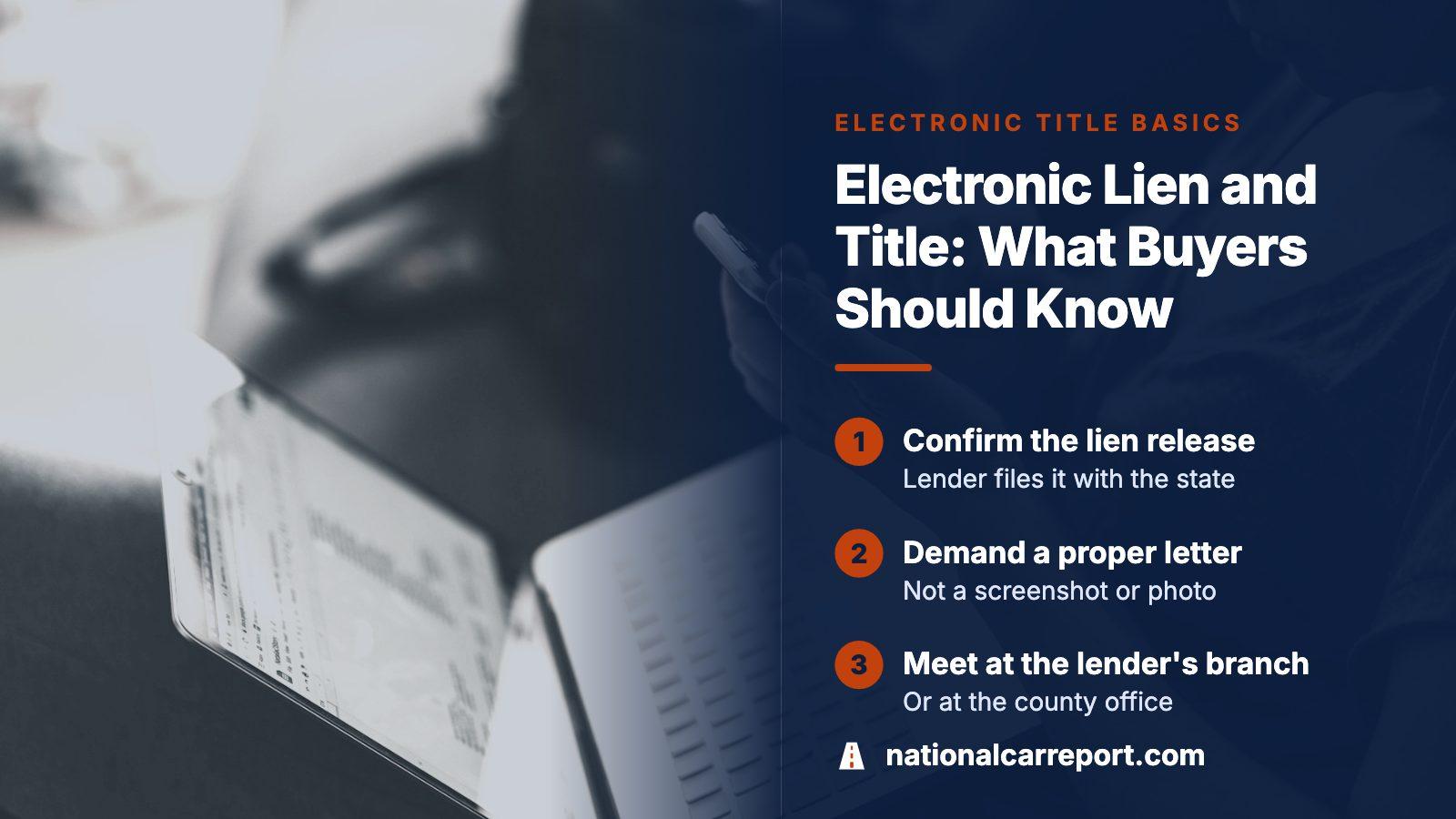
THE SHORT ANSWER
Under an electronic lien and title program, the state stores the title as data and the lender is the only party with a stake in it until the loan is paid. After payoff the lender sends an electronic release, and the state then issues a paper title to the owner. A seller who says the loan is paid but holds no title may be telling the truth, so confirm the release before paying.
- Where the title lives
- In the state's database
- Who releases the lien
- The lender, electronically
- Texas fee, paper route
- $28 or $33 by county
- Participation
- Set state by state
What electronic lien and title means in plain terms
When someone finances a car in a state that runs an ELT program, the lender and the motor vehicle agency trade the title details by computer. No certificate is printed and mailed to the lender to sit in a drawer. The agency keeps the title as a database entry, and the lender is shown on it as the holder of the lien.
California describes the arrangement the same way and adds that an electronic title carries the same legal effect as a paper one. Nothing about the car's ownership is weaker. What differs is where the evidence sits. NationalCarReport looks at this from the buyer's side: a car can be perfectly legitimate and still arrive with no paper at all.
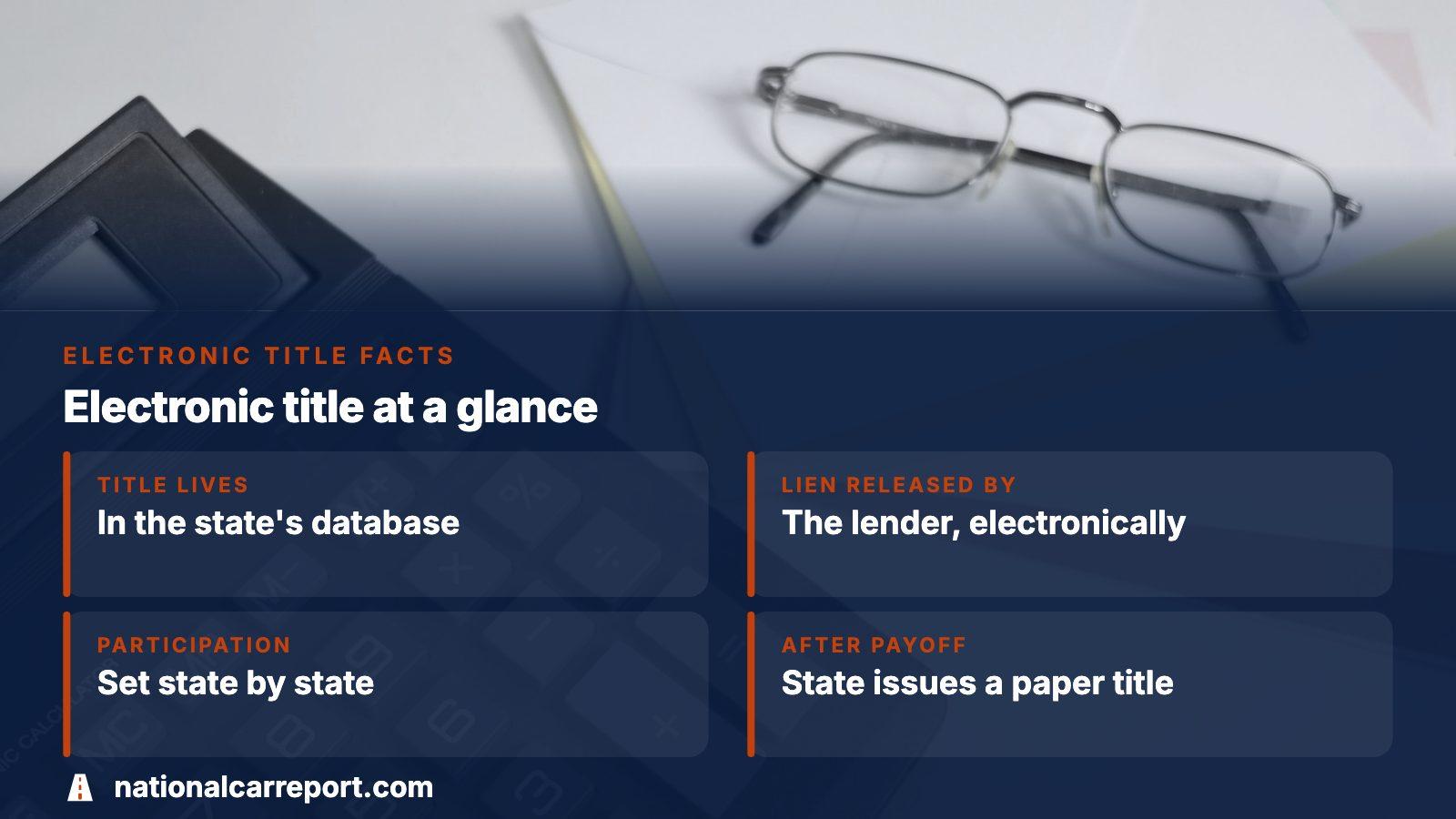
How one loan moves through the system
- The buyer and lender submit the titling paperwork, usually through the dealer or the county office.
- The agency processes it and tells the lender electronically. California says this notice generally lands the next business day.
- The lien stays on the record while the borrower makes payments.
- At payoff the lender files an electronic release or satisfaction notice with the agency.
- The agency removes the lender and issues a paper title to the owner, or to a new lienholder if the car is being refinanced.
The borrower is not part of steps two through four. That is why a seller can honestly say they have no title: the loan may be open and the paper may not exist.
What happens at payoff, using Texas as the example
TxDMV tells owners that with an electronic lien they need to do nothing. The lender reports the release, the agency converts the record to a paper title, and the title is mailed to the recorded owner. For a lien on a paper title the path is different: the owner needs the title, a release letter or similar notice from the lender, and the agency's title application form, filed at the county tax office.
On timing, the owner page says the lender has 10 days after receiving payment, while the lender page speaks of 10 business days for dealer trade-ins. The pages do not settle whether the shorter wording means calendar days, so treat the window as roughly two weeks and ask the lender for its own date.
What it changes when you are the one buying
| Situation | What you may see | What to do |
|---|---|---|
| Seller still owes money | No title in hand; the lender holds the electronic record | Pay the lender its payoff figure directly and get the release in writing |
| Seller says it is paid off | Title not yet mailed, or mailed to an old address | Ask for the lender's release confirmation, not just the seller's word |
| Seller hands over a paper title | Lender may be missing from it, or still printed on it | Check it against the state record before treating it as clean |
| Car came from another state | Paper may have been printed for the move | Ask which lender last held the lien |
Texas notes that a printed title is needed when an owner moves out of state or a car is repossessed, so a paper copy for an out-of-state car is not a red flag in itself.
Red flags specific to electronic titles
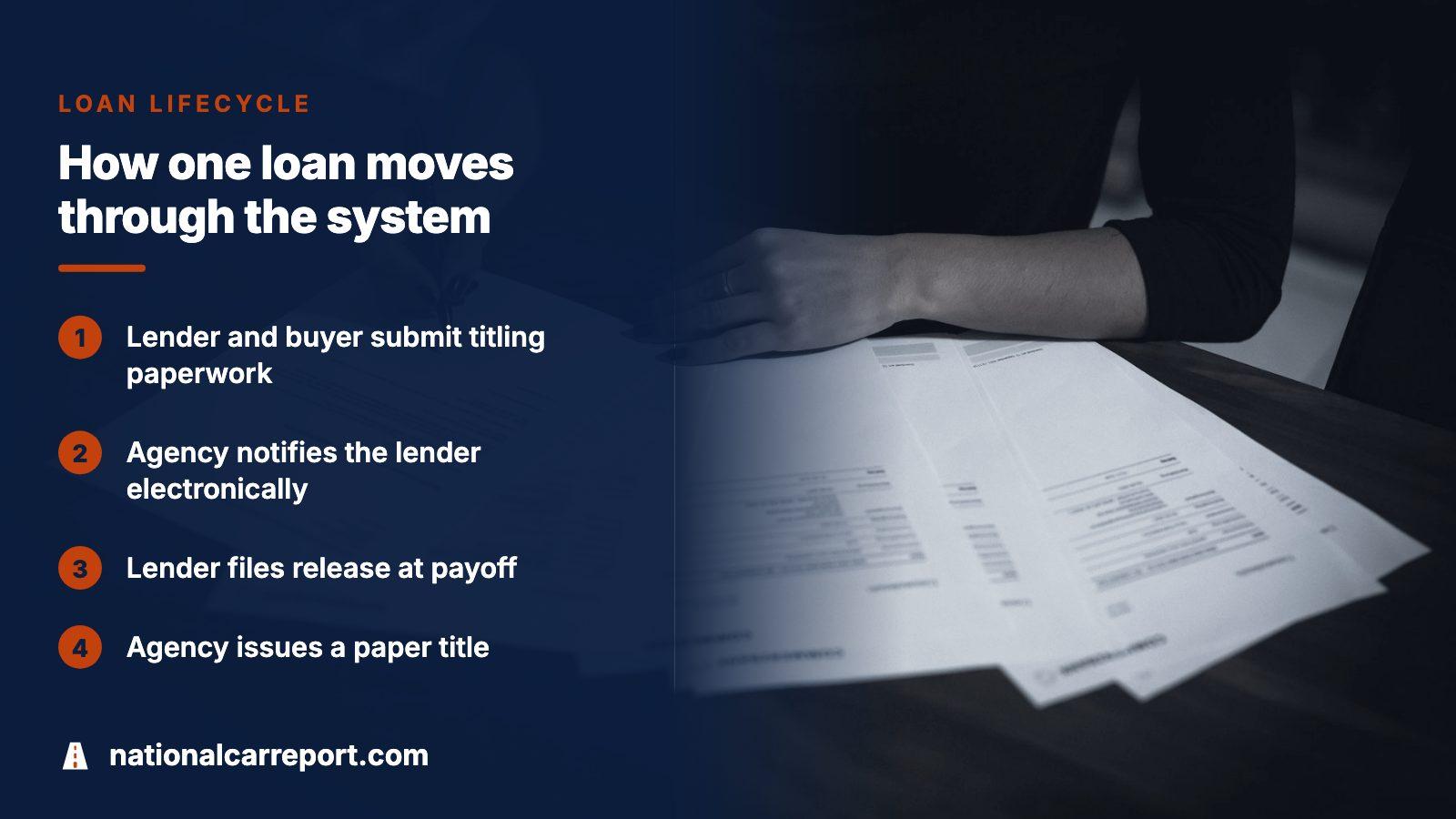
- The seller cannot name the lender or says the loan was "with a credit union" without a name.
- The payoff letter is a screenshot or photo and not a document with the lender's contact details.
- The seller asks for the full price in cash before the lender has confirmed anything.
- A "duplicate title" appears just before the sale, on a car that was financed recently.
- The seller wants to meet somewhere other than the lender's branch or the county office.
Why the lender matters more than the seller
A lien belongs to the lender until the lender releases it. A seller's receipt for a payment does not remove it. Only the lender's filing with the state does.
Where a VIN check fits
A national VIN report is a screen, run before you spend a Saturday on a car. NationalCarReport's free preview reads a VIN for reported liens, theft and impound records across state lines, so you learn early whether a lender, a thief or a tow yard has already touched the car. The full report is one payment, with no subscription, and prices are on the pricing page.
Keep expectations tight. The federal vehicle history system says it exists to protect consumers from fraud and to keep stolen cars from being resold, and the page I read does not claim it lists liens. A report that shows no lien is a good sign, not a release. The state record and the lender have the last word.
If the lender has not filed the release
Delays happen. When the record still lists a lender after a payoff, Texas points owners back to the lienholder, and the practical fix is a written release from that lender. Ask for a letter that names the VIN and the date of payment, then take it to the state agency or county office.
If you are the buyer and the seller cannot produce that letter, wait. A sale can be rescheduled. A lien that survives the sale cannot easily be undone, and the lender's claim stays with the vehicle.
Who has to take part, and why rules differ
Participation is set by each state. California requires licensed financial institutions whose main business is lending to join, with no minimum number of vehicles, and charges no participation fee, though lenders pay their chosen provider. Texas treats ELT as optional and lets certified lenders file on paper if they prefer. So two cars financed on the same day in different states can end up with very different paperwork.
For that reason, ask your own state agency how it handles e-titles, and do not assume an answer from another state applies.
Where this information comes from
- California DMV: Electronic Lien and Title Program — How the program works, who must join and what happens at payoff.
- TxDMV: Electronic Lien and Title Program — Lender-side process, electronic release and paper-title rules.
- TxDMV: Add or remove a lien on a vehicle — Owner steps, release timing wording and the title fee.
- NMVTIS: vehicle history information — Purpose of the federal system and the public report.
Sources and photos: Facts checked against the sources above in November 2026. Photos by Michal Biernat, Dimitri Karastelev and Cht Gsml on Unsplash; diagrams by NationalCarReport.
Keep reading
- DMV Lien Release Search: How to Confirm a Lien Is GoneHow to confirm a lender has actually let go of the car.
- Vehicle Lien Check by VIN: Nationwide Lien, Theft and Impound RecordsThe full lien check, read alongside theft and impound records.
- Car Lien Release Letter: What It Is and How to Get OneWhat a usable release letter should contain.
- Buying a Private-Party Car That Has a Lien: Safe StepsHow to pay when the seller still owes money.
Frequently asked questions
Does electronic lien and title mean I will never get a paper title?
No. After the lender releases the lien, many states print a paper title and mail it to the owner. Texas does this automatically. Some states leave the title electronic unless the owner asks for paper, so check how your state agency treats a paid-off car.
Can I sell a car if the title is electronic and I still owe money?
Yes, but the buyer cannot take a title from you, because the lender holds the record. The usual route is a payoff made straight to the lender, then a release, then a title for the new owner. Plan on starting with the lender, not the buyer.
How do I know the lender filed the release?
Ask the lender for written confirmation naming the VIN and payment date, then ask your state agency or county office whether the record has changed. Some agencies do not read records to third parties, so the titled owner may need to make the request.
Is an electronic title less secure than paper?
California says the two carry the same legal effect and need the same documents. Its listed benefits include less fraud and no manual releases on paper. The weak point is the human step: a buyer who skips checking with the lender.
Will a VIN report show whether my lien has been released?
A report shows liens that were reported to its sources, and it may lag a release. Use it to decide whether the car is worth pursuing, then settle the question with the lender's release and the state record before any money moves.
Now check the car itself
The guide explains what to look for. The report shows what this VIN has on record.