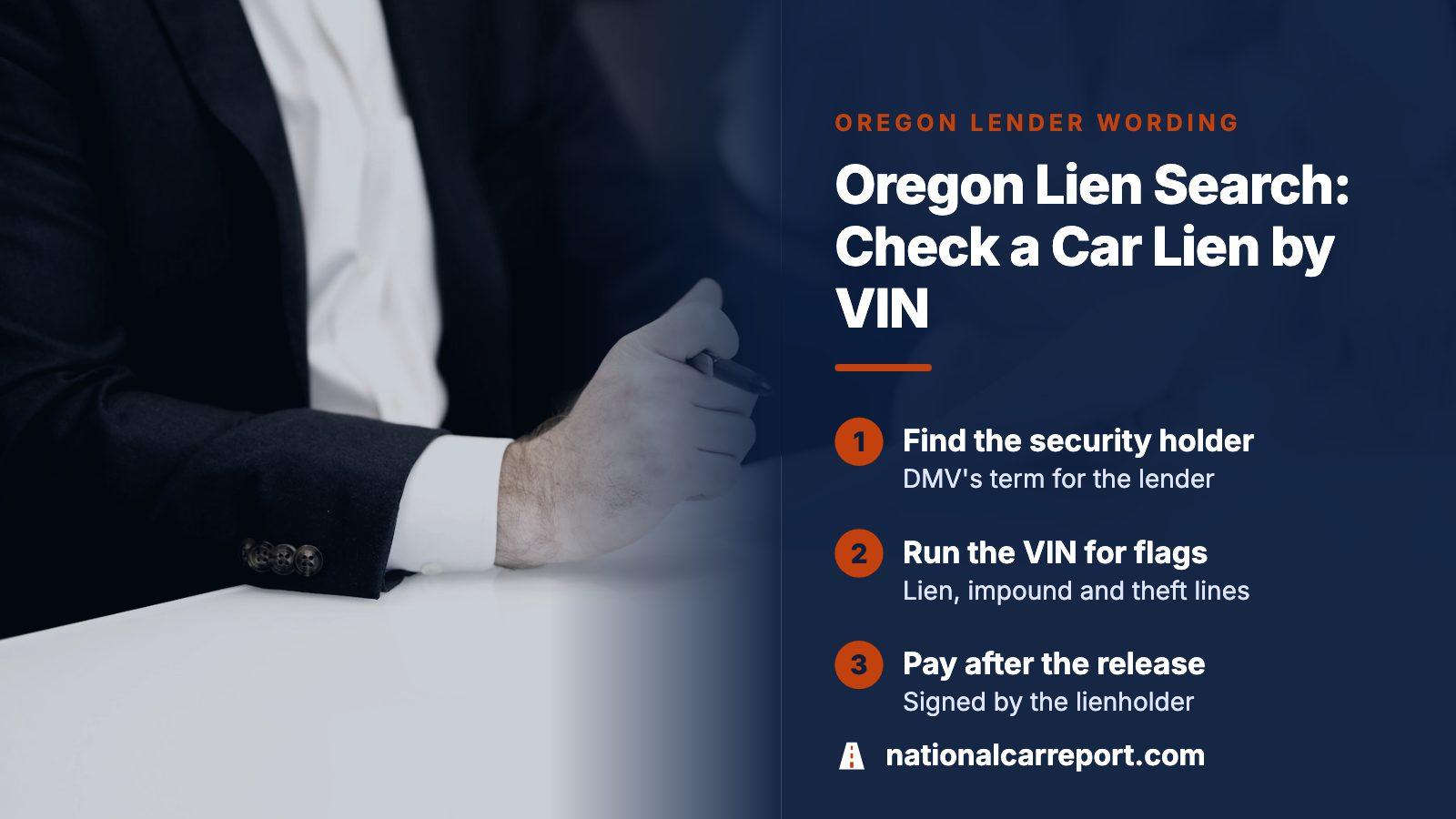
THE SHORT ANSWER
Search an Oregon car for a lien in two steps. First, find the lender on the title, which Oregon DMV calls the security interest holder. Second, put the VIN through a lien and impound check. Any lender that appears must hand over a signed release before you pay. No public lien lookup turned up on the DMV site.
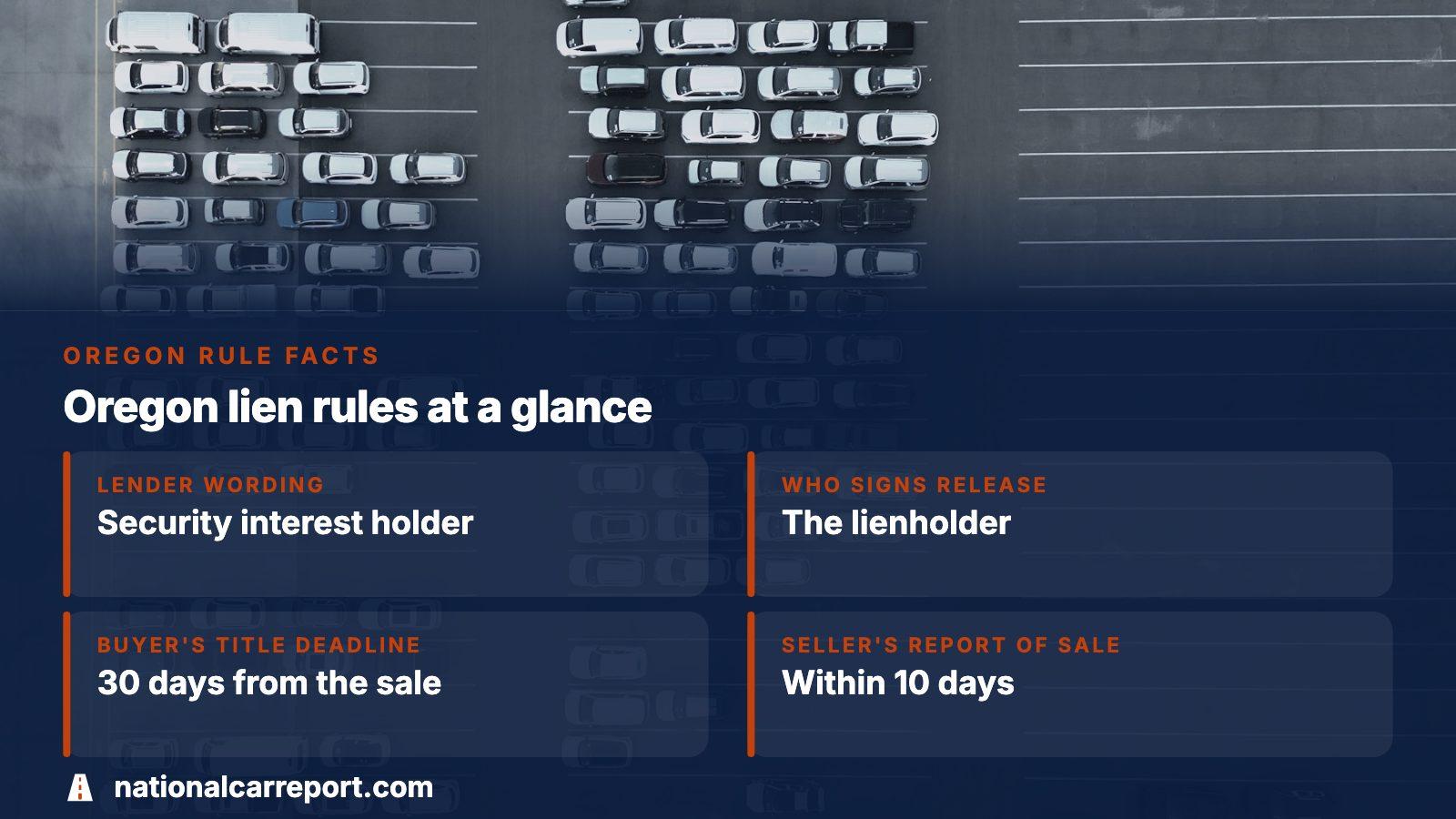
- DMV's word for a lender
- Security interest holder
- Who signs the release
- The lienholder, on the title or in a separate statement
- Buyer's title deadline
- 30 days from the sale
- Seller's report of sale
- Within 10 days
What an Oregon lien search can actually tell you
People who type this search usually want a database where a plate or VIN returns a yes or no. We looked for one on the Oregon DMV site and did not find it. Pages we guessed at for a lien lookup came back as not found, and the DMV material we did read talks about paper: the title, the lender's release and the buyer's application.
That shapes the method. The title is your first document, because an Oregon lender is recorded there as a security interest holder. The VIN is your second, because it lets a national record check surface lien, impound and theft entries the seller never brought up. Use both, and trust neither alone.
What the check looks for on a nationwide basis
NationalCarReport works from the VIN, not from the state line. A car titled in Oregon may have been financed in Idaho, towed in Nevada or reported stolen in California, and a state-by-state hunt would miss all of that. The report is built to catch those cross-border entries in one pass.
- A recorded lien or lender claim attached to the VIN
- An impound or tow record that could mean unpaid storage charges
- A theft record, which makes a clean title meaningless
- Title brands such as totaled or reconstructed, which change what the car is worth
- Odometer readings that should rise in a straight line
Start with the preview: it tells you whether anything is there before you decide to pay for the detail.
Reading the Oregon title for a lender
Oregon DMV tells buyers to confirm that every owner on the title, lienholders included, has released interest. So the question on the page in front of you is whether a lender is named and whether it has signed off.
| What the paper shows | What it suggests | Your move |
|---|---|---|
| Lender named, signature on the front of the title | Loan paid and release recorded | Check the VIN anyway, then proceed |
| Lender named, no signature | Loan may still be open | Get a separate signed release statement |
| Only the seller's name, bill of sale offered | Title may belong to someone else | Ask for the actual title before any money moves |
| Seller says the title is lost | Replacement needed first | Have the seller order it, then buy |
DMV says a seller who still owes money cannot sell, donate or gift the vehicle. A seller who tries to is asking you to take the risk.
Running the check from the VIN
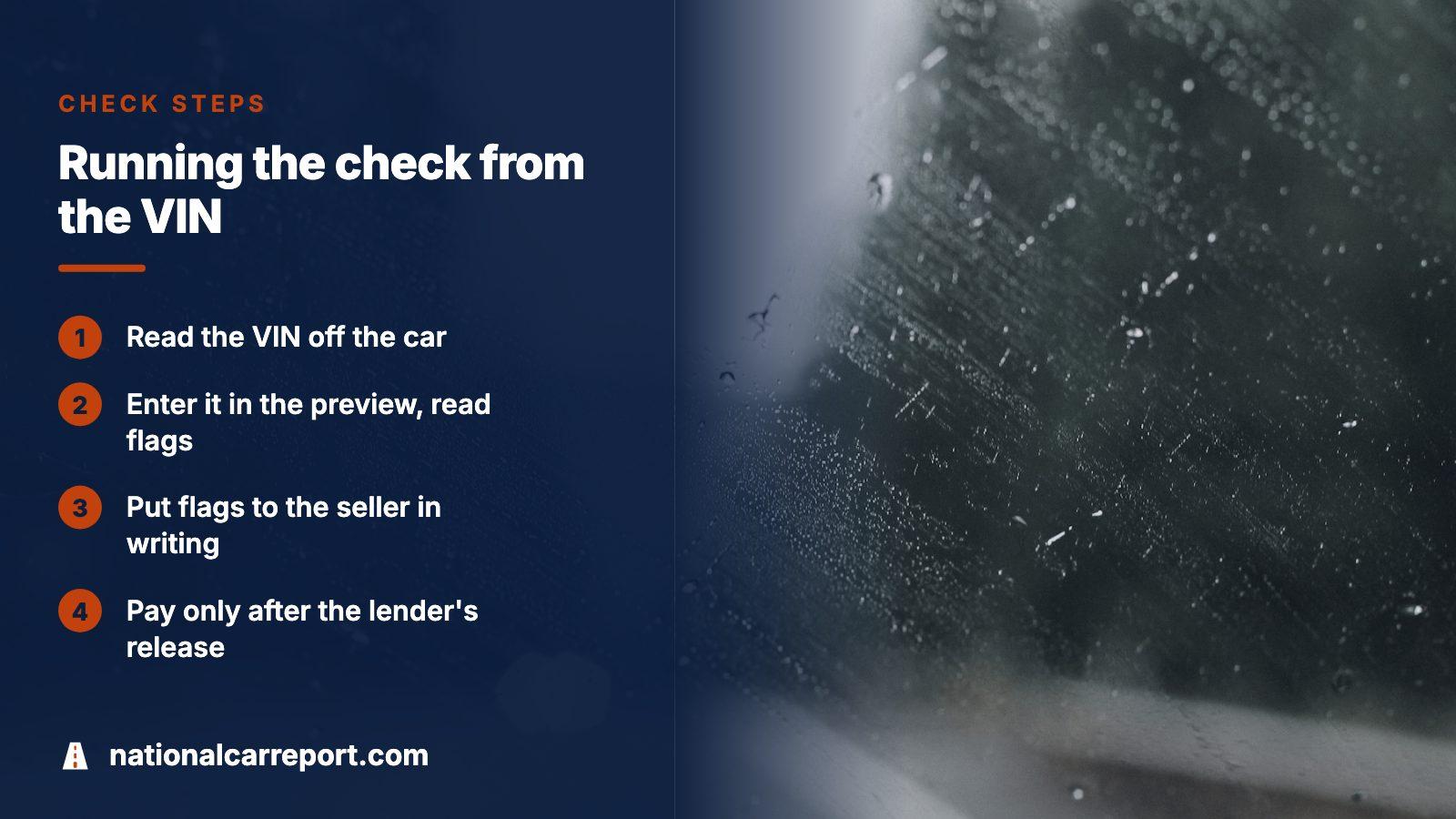
- Read the VIN straight off the vehicle, not the listing, and set it beside the title digit by digit.
- Enter it in the NationalCarReport preview and read what flags appear.
- Buy the full report when the preview points to a lien, impound or theft entry, or when the price of the car makes it worth it.
- Put every flag to the seller in writing and ask for documents that answer it.
- Pay only after the lender's release, or the signed-over title, is in your hands.
Numbers that differ between car and paper mean you stop the sale; they are not a typo to wave through.
How a lien leaves an Oregon title
When a loan is paid, the lender releases its interest, either by signing the front of the title or by issuing a separate signed statement. DMV also asks for original lien releases from earlier holders whenever a title is processed, so a missing one can hold up your application later.
A text message is not a release
Ask for the lender's signed paperwork, or have the seller take you to the lender and settle the payoff while you watch. A seller's promise to clear the loan afterward leaves the claim attached to the car you now own.
If the loan is still open, one clean route is to pay the lender directly and receive the signed title in exchange. Some buyers also hold the funds until the release arrives.
Deadlines and paperwork once you buy
A buyer in Oregon must apply for title within 30 days of the sale. Late applicants pay an extra $25 if they file between days 31 and 60, and $50 after that. Sellers report the sale within 10 days through DMV2U, and remain the listed owner until the transfer goes through.
If you finance the purchase, expect the lender to ask for your documents and submit the application itself. DMV then sends the title to the lender, while you receive the registration card, plates and stickers.
Model year 2011 or newer vehicles under 20 years old also need an odometer disclosure signed by both of you.
What DMV records can and cannot do for a buyer
DMV sells a Vehicle Record Print for $4, which lists registered and security owner information, and a Vehicle Title History letter for $22.50. Both are open only to people whose request meets the statutes DMV cites, ORS 802.175 through 802.191, and DMV rejects the rest.
A typical private buyer will not qualify, which is one more reason the VIN report matters. Do not expect any report to hand you a seller's personal details; the check is about the vehicle.
Cost, then your next move
Opening the preview costs nothing. Detail beyond it is a one-off purchase, never a recurring plan, and the pricing page shows today's options. A pack of reports makes sense if you are weighing several Oregon cars.
If the preview and the title agree, move to the paperwork. If they disagree, treat the disagreement as the finding, and ask the lender, not the seller, to settle it.
Where this information comes from
- Oregon DMV: Title and register a vehicle — Lender terms, lien release documents, late fees and the lender-submits route.
- Oregon DMV: Buying or selling a vehicle — Seller and buyer steps, the loan rule and report-of-sale timing.
- Oregon DMV: Records available for purchase — Record types, fees and who may order.
- VehicleHistory.gov: NMVTIS — Federal purpose of the national title information system.
Sources and photos: Facts checked against the sources above in November 2026. Photos by Carrie Allen www.carrieallen.com, Cole Keister and Iain on Unsplash; diagrams by NationalCarReport.
Keep reading
- Vehicle Lien Check by VIN: Nationwide Lien, Theft and Impound RecordsThe same check for any state.
- DMV Lien Release Search: How to Confirm a Lien Is GoneHow to confirm a lender really released its claim.
- Oregon Title Check: Seven Steps to Run Before You PayBrands and the rest of an Oregon title.
- Buying a Private-Party Car That Has a Lien: Safe StepsWhat to do if the loan is still open.
Frequently asked questions
Is there a public Oregon lien lookup?
We did not find one on Oregon DMV's site, so this page does not describe one. The dependable approach combines the title, which names any lender, with a VIN-based check, and a call to the lender if the two disagree.
Can I buy a car in Oregon that has a lien?
Only with the lender's release. DMV says a seller with an unpaid loan cannot sell the vehicle, so the loan has to be settled, ideally by paying the lender directly in exchange for the signed title.
How do I find out who the lender is?
Look on the title for the security interest holder. If the seller has no paper title, ask which lender holds it, and let the lender confirm the payoff itself. Do not rely on the seller's account of the balance.
How long do I have to title the car?
Thirty days from the sale. Late applications cost more, and the seller stays listed as owner until you transfer, so waiting leaves both of you exposed.
Does the preview show liens?
The preview, which costs nothing, tells you whether the VIN has records worth opening. Lien and impound entries sit in the full report, which you buy once rather than by subscription.
Now check the car itself
The guide explains what to look for. The report shows what this VIN has on record.