THE SHORT ANSWER
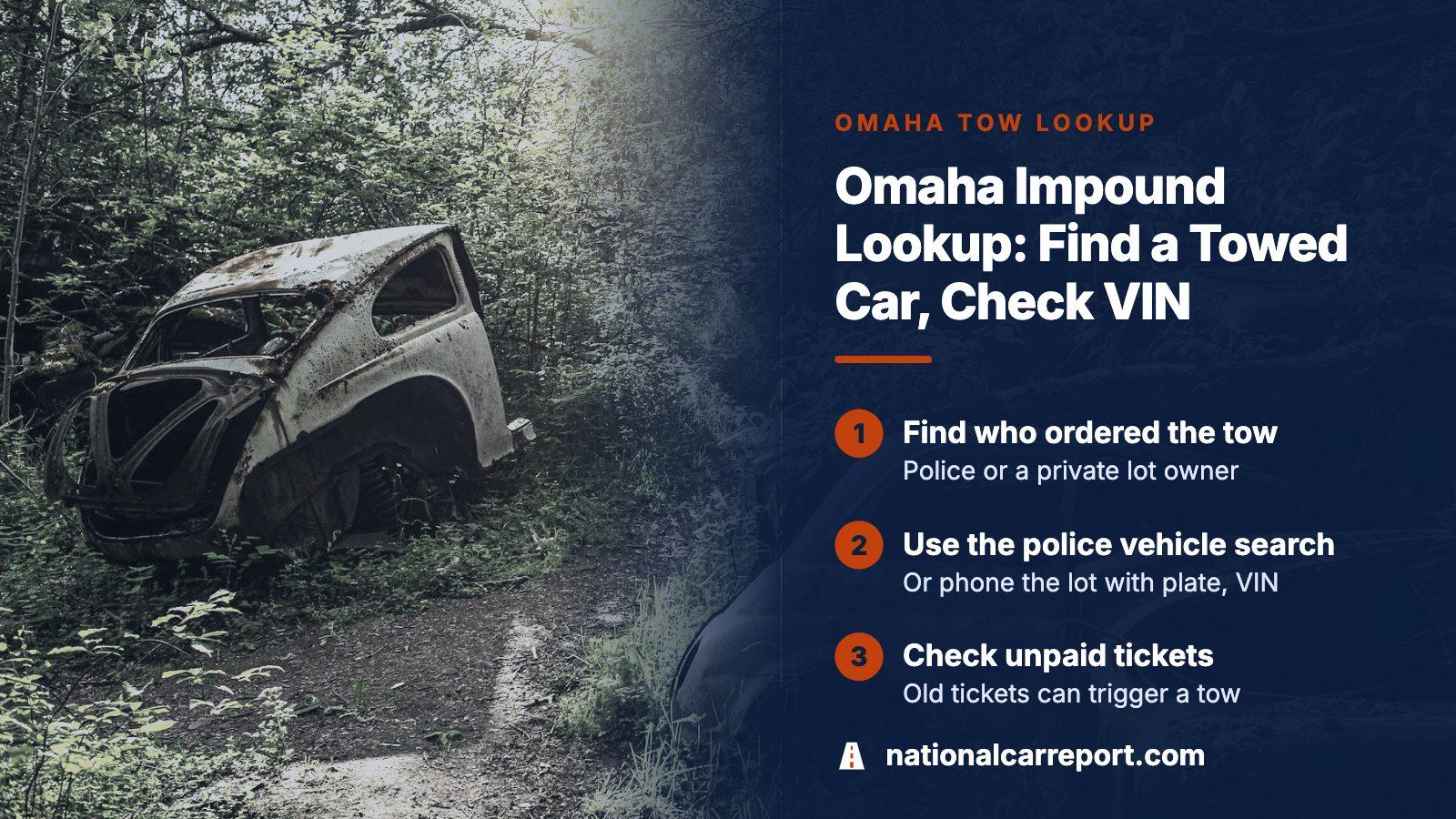
Open the impound section of the Omaha Police Department's website, which has a vehicle search, or phone the lot with your plate and VIN. If a private lot owner ordered the tow, the tow company must give police the plate within 24 hours, so police can still point you to the yard. A VIN check is a separate tool: it reads a car's recorded impound, lien and theft entries, not where the car sits today.
- Police tows
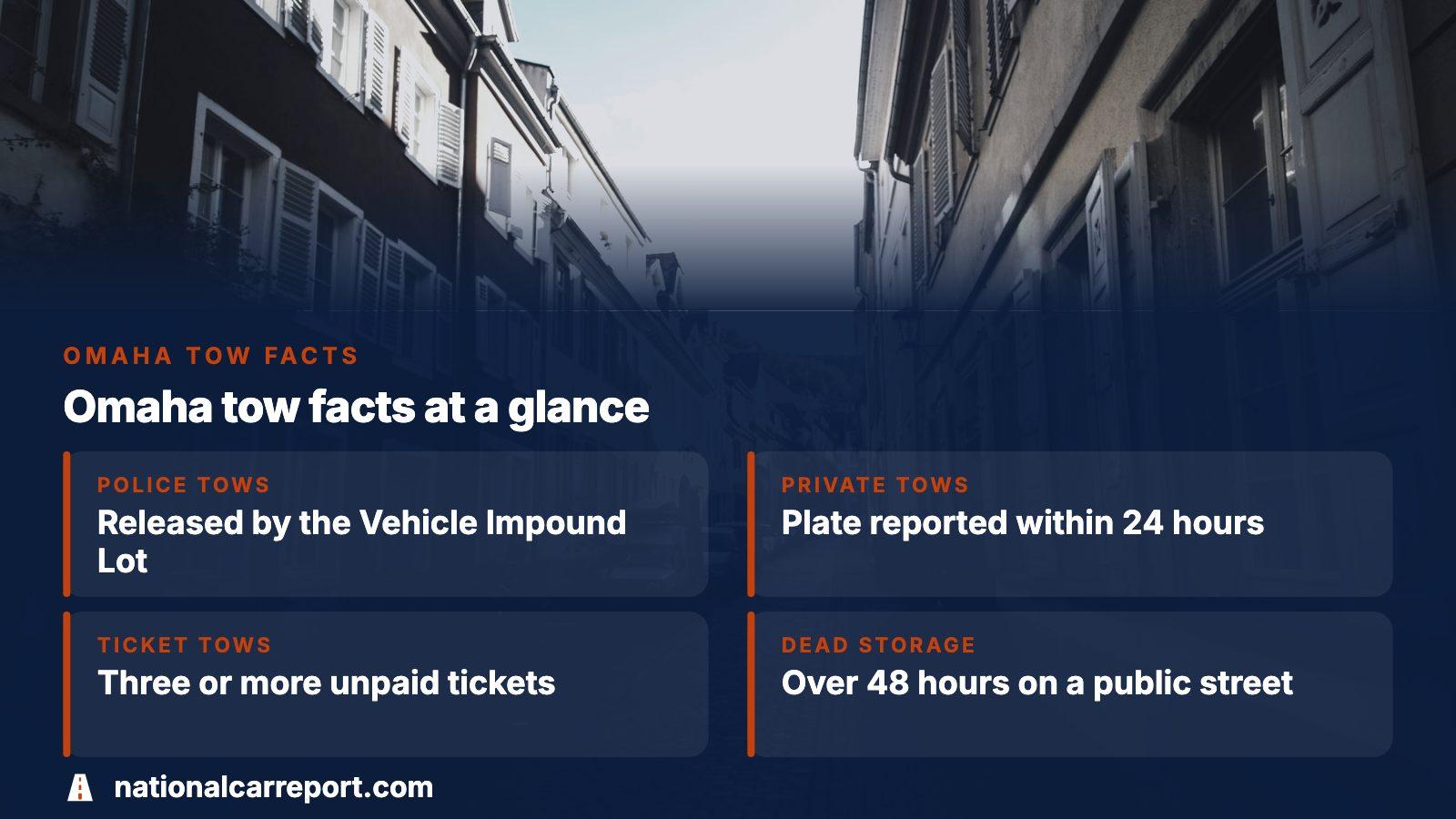
- Released by the city's Vehicle Impound Lot
- Private tows
- Tower reports the plate to police within 24 hours
- Ticket tows
- Three or more unpaid tickets, each over 30 days old
- VIN check
- Reads recorded impound, lien and theft entries
Start with who ordered the tow
A tow's record sits with whoever ordered or carried it out, and phoning the wrong office costs a day. Police also log tows from private lots and repossessions, so when unsure, ask police first.
| How it was towed | Typical trigger | Where to look |
|---|---|---|
| Police tow | A crash, a parking violation, a car left too long on a street, an arrest | The city's Vehicle Impound Lot, which also handles release |
| Ticket tow | Three or more unpaid parking tickets, each over 30 days old | The same lot, once the tickets show as paid |
| Recovered theft | Police find a car reported stolen | The owner on the spot, or the lot after the Auto Theft Squad clears it |
| Private lot or repossession | Parking without permission, a lender taking the car | The tow company's yard, which must report the tow to police |
| Owner's-request tow | You picked a private company at the scene | That company, under your own deal |
What gets a car towed by Omaha police
- A parking nuisance: a blocked driveway or hydrant, a bus zone, peak-hour rules, or no current plates.
- Dead storage: over 48 hours on a public street, or over 12 on the interstate. A sticker and chalk marks show whether the car moved before it is hauled.
- A disabled car in a traffic lane when the private tow you called cannot promise to arrive within 20 minutes.
- An unregistered car on a street. A valid dealer temporary tag within 30 days of the transfer protects it; an expired or homemade tag does not.
One reason is missing. Department policy tells officers not to impound at a traffic stop solely for missing insurance proof, expired registration, a lapsed temporary permit or badly displayed plates. If a tow followed a stop over only one of those, raise it at pickup.
Running the lookup itself
The police website carries an impound lot section with a vehicle search page, and lot staff answer questions about fees and release. Have the plate number, the VIN, and the car's year, make and color ready.
What this page leaves to the lot
The street address, opening hours, accepted payment types and the day's total come from the lot itself. They change, and police policy sends fee questions to the lot, so confirm each before you drive out. If neither the lot nor a private yard has the car, report it stolen.
When unpaid parking tickets caused the tow
A ticket tow leaves the clearest paper trail. Before an officer may order the truck, the city's citation records must show three or more unpaid tickets over 30 days old. The City Cashier works from 8 a.m. to 3:30 p.m. on weekdays, holidays excluded.
- An owner on scene with a phone can pay online before the tow is ordered, and the officer checks the receipt.
- Too late for that? The lot can still hand the car back once staff verify payment, by receipt or on the Park Omaha site, and every impound fee that applies is settled.
Private-lot tows and repossessions
City code bars towing from private property without consent from the owner or an authorized operator, unless the tow follows Nebraska's restricted-lot rules. Those rules put duties on the tower.
- Report the tow to police within 24 hours with the plate. For abandoned or trespassing cars, add the VIN and the storage spot.
- Post clear signs naming the lot's purpose, its restricted hours and whom to call.
- Stay under the city's limits. Police policy lists a $150 tow charge, a $25 administrative fee, and storage capped at $15 per day.
- Claim no lien on a car taken without authority, and give it back.
Check the limits in force today
A local TV report published on 18 August 2026 said the city council was about to vote on changed towing fees, without saying which tows the new amounts cover. Compare any bill with the current ordinance.
Unauthorized towing is a local crime. Punishment can reach a $500 fine, six months in jail, or both, for the driver or whoever ordered the tow.
A stolen car that police found
Police either give a recovered theft to the registered owner at the scene or have it hauled to the city lot. Before any haul, the VIN is compared with the registration tied to the plates on the car.
- The Auto Theft Squad must clear the car and may order fingerprint work first.
- The lot's impound unit calls the owner after that release, and pickup happens in the lot's business hours.
- A stolen car found on a private tow company's lot may stay put or go to the police lot, as investigators choose.
Once the recovery report is filed, the active-stolen status comes off the national crime database. The theft stays in the car's history, the kind of entry a VIN check looks for.
Disputing the tow or the bill
- At the scene: reach the car before it is hooked up and it comes back to you if no hold exists and the problem can be fixed immediately.
- At the lot: ask for a Fee Waiver Request form. The manager can waive a fee, and if that fails a Neighborhood Services Unit lieutenant decides, with the last word.
- On video: the officer's camera recording of a dead-storage tow is retained for 120 days, which the policy calls enough for an appeal. Move inside that window.
Police treat your deal with the contracted tow company as a private agreement, even when the car lands at the police lot.
Buying a car that has sat in an Omaha lot
A release slip does not clean a record. The federal title database covers brands, odometer readings, insurer salvage reports and junk-yard transfers. Its consumer page never mentions impounds or tows, puts the share of the country's vehicles in the system at 87 percent, and warns that a search can miss records.
Why a write-off after a theft matters
That page adds that an insurer may declare a stolen car lost if 30 days pass without recovery. The tag survives a later recovery, so a car police found and impounded may carry it.
- Ask the seller when the car left the lot, who collected it, and why it was towed.
- Look for a lien or title change soon after the release.
Running the VIN check and what comes next
- Compare the VIN stamped on the car with the one on its title.
- Enter it at NationalCarReport. The preview names the record categories held for that VIN and costs nothing.
- If an impound, lien or theft entry appears, the full report is bought once. Bundles of three, five or ten are sold for people weighing several cars.
- Phone the agency an entry names and ask for the release papers.
Nothing recurs, and prices sit on the pricing page. Walk away if an impound has no release story, a lien follows it, or a theft record sits on the car you want. A clean result still leaves the stamped VIN and the title to compare in person.

Where this information comes from
- Omaha Police Department policy: Towing, general procedures — Who releases cars, ticket holds, the fee waiver route, private-agreement rule and what officers may not impound for.
- Omaha Police Department policy: Towing, parking violations — Ticket-tow threshold, dead-storage timing, temporary tags and how a ticket tow is reclaimed.
- Omaha Police Department policy: Towing, recovered stolen vehicles — How recovered thefts are released, cleared or processed before an owner collects them.
- Omaha Police Department policy: Towing, repossession and private property — Reporting duties, signage, charge limits and penalties for private-lot and repossession tows.
- NMVTIS: for consumers — What the federal title system covers, its gaps and the stolen-car total-loss label.
- WOWT: City council to vote on unauthorized towing fees in Omaha — Local report that the council was taking up changed towing fees in August 2026.
Sources and photos: Facts checked against the sources above in November 2026. Photos by Patrick von der Wehd, Anastasiia Nelen and Karwin Luo on Unsplash; diagrams by NationalCarReport.
Keep reading
- Impound Lookup: Find a Towed Car, Then Check Its VIN for Impound RecordsHow impound records work nationwide, and why no single database holds them.
- How to Find a Stolen Car: Tow Checks, Police Steps and TrackersIf neither the lot nor a private yard has your car, the theft route comes next.
- Stolen Car Check by VIN: Nationwide Theft, Lien and Impound RecordsTest a VIN for theft records before buying any car that was once recovered.
- Vehicle Lien Check by VIN: Nationwide Lien, Theft and Impound RecordsLook for a lender's claim, which matters after a repossession tow.
Frequently asked questions
How do I find out if my car was towed in Omaha?
Use the vehicle search in the impound section of the police department's site, or phone the lot with your plate and VIN. If a private lot owner had the car moved, the company must report the plate to police within 24 hours, so police can name the yard. If nobody has it, report it stolen.
Can I do an Omaha impound lookup by VIN online?
The police impound section lists a vehicle search; check on that page which details it accepts and how current it is. NationalCarReport's VIN preview answers another question: whether impound, lien or theft entries exist in a car's history. It cannot say which yard holds the car today.
Who releases a car from the Omaha police lot?
The Vehicle Impound Lot releases cars towed to it, with two exceptions. Cars held as evidence leave under the department's evidence procedures, and recovered thefts leave after the Auto Theft Squad clears them. A ticket tow ends once lot staff verify the tickets are paid.
Can Omaha police tow my car for no insurance?
Policy tells officers not to impound at a traffic stop solely for missing insurance proof, expired registration, a lapsed temporary permit, no registration or badly displayed plates. Other grounds can apply, such as a crash, a parking nuisance or old unpaid tickets, so ask the lot why yours was towed.
How much does the VIN report cost?
The preview is free and names the record categories held for the VIN you enter. After that, the full report is a one-off payment, and bundles exist for anyone sizing up several cars. Amounts are listed on the pricing page.
Now check the car itself
The guide explains what to look for. The report shows what this VIN has on record.