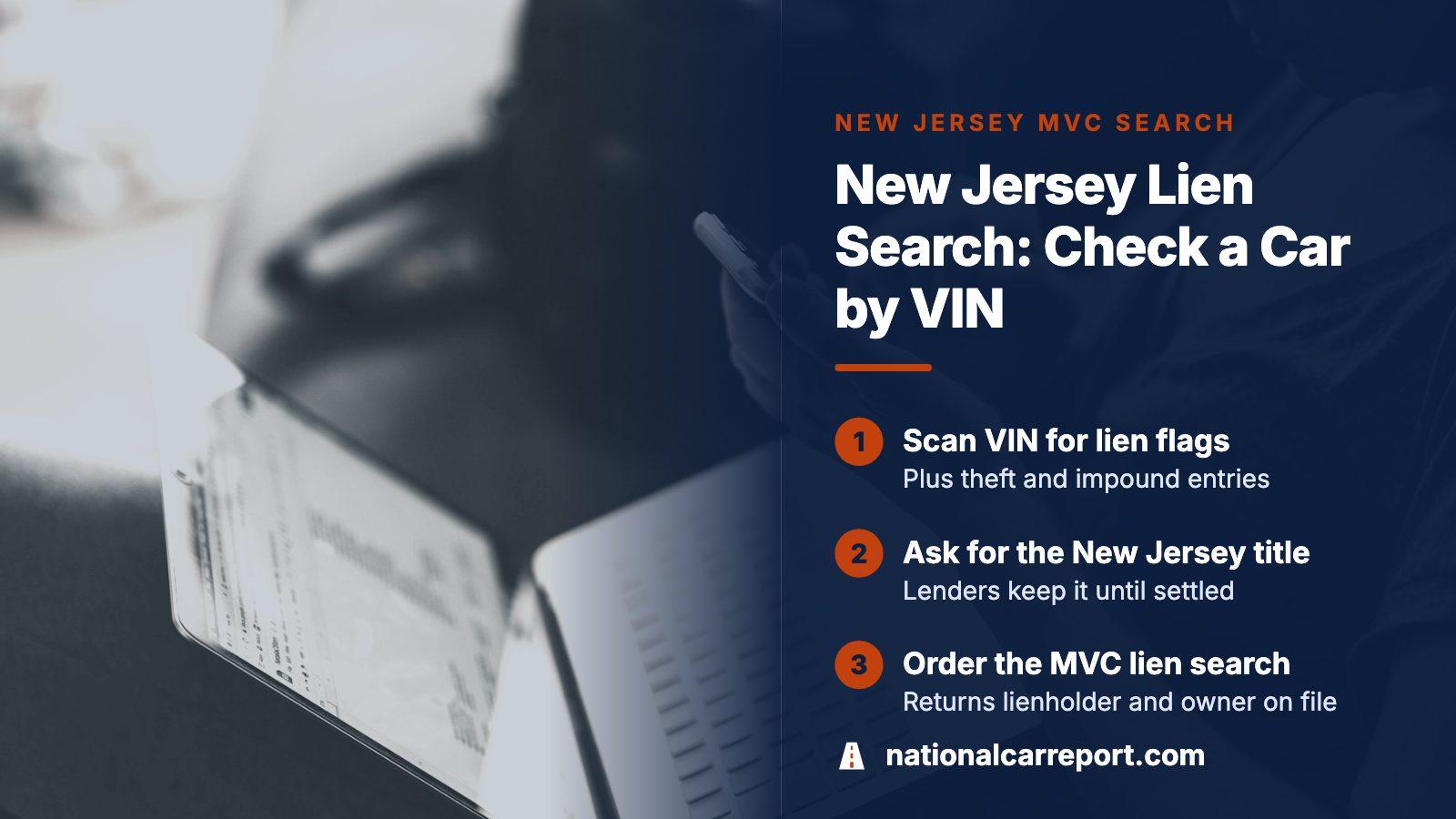
THE SHORT ANSWER
Type the car's VIN into our preview and look for lien, theft and impound flags. Next, ask the seller for the New Jersey title. Lenders keep the paper until a loan is settled, so a seller who can hand it over is in good shape. For a firm answer, the MVC runs a lien search that returns the current lienholder and owner on file.
- Official lien search
- Run by the NJ MVC, online or by mail on form DO-22
- Mail-in search fee
- $15 per vehicle
- Lien-free title
- $60 to reissue once the lender signs off
- Proof the debt is gone
- A signed, dated satisfaction letter or a signed title
What a VIN lookup tells you about a New Jersey car
NationalCarReport follows the claims that stay with a vehicle after it changes hands: a debt against it, a stolen report, a tow lot visit. Each one is keyed to the VIN, so it makes no difference whether the car was financed in Newark or Philadelphia. Start with the VIN, since seeing what the preview flags costs nothing.
- A lien, where a lender's claim reached the records we search
- A theft report and whether the car was marked recovered
- Stays in an impound or storage yard
- A salvage or similar brand, which cuts what the car is worth
The preview is a free first screen. The full report is paid once per vehicle with no subscription, and the pricing page lists the options.
How New Jersey keeps track of who is owed
The MVC calls a lien a property claim. When a car is financed, the lender is the one holding the title, and it stays there until the balance reaches zero. That helps a buyer: a seller with no title to show often has a lender who still keeps it.
To record a claim, a lender files a Universal Title Application, form OS/SS-UTA, and pays $85. In-state lenders must go in person to an agency; lenders located elsewhere may use the mail. The new title then goes to the lender, not the borrower.
One practical consequence follows. The state does not hand a customer a title with a lien still on it, so a seller showing you an encumbered paper title is either mistaken or not telling you everything.
Ordering the MVC's own lien search
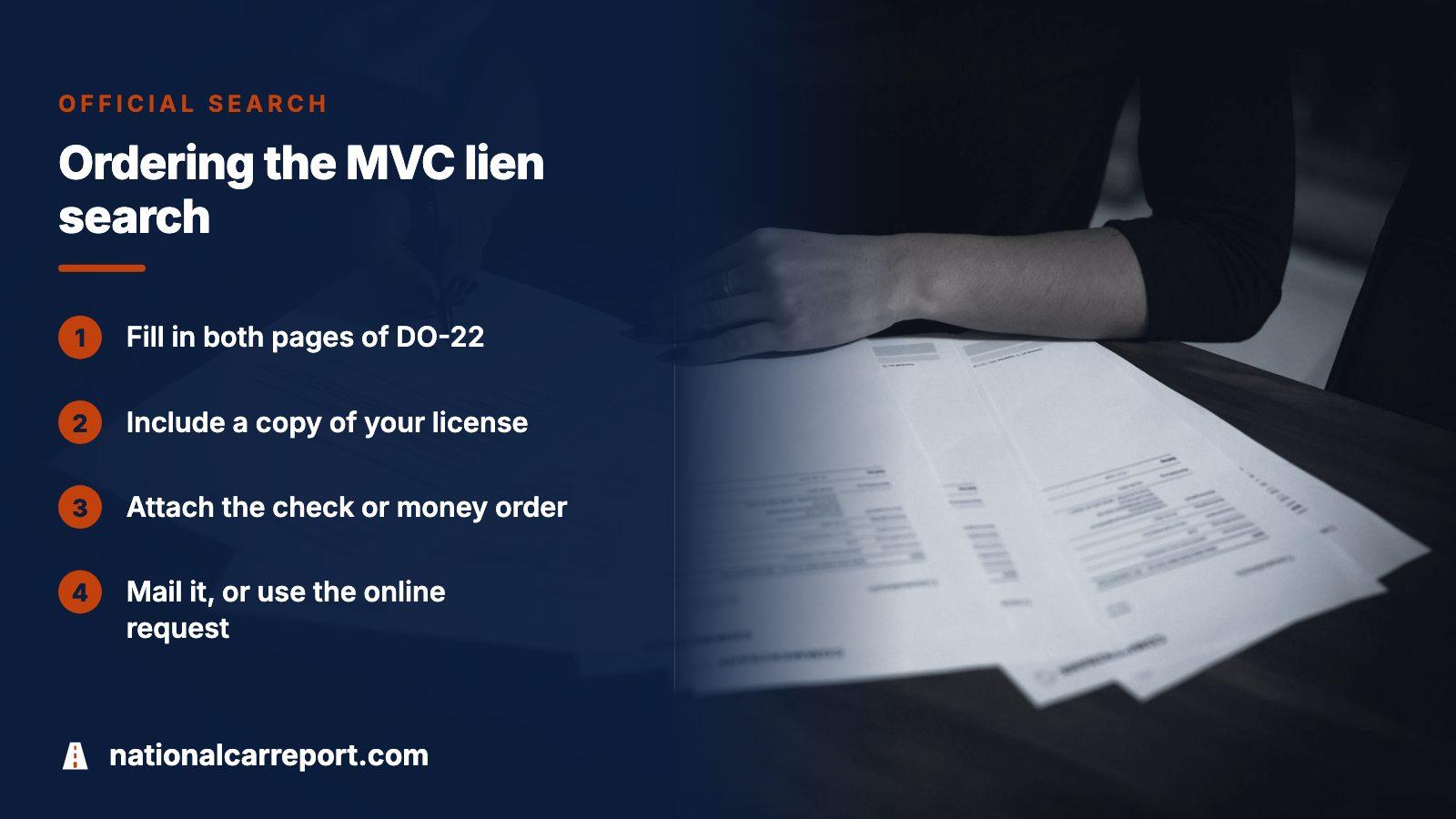
A database flag is a lead, and the state's search is the record. The MVC says it returns whoever is listed as lienholder and owner for the vehicle right now. Ask for it through the online request, or mail in form DO-22, titled as the Title/Lien Search application.
- Fill in both pages of DO-22, using a separate request for each vehicle.
- Copy your driver's license and include it.
- Attach $15 as a check or money order payable to the NJMVC.
- Send it to the Certified Information Unit in Trenton, or skip the stamp and use the online request.
Mail is slow when a seller is waiting. If the car is a private sale on a tight timeline, the online route is the likelier fit, and the MVC's Certified Information Unit takes questions by phone.
What a lien result means and what to do about it
| What you see | What it likely means | Your move |
|---|---|---|
| Lender named on the MVC search | A balance may remain on the car | Get a payoff figure and arrange the payoff with the seller present |
| Lien in our preview, nothing from the MVC | The two sources disagree | Do not rely on either; ask the seller to explain and ask the lender directly |
| Theft or impound flag | The car was reported stolen or towed at some point | Request proof it was recovered and any fees were settled |
| Nothing anywhere | No claim was found in the data searched | Still inspect the title for the seller's name and ask about any loan |
A blank result is encouraging but never final. The federal NMVTIS title record covers five indicators and liens are not one of them, which means that record staying quiet tells you nothing about a loan.
Paid off does not always mean cleared
Sellers often say the car is paid off, and often that is true. The catch is paperwork. The MVC's own duplicate-title page lists a missing lien release among the usual reasons an application is turned down: the car was financed, and nobody ever got the lien marked as satisfied in state records.
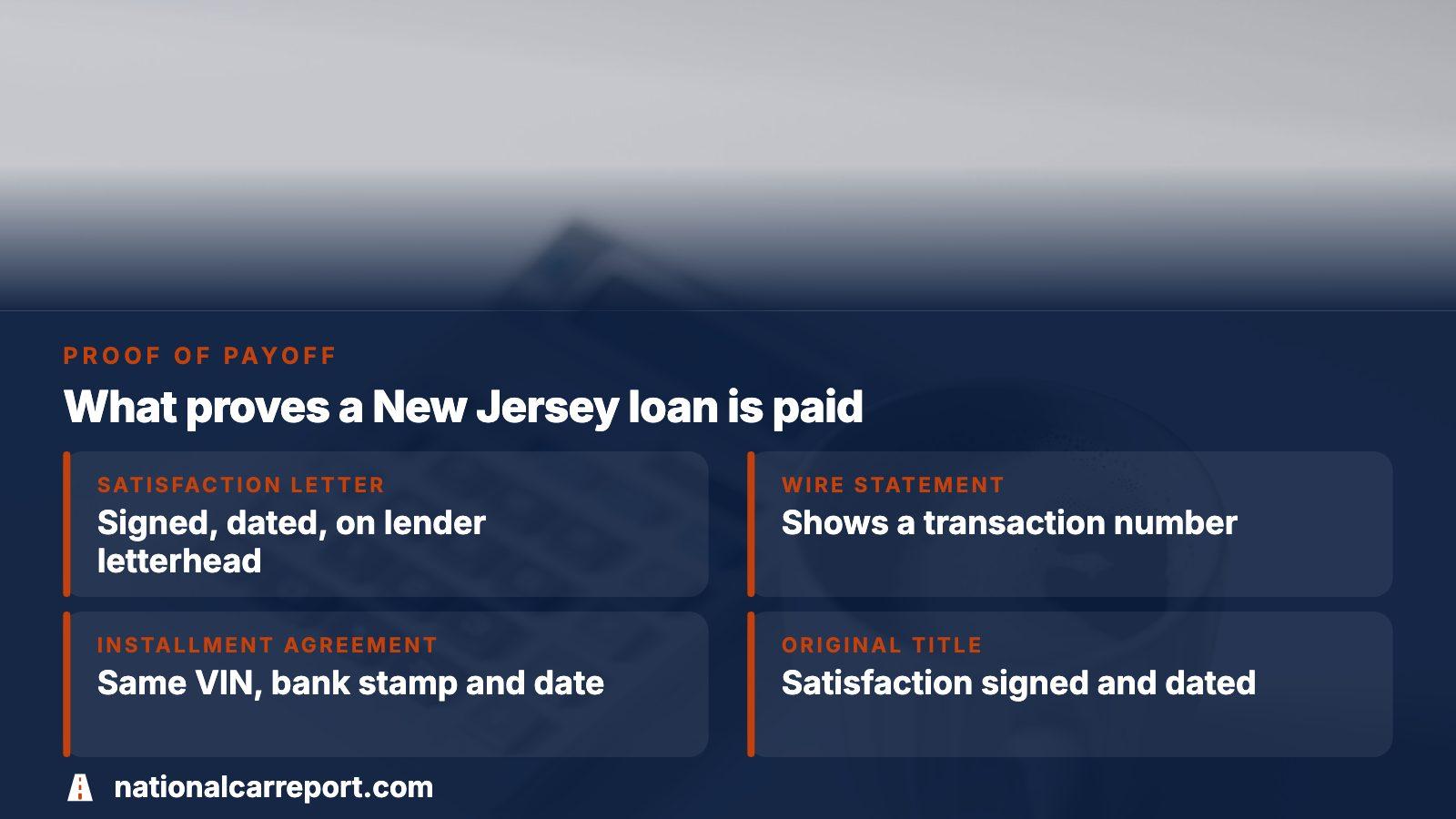
The MVC accepts several kinds of proof that a loan is finished.
- A dated, signed satisfaction letter on the lender's letterhead that names each owner and repeats the title's VIN, year and make
- A dealer wire transfer statement showing a transaction number
- The retail installment agreement, with the same VIN, bearing the bank's stamp and a date
- The original New Jersey title with the satisfaction signed and dated by an authorized lender representative
A lien letter from a private person who lent money, rather than from a financial institution, has to be notarized.
Closing out the lien after you buy
Once a lender has released its claim, the owner still has to ask the MVC to remove it from the records. Reissuing a lien-free title costs $60, either in person at an agency or through the mail. You bring the New Jersey title endorsed with the lien, or the title with the satisfaction letter attached, and the new one comes back without the lender noted.
Do it at the table, if you can
If the seller owes a lender, pay the lender directly or watch the payoff happen, and leave with the signed satisfaction in hand. Promises to send the paperwork later are the usual start of a title headache.
A duplicate title is a different route. When a lien exists, the duplicate is mailed to the lienholder, and a financed car needs a statement from the lender that it does not hold the original title.
When the lien question is tangled up with a salvage or theft history
Recovered stolen cars and total losses often carry a lender's name too. On a recovered-theft salvage request, the MVC's salvage page requires that any lien printed on the old title be satisfied first. The state's salvage regulations add that a lienholder of record remains listed on a salvage title until the debt is discharged.
In practice, a branded New Jersey car with a lender's name on the paperwork needs two answers: what happened to it, and whether the lender was paid. Our preview flags the theft and impound side; the title and the MVC search answer the lender side.
Run the check, then verify on paper
Copy the VIN off the vehicle, then make sure the title and the listing match it. Run it through the preview and jot down anything about liens, thefts or impounds. If something appears, or the seller is vague about a loan, order the MVC lien search, and do not pay until a lender's release is in your hands.
Once the preview looks clean and you are still interested, the full report adds records the preview skips. It does not stand in for the title, the MVC search or a mechanic, and the pricing page has the options.
Where this information comes from
- NJ MVC: Liens — Lien search, form DO-22, fees, proof of payoff and lien-free title reissue.
- NJ MVC: Duplicate title — How a duplicate is handled when the car is financed, and why releases get rejected.
- NJ MVC: Salvage and rebuilt vehicles — The lien rule for recovered-theft salvage titles.
- N.J.A.C. 13:21-22: salvage certificates of title — Lienholder of record stays on a salvage title until discharged.
- NMVTIS: understanding a vehicle history report — Shows the five items in the federal title record, with no liens among them.
Sources and photos: Facts checked against the sources above in November 2026. Photos by Michal Biernat, Dimitri Karastelev and Ben Wicks on Unsplash; diagrams by NationalCarReport.
Keep reading
- Vehicle Lien Check by VIN: Nationwide Lien, Theft and Impound RecordsThe same check for a car from any state.
- Car Lien Release Letter: What It Is and How to Get OneWhat a lender's release should say before you rely on it.
- How to Remove a Lien From a Car Title After PayoffThe steps after a loan is paid and the lien still shows.
- Car Lien Holder Search: How to Find the Lender Behind a VINFinding out which lender holds the claim.
Frequently asked questions
How do I do a lien search on a car in New Jersey?
Start with the VIN in our preview to see lien, theft and impound flags. For the official answer, request the MVC's title and lien search, online or by mail on form DO-22 with a copy of your license and a $15 payment. It returns the current lienholder and owner in the MVC database.
Can the seller prove there is no lien?
The strongest evidence is a New Jersey title naming no lender, or one carrying a lien satisfaction that is signed and dated. Otherwise, ask for the lender's satisfaction letter on its letterhead. Verbal assurances are not proof, especially when a payoff is described as already done.
Does a paid-off loan remove the lien automatically?
Not according to the MVC. Its records keep showing the lien until the owner applies for removal or a new title, with proof the loan is paid. That is why a lien shows up on cars whose owners believe the debt is long gone.
What does it cost to get a lien taken off a title?
The MVC lists $60 for reissuing a lien-free title, by mail or at an agency. If you need a certified title search as proof of ownership, that is $15 by mail. Fees change, so confirm the current amounts on the MVC page before sending money.
Will a vehicle history report show a lien?
Sometimes, if a lender's claim made it into one of the databases we search; that is what the preview flags. Liens are not part of the federal NMVTIS title record, so a clean report cannot prove there is none. Confirm with the MVC lien search and the title itself.
Now check the car itself
The guide explains what to look for. The report shows what this VIN has on record.