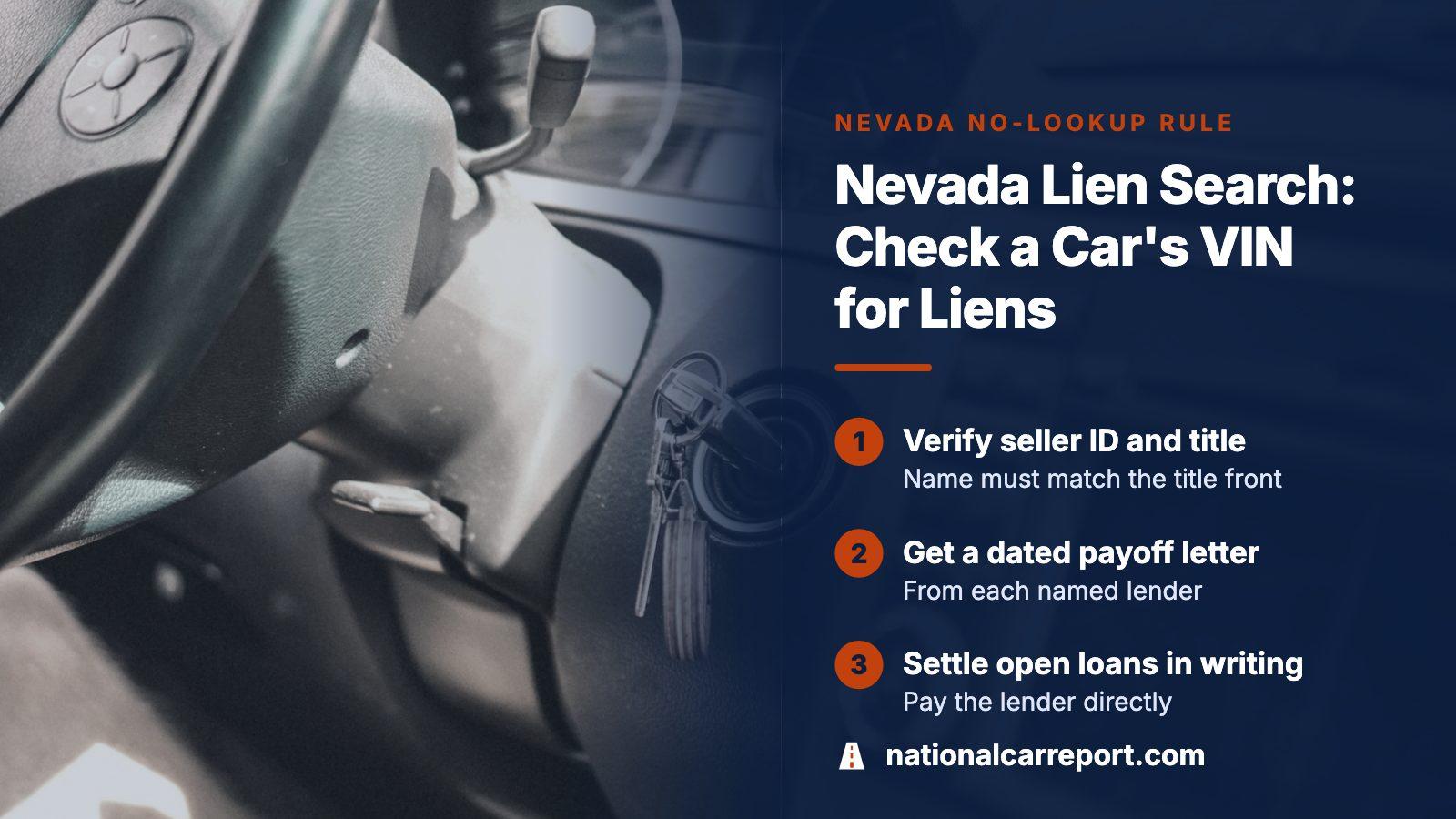
THE SHORT ANSWER
For a Nevada car lien check, pull the VIN from the car and run it through the free preview, jotting down any lender, theft or tow-lot entry. Next, request the paper title from the seller along with a signed payoff or release from each lender. Nevada has no public lien lookup for buyers, so a blank result means verify the paperwork, not skip it.
- State lien lookup for buyers
- None; the DMV releases no vehicle records to them
- Electronic lien system
- Required for most lenders on loans after July 1, 2017
- Old paper liens
- Can stay on DMV records after payoff
- Seller title
- Never buy from a private seller without one
What a VIN search can show about a Nevada car's debt
Three kinds of record settle whether a seller can truly hand a car over, and NationalCarReport is built around them: lender claims, stolen-vehicle entries and impound custody. Those follow the vehicle across state lines, so a truck financed in Reno and offered in Henderson, or one that arrived from California, can carry a loan nobody mentions.
Run the preview first and read three lines. Is a lender named? Is a theft report open with no recovery? Has a tow yard ever held the car? Each answer changes the questions you put to the seller. No account or payment is involved at this stage, so do it before making the trip to see the car.
Why you cannot ask the Nevada DMV for a lien search
The state's records page is blunt about it: someone shopping for a car gets no vehicle records from the DMV. Details on abandoned or crash-involved vehicles are reserved for approved requesters, among them insurance companies, towing operations and lawyers. Anything with personal details needs identification and an electronic notary, so you cannot phone in a plate and get a lender's name.
What the DMV does is point shoppers to outside tools: the stolen and salvage lookup from NICB, the NHTSA decoder that tells you whether a VIN is even valid, and NMVTIS title data. The DMV's own buyer checklist includes a line about liens, which leaves the proof to you and the seller.
Electronic liens, paper liens and the gap between them
Nevada runs two kinds of lien record, and which one applies depends on when the loan began. Lenders mostly have to put loans opened after July 1, 2017 into the state's Electronic Lien Title program. The lender holds the title digitally. At payoff it notifies the DMV, and a clear paper title is printed and sent to whatever mailing address the lender keeps for the borrower.
Older loans can sit on paper. Once the debt is cleared, the lender signs off in the release box and hands the original title to the owner, yet nobody informs the DMV of that payoff. Unless the owner files the signed title, the lender stays on state records as an active lienholder. A seller who swears the loan is finished may be honest and still be wrong on paper.
| Loan type | How payoff is recorded | What to ask for |
|---|---|---|
| Electronic lien (most loans after July 1, 2017) | Lender releases electronically; DMV mails a clear title | A title with no lienholder, in the seller's name |
| Paper lien (before July 1, 2017) | Lender signs the title; DMV may not be told | The signed release section, plus proof the seller filed it |
| Private seller's own financing | Paper title only; the electronic system is closed to private lienholders | The paper title and a signed release |
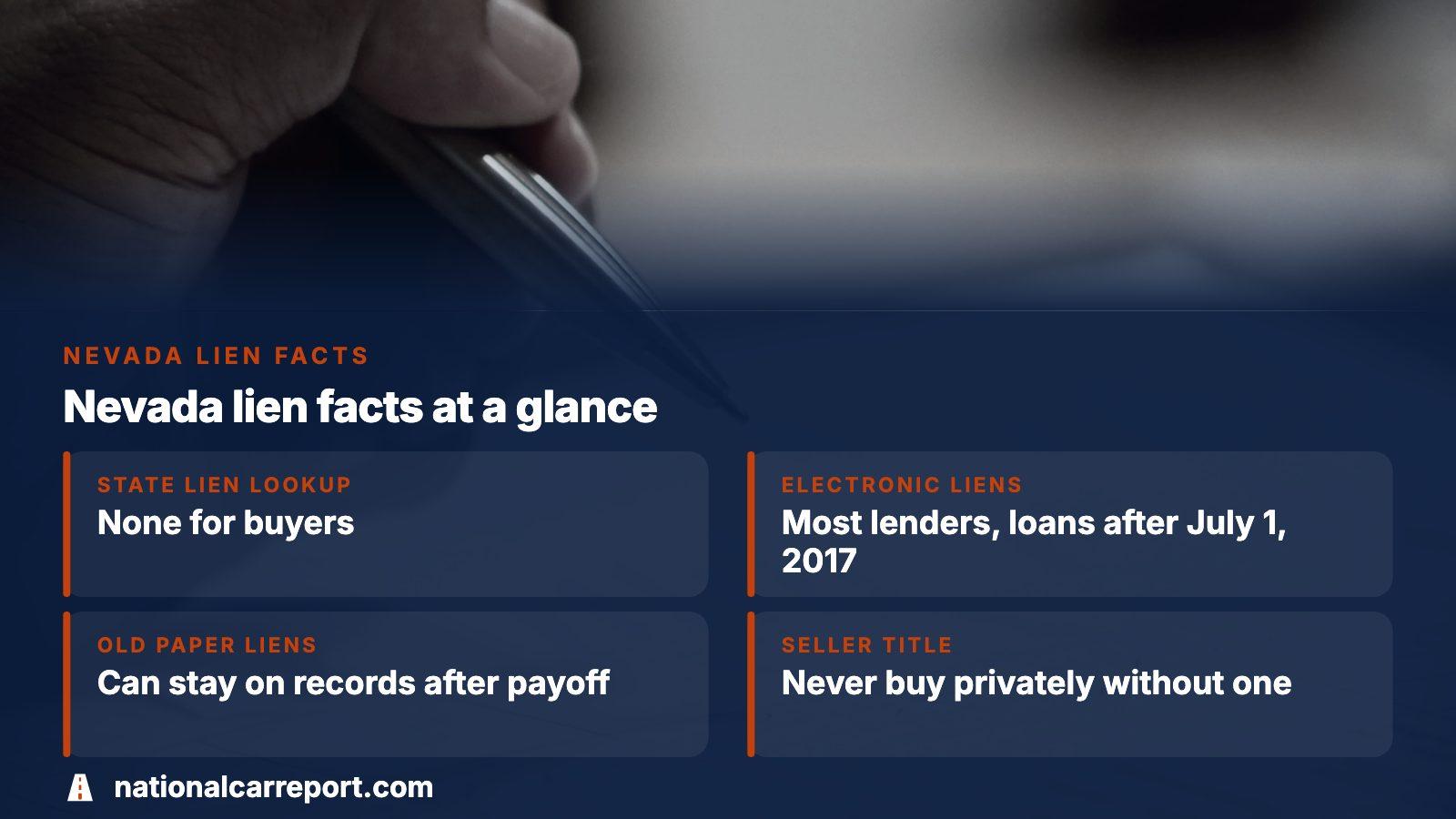
Running the check before you hand over money
- Copy the VIN from the vehicle in person and check it against the number shown on the seller's title. Any difference ends the conversation.
- Type the VIN into the preview and record whichever lender, theft or impound lines appear.
- Photograph the seller's ID and confirm the name matches the front of the title, as the DMV advises.
- Have the seller name each lender, then get a payoff amount from that lender on paper, showing the date it stops being valid.
- Agree in writing how any open loan gets settled, ideally with the payment going straight to the lender.
Nothing here needs a login or an appointment, and every step except the last can be done from a parking lot with a phone.
Reading what comes back and what it means for the deal
| Result | Possible meaning | Next move |
|---|---|---|
| Lender named | A loan may still be open | Obtain a written payoff and settle with the lender directly |
| Theft entry, no recovery | The car may not belong to the seller | Walk away and tell local police |
| Tow or impound line | Storage or tow charges may have been owed | Ask for the release paperwork |
| Nothing found | No match in the sources checked | Still read the title and demand a signed release |
The U.S. Department of Justice cautions that national title data has gaps because not every entity reports, so a clean search result is not always the full story. Treat it as one input beside the paper title, never a substitute for it.
The paperwork that actually clears a lien in Nevada
Under Nevada's rules a lien must be satisfied before ownership can change hands. When a lender holds the title but has nothing to give you, it can complete a notarized Lien Release, form VP 186, which the owner sends in alongside a duplicate-title application on form VP 012. Paper releases cannot clear an electronic lien; those must come from the lender electronically.
Taking over the seller's payments is illegal
If a lender is still owed, the DMV says the lender must approve the change of owner, and it may ask for a refinance. Offers to simply keep paying the seller's loan are illegal in Nevada.
Never accept a bill of sale in place of a title. The DMV tells buyers to refuse any deal without the physical title in the seller's own name.
Garage, tow and storage claims behave differently
Not every lien is a bank loan. Nevada lets only licensed garages with a signed work order, plus tow and storage businesses holding a property release, sell a vehicle through a lien sale, and the owner must be notified and a public auction held. Landowners and property managers cannot do it themselves.
Should a seller claim the car was bought at a tow auction, ask to see the paperwork behind that sale. The state's governing rules sit in Chapter 108 of the Nevada Revised Statutes and the matching administrative code. The impound entries in a VIN report are the quickest way to learn whether a tow yard has ever handled the car.
Nevada report pricing and what comes after
The preview is free. Should the preview flag anything, the full report covers the VIN you typed in for a single payment, with no subscription attached, and today's prices are on our pricing page. Buy it when a lender line, a theft entry or a tow record needs detail, and use it alongside the seller's paperwork.
If the title itself looks odd, or the seller cannot produce a payoff letter, the safest result of the whole exercise is a polite exit.
Where this information comes from
- Nevada DMV: Loan payoffs and lease buyouts — paper versus electronic payoff, lien release form, garage and tow lien sales
- Nevada DMV: Electronic lien and title — how electronic releases work and why private lienholders use paper
- Nevada DMV: Vehicle title and ownership — buyer checklist, duplicate title rules, transfers with a lien
- Nevada DMV: Records — no vehicle records for prospective buyers
- U.S. Department of Justice: NMVTIS for consumers — coverage and limits of national title data
Sources and photos: Facts checked against the sources above in November 2026. Photos by tim, Cole Keister and Masjid MABA on Unsplash; diagrams by NationalCarReport.
Keep reading
- Nevada Title Check: What the DMV Won't Release and What to Run InsteadBrand rules and title reading for Nevada cars.
- Car Lien Release Letter: What It Is and How to Get OneWhat a valid release from a lender looks like.
- Car Lien Holder Search: How to Find the Lender Behind a VINHow to find which lender holds a claim.
- Las Vegas Impound Search: Find a Towed Car, Then Check Its VINCheck whether the car has sat in a Las Vegas tow lot.
Frequently asked questions
Does Nevada have an official lien search?
Not for buyers. The DMV releases no vehicle records to someone who is only shopping. A lender can see its own electronic liens, and the title in hand shows what was recorded. For everyone else, the practical route is a VIN screen plus the seller's signed release.
Can a car still have a lien after the loan is paid?
Yes. On older paper loans the lender signs the title but does not tell the DMV, so the lienholder can remain on state records until the owner files the signed title. Ask to see the release section signed, and ask whether the owner already filed it.
The seller says the title is held by the lender. Now what?
Assume the loan is open. A lender keeps a title for a reason, and the DMV says the lender must approve any change of owner. Arrange payoff directly with the lender and receive the clear title from it, not a promise from the seller.
Is a clean VIN result enough to buy?
No. National title data can miss records because not every reporter participates, and a VIN screen cannot read the paper in the seller's hand. Combine the result with a title naming the seller, matching ID and a signed lender release.
Is it legal to buy a car with a lien on it?
Only with the lender's involvement. Nevada requires a lien to be satisfied before ownership transfers, and take-over payments are illegal. The clean route is paying the lender its written payoff, then getting the released title or a lender letter that carries the VIN.
Now check the car itself
The guide explains what to look for. The report shows what this VIN has on record.