THE SHORT ANSWER
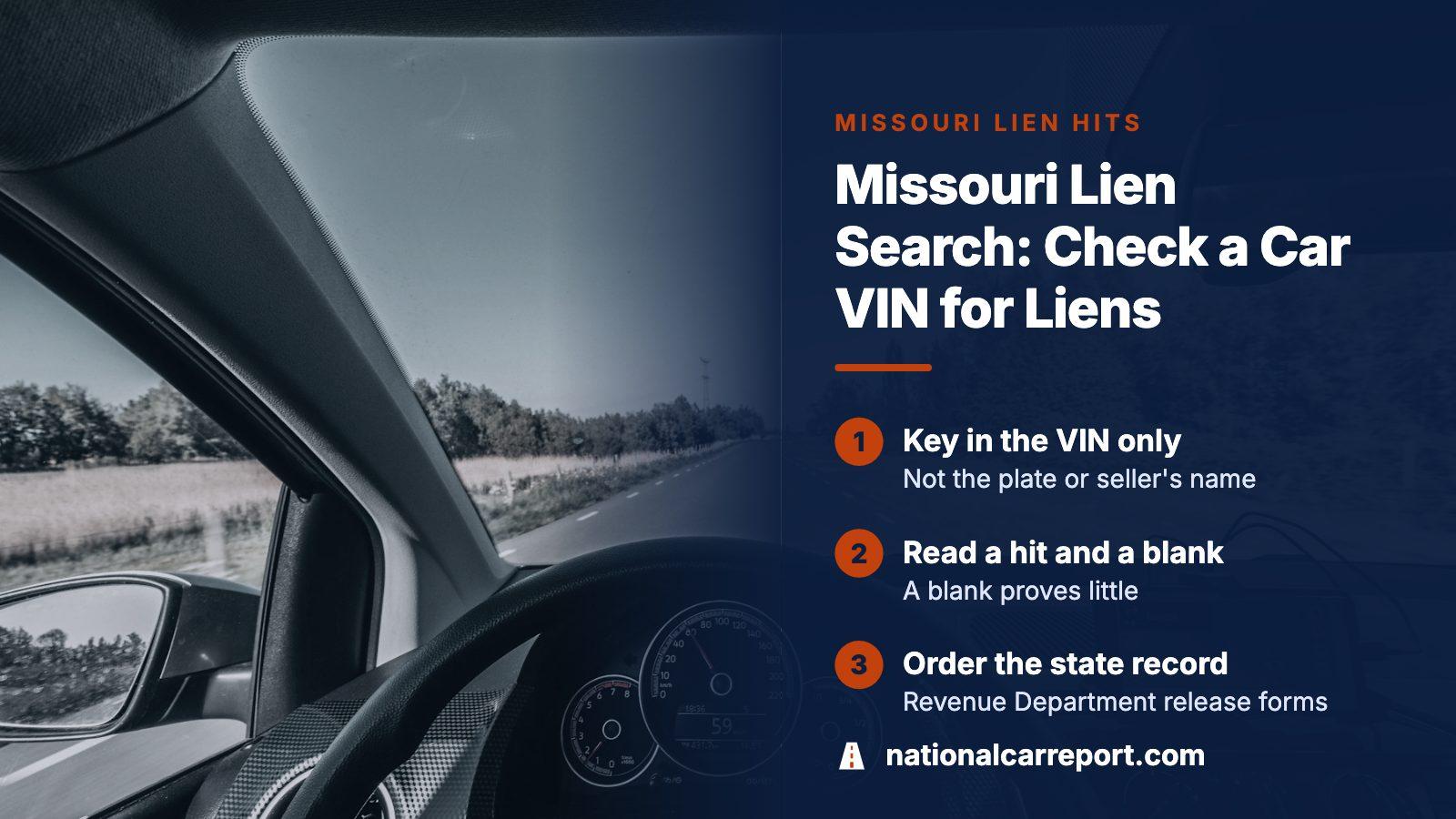
For a Missouri car lien check, key the VIN into the preview and read whatever lender, impound or theft flag comes back. A named lender suggests an unpaid loan. An empty result proves little, since national databases have holes, so get a payoff letter from the lender and, where needed, order the state's record from the Department of Revenue.
- Search key
- The VIN, not the plate or the seller's name
- Federal title data
- Shows brands and odometer, but not liens
- State record
- Missouri release form 5499 for owners, 5091 or 4803 for others
- Preview
- Free to run; the full report is one payment
What a Missouri VIN search turns up before you pay
Most Missouri buyers think of a lien as a bank's name on a title. In practice a car can be tied up three ways: a lender that financed it, a tow yard that stored it, and a police report if it was ever taken. Each of those claims follows the VIN, which is why the search keys on that number.
- Lender claims, where a source the search reads recorded one
- Impound and tow entries, including whether a yard sold the car for its charges
- Theft reports and what happened after
- Title brands such as salvage, which change the car's value even with no loan
The preview tells you whether any of this exists. When something does, the full report lays it out. Amounts are listed on the pricing page, not here.
Running the check with the car in front of you
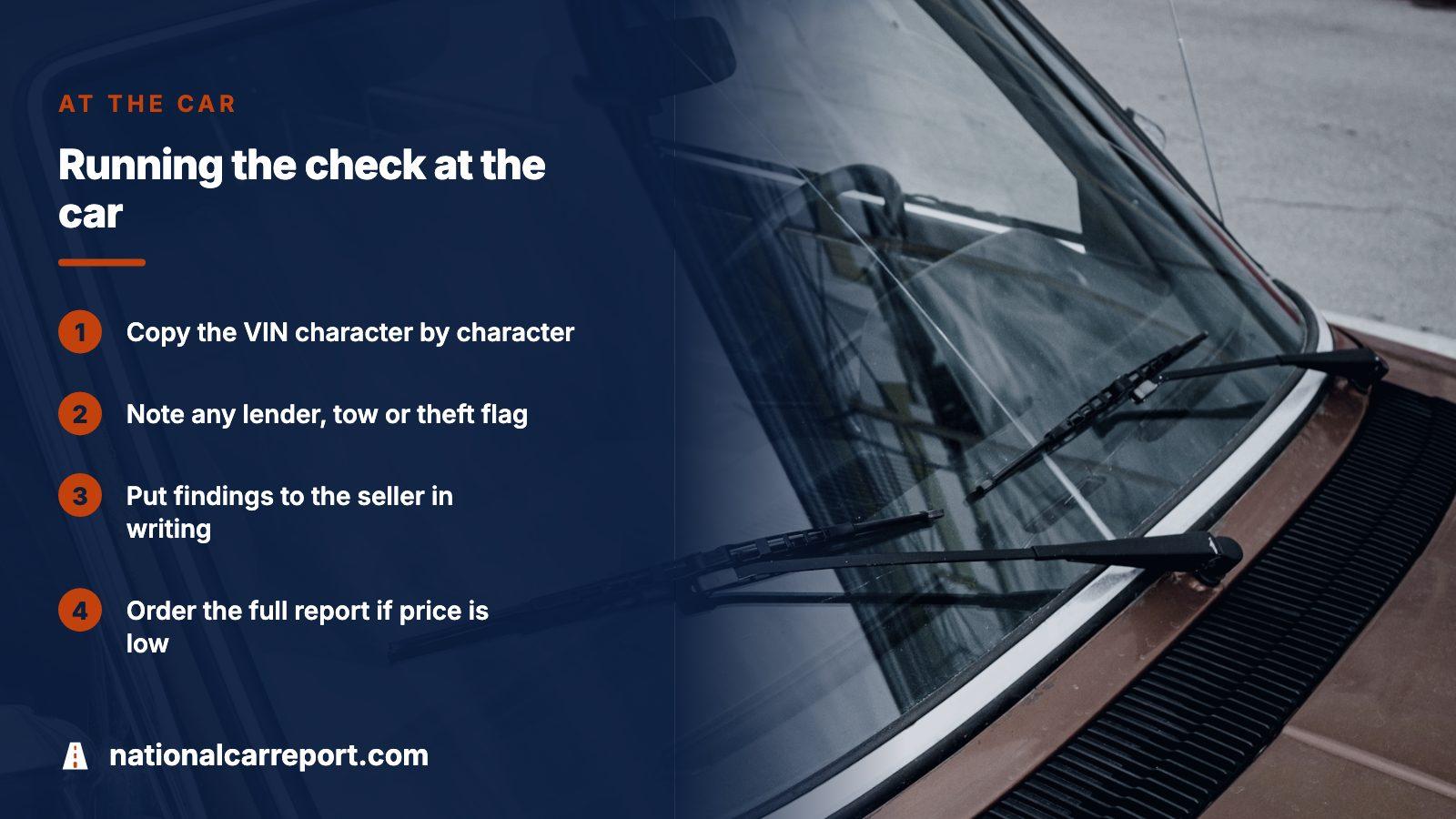
Do this before a deposit, not after. Read the number off the dashboard plate and hold it up against the paperwork. If they differ, the deal is over, and no lien question matters after that. Those three letters are never printed in a VIN, so a typo built on one of them gives itself away.
- Copy the VIN character by character into the preview box.
- Note any lender, tow yard or theft flag in the results.
- Put what you found to the seller in writing and keep the reply.
- If the preview is clean but the price looks too low, order the full report anyway.
Plates do not work as a search key here
Missouri plates stay with the seller, and personal records tied to a plate are protected by federal privacy law. The VIN is the number that stays with the car.
Reading a hit, and reading a blank
A named lender is only a lead. The loan could be nearly finished, paid off but not yet released, or fully owed, and only that lender knows which. A blank result feels reassuring but proves less. Either way, your next move is a direct question to the seller.
| What you see | What it usually means | What to do |
|---|---|---|
| A lender named | A loan may still be open | Ask for a payoff letter from that lender, dated recently |
| A tow or impound record | A yard once held the car | Ask how it left and what was paid |
| A theft flag | Reported stolen at some point | Pause until the outcome is documented |
| Nothing at all | No source reached by the search had a record | Confirm with the seller and the state record |
Where the federal title system stops short
The Justice Department operates the national title system. It does well on title brands, odometer history, insurer total-loss rulings and cars handed to salvage yards. Liens are absent from the list of things its consumer page says a search returns. The page also puts system coverage near 87 percent of vehicles, with just over half of the states sending data, which means a no-record answer can be wrong.
That is the reason a lien check should not rest on one database. The Justice Department itself encourages buyers to look at the real state title record, since the national file holds only part of it. Each consumer report points to instructions for requesting one.
Getting Missouri's own record of the car
The Department of Revenue sells title and registration records, and the Justice Department's state-by-state list describes how. An owner of record fills out request form 5499 and takes it to a state-licensed motor vehicle office, or mails or e-mails it to the department's record center. The owner receives paperwork that includes lien information where it exists.
A buyer is rarely the owner of record yet. Someone else files a request and pays a fee per record, using form 5091 when personal information is wanted and form 4803 when it is not. The list gives no dollar amount, so read the fee on the form. Requests are screened against uses that federal and state law allow, and the reply is either the record or a written reason it cannot be released.
A record is not a title
Missouri says this paperwork cannot stand in for the title when ownership changes hands. A duplicate title is a separate request.
Title loans and other quiet claims
Some Missouri owners borrow against the car itself. The Attorney General's consumer guide explains that a title loan rests on the equity in the vehicle, and a borrower who cannot repay, even a small loan, loses the car. A seller in that position may be tempted to sell fast, which is exactly when a lien surprise lands on a buyer.
If the seller is vague about where the title is, or cannot say who financed the car, assume the question is open. Ask for the lender's name, call the lender yourself, and get the payoff figure from them, not from the seller's phone.
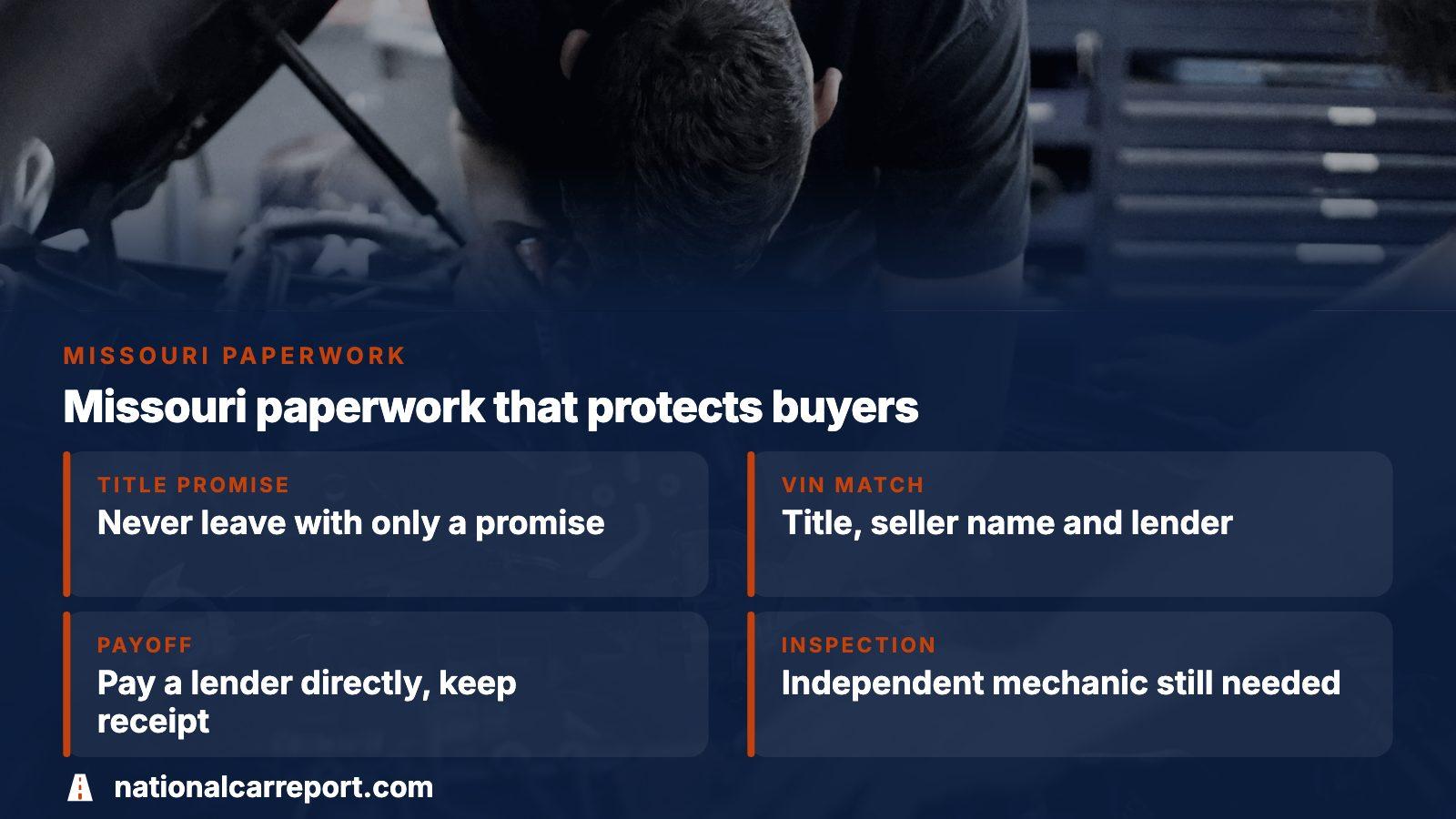
Missouri paperwork habits that protect a buyer
The state Attorney General's guide makes a few points that apply here. Per the Attorney General's student guide, Missouri treats most car sales as void if ownership is not papered on the day of sale, and a buyer has no statutory right to hand the car back for money. Dealers post a window guide, and most cars carry its as-is box.
- Never leave with only a promise that the title is on its way.
- Match the title's VIN, the seller's name and any lender listed.
- Pay a lender directly if a payoff is part of the deal, and keep the receipt.
- Have an independent mechanic look at the car; a clean record does not replace that.
I could not open the Department of Revenue's own pages or the statute text when writing this, so for release timing, fees and electronic-lien details, confirm the current rule with the department before relying on a date.
What the report costs and what to do next
Begin with the preview. If it turns up a lender, a yard or a theft report, or finds nothing on a vehicle you are nearly ready to buy, order the full report. Each report is paid for once and does not renew, and bundles for people comparing several cars are on the pricing page.
Then take the results to the seller. Ask for a payoff letter, a copy of the title and a release if the loan is paid. If anything stays unexplained, the Attorney General's Consumer Protection office takes complaints about used-car deals.
Where this information comes from
- DOJ NMVTIS for consumers — what the federal title system shows, its coverage and its false-negative gaps
- DOJ list of state vehicle record requests (October 2024) — the Missouri entry on record request forms and who may file
- DOJ approved NMVTIS data providers — reports come from approved private providers, not the Justice Department
- Missouri Attorney General: flood cars consumer alert — why a clean title and lagging databases still call for an inspection
- Missouri Attorney General: Student Consumer Guide — title loans, void sales without a title transfer, as-is sales
Sources and photos: Facts checked against the sources above in November 2026. Photos by Sander Jeurissen, Max Tokarev and Mustafa Sheikhmouss on Unsplash; diagrams by NationalCarReport.
Keep reading
- Vehicle Lien Check by VIN: Nationwide Lien, Theft and Impound RecordsThe same check for a car titled in any state.
- Car Lien Holder Search: How to Find the Lender Behind a VINWork out who holds the loan on a car.
- DMV Lien Release Search: How to Confirm a Lien Is GoneConfirm a lender actually released its claim.
- Title Loan Lien Check: Is a Title Loan Hiding on This Car?See how a title loan shows up against a car.
Frequently asked questions
How do I do a Missouri lien search on a car?
Put the car's VIN in the preview and watch for lender, impound and theft flags. Should a lender show, get a payoff letter and the title from the seller. For the state's own record, the Department of Revenue takes request forms, with a different form for owners than for other people.
Does the federal title system list Missouri liens?
Its consumer page lists title brands, odometer readings, insurer total-loss decisions and salvage-yard transfers, not liens. Reporting also has gaps, so an empty answer can be wrong. That is why a state record and a lender's payoff letter matter alongside any national check.
Can I look up a Missouri lien by license plate or owner name?
Not through this check. The search runs on the VIN. Records tied to a person are released by the state only for uses that federal and state law permit, and the state reviews each request before answering, so a plate is not a shortcut to a seller's loan.
Why would a seller not have the title in hand?
Some reasons are innocent: a lender holding it until the loan clears, or a lost copy. Others are not. The Attorney General's guide warns that a sale without a same-day transfer of the title is usually void, so hold your cash until the document is in your hands.
Is the Missouri lien check really free?
Only the preview carries no charge; it shows whether lender, impound or theft records exist. The report behind it is bought separately, once, and does not renew. Raise anything the preview flags with the seller before you commit.
Now check the car itself
The guide explains what to look for. The report shows what this VIN has on record.