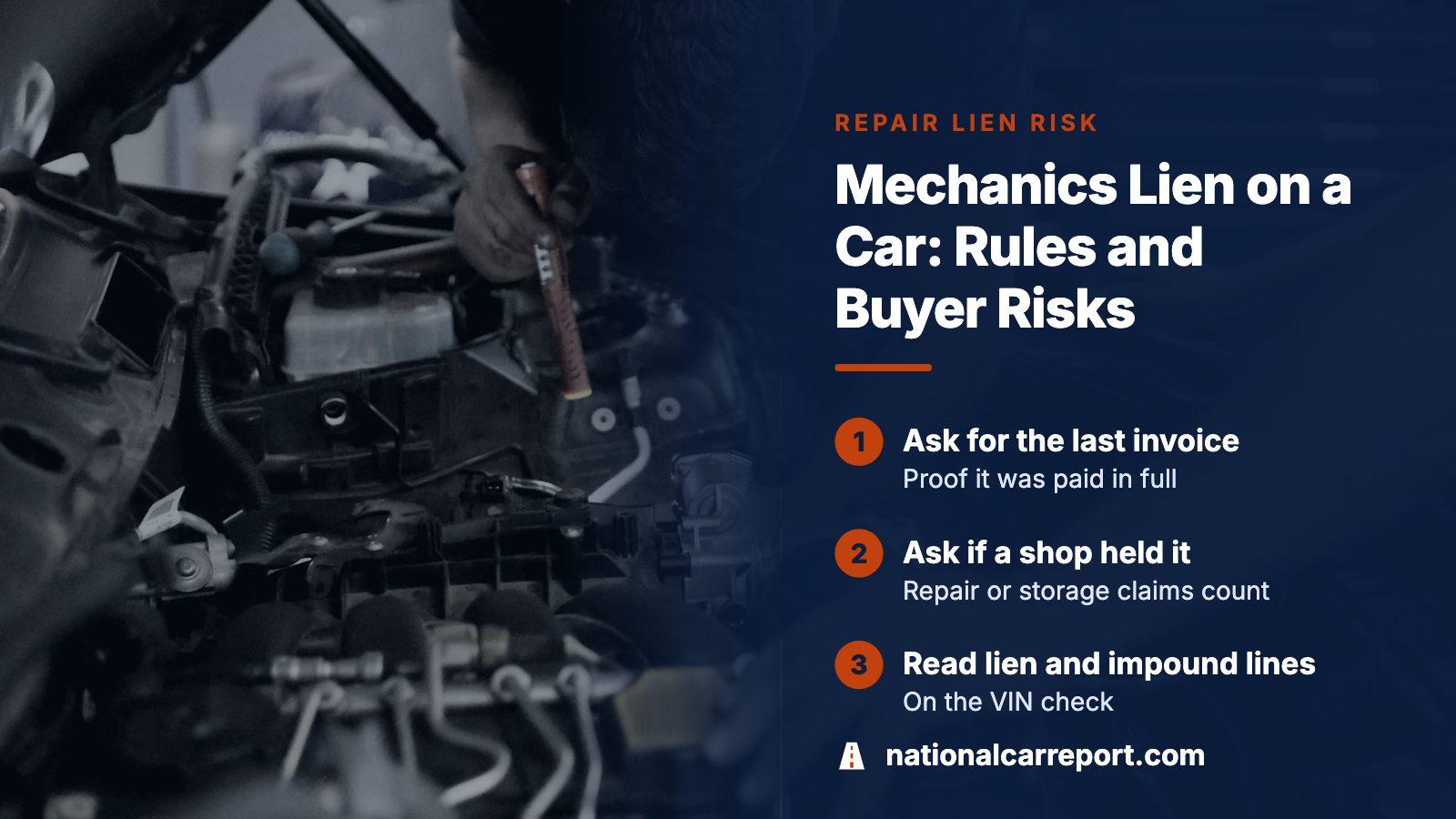
THE SHORT ANSWER
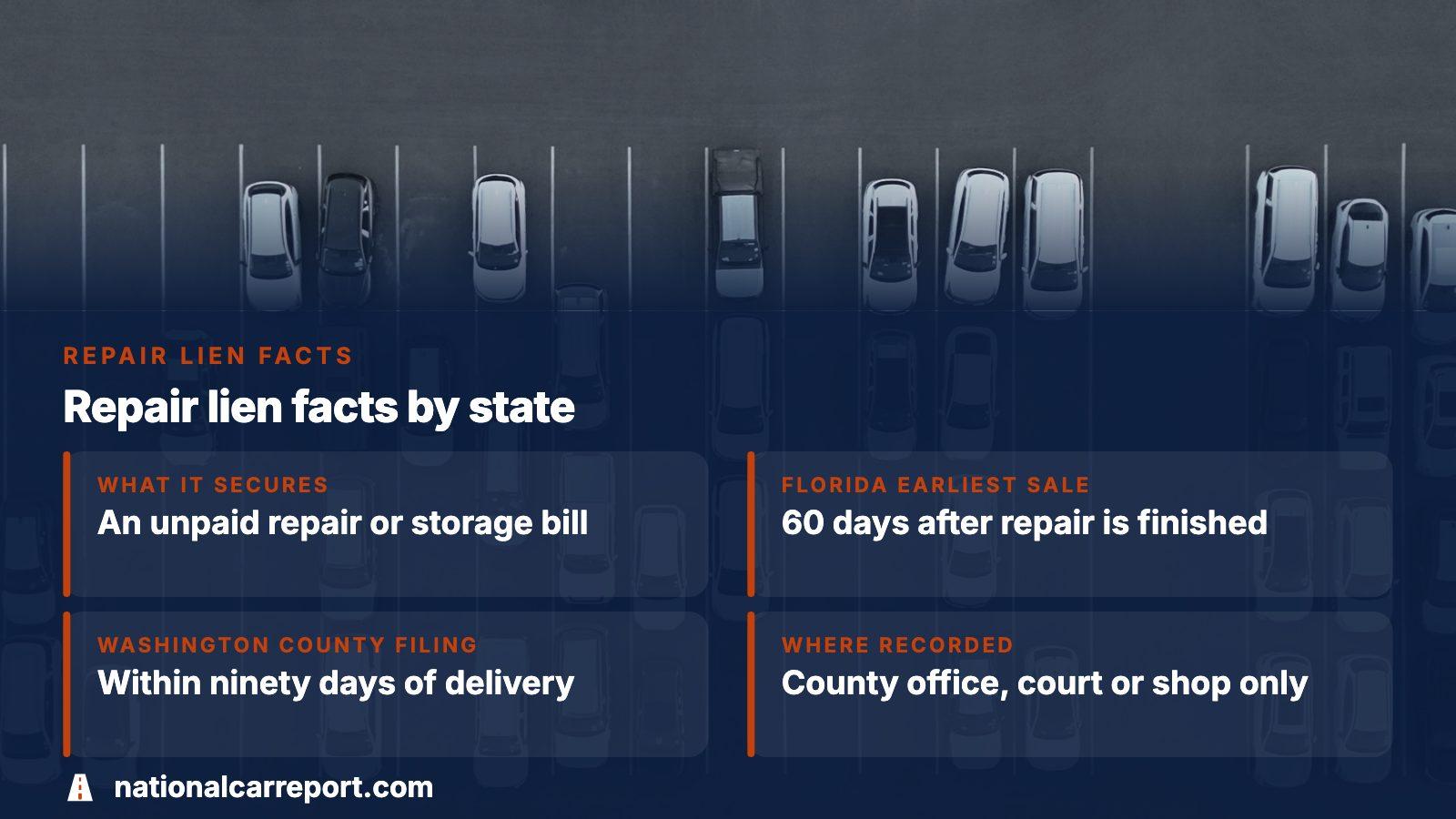
A mechanic's lien secures an unpaid repair or storage bill. The shop can usually keep the car until it is paid, and in some states it can sell the car after set notices. Where the claim is recorded varies: a county office, a court, or only the shop's possession. Before buying, ask for proof the last repair was paid, run a VIN check, and ask the seller if a shop ever held the car.
- What it secures
- An unpaid repair or storage bill
- Florida earliest sale
- 60 days after the repair is finished
- Washington county filing
- Within ninety days of delivery
- Virginia financed-car cap
- $1,000
A repair bill that can hold your car hostage
A mechanic's lien is the legal claim a shop gets on a vehicle it worked on. The claim secures the repair bill, and in most states it lets the shop keep the car until someone pays. Owners often meet it at the counter, with the invoice disputed and the keys behind the desk.
It is a different animal from the lien a bank puts on a title when it finances a car. The lender's entry sits on the state title record. A shop's claim comes from a repair statute, and depending on the state it may live in possession of the car, in a county filing, or in a court case, rather than on the title at all. That gap is the reason buyers get caught.
Who runs into this problem
Three people feel it most: an owner disputing a bill, a seller whose car sat in a shop while storage charges grew, and a buyer who learns later that the last shop to touch the car still claims money.
- Owners: the shop can usually hold the car until the charge is settled or a bond is posted.
- Sellers: unpaid repair or storage charges can end in a forced sale of the car.
- Buyers: in some states a recorded claim can follow a car that already changed hands.
How three states handle it
The statutes differ in wording, so read your own state's text. Three we opened show the range.
| State | What the statute gives the shop | Where it is worth looking |
|---|---|---|
| Florida | A lien for labor or services on personal property, enforced on a car through a set sale procedure | Circuit court clerk's office, after notice by certified mail |
| Virginia | A lien for just and reasonable repair charges, with possession kept until paid; capped at $1,000 where the car is financed and the customer held it under a lender's security | County or municipal court if the owner wants the car back on a bond |
| Washington | A lien that can survive delivery of the car back to the owner, once a notice is filed within ninety days | County auditor in the county where the car is kept |
None of the three points to the title as the first place to look.
Florida's sale rules in plain terms
Florida is strict about how a shop turns an unpaid bill into a sale. Within 7 business days after storage begins to accrue, the shop mails a certified letter to the registered owner, to whoever signed the work order, and to any other party claiming a stake. The VIN's final 8 digits go on the envelope. Inside, the shop itemizes labor, fees and daily storage and names the amount that buys the car back.
Two timing limits protect the owner. The notice cannot go out less than 30 days before a sale, and 60 days must pass after the repair is finished before any sale. When the first letter named no sale date, a second certified notice must go out at least 15 days ahead, and the shop also runs it once in a county newspaper.
What an owner can do in Florida
Before the sale date, the owner or anyone holding an interest can demand a hearing with the circuit court clerk or post a bond to recover the car. Money left after the shop's claim goes to the clerk and is paid out only on a court order.
What this means if you are buying the car
A seller who still owes a shop is a risk you cannot see from the driver's seat. The car may drive well and the title may look clean while the claim sits in a courthouse. Washington's statute spells out the tension. A person who paid fair value in good faith, with no actual knowledge of the lien, is not bound by it if the purchase predates the filing.
So timing decides who loses. If the filing came first, you could be arguing about someone else's repair bill. If your purchase came first and you had no reason to know, the statute leans your way. You still do not want to be the person finding out which side of that line you are on.
- Ask the seller for the last repair invoice and proof it was paid in full.
- Ask whether any shop is holding or has held the car, or has stored it.
- Run a VIN check before money moves, and read any lien, impound or theft line it returns.
- Where the state has a county or court filing for repair liens, ask that office about the car.
If you are the one who owes the shop
Some owners try to end a dispute by driving off without paying. Florida's statute treats that as a crime when done knowingly and with intent to defraud: the person removing the property commits a misdemeanor, punishable by a fine of no more than $500, or a county jail term of three months at most. Stopping payment on a check handed over for the debt counts as prima facie evidence of the intent.
The same statute says the shop's possessory right and lien are lost once the property is removed, which is why shops guard keys so closely. If you disagree with a bill, the lawful routes are paying under protest, posting a bond where the state allows it, or asking a court to decide. Taking the car back quietly is not one of them.
Clearing a repair lien before a sale
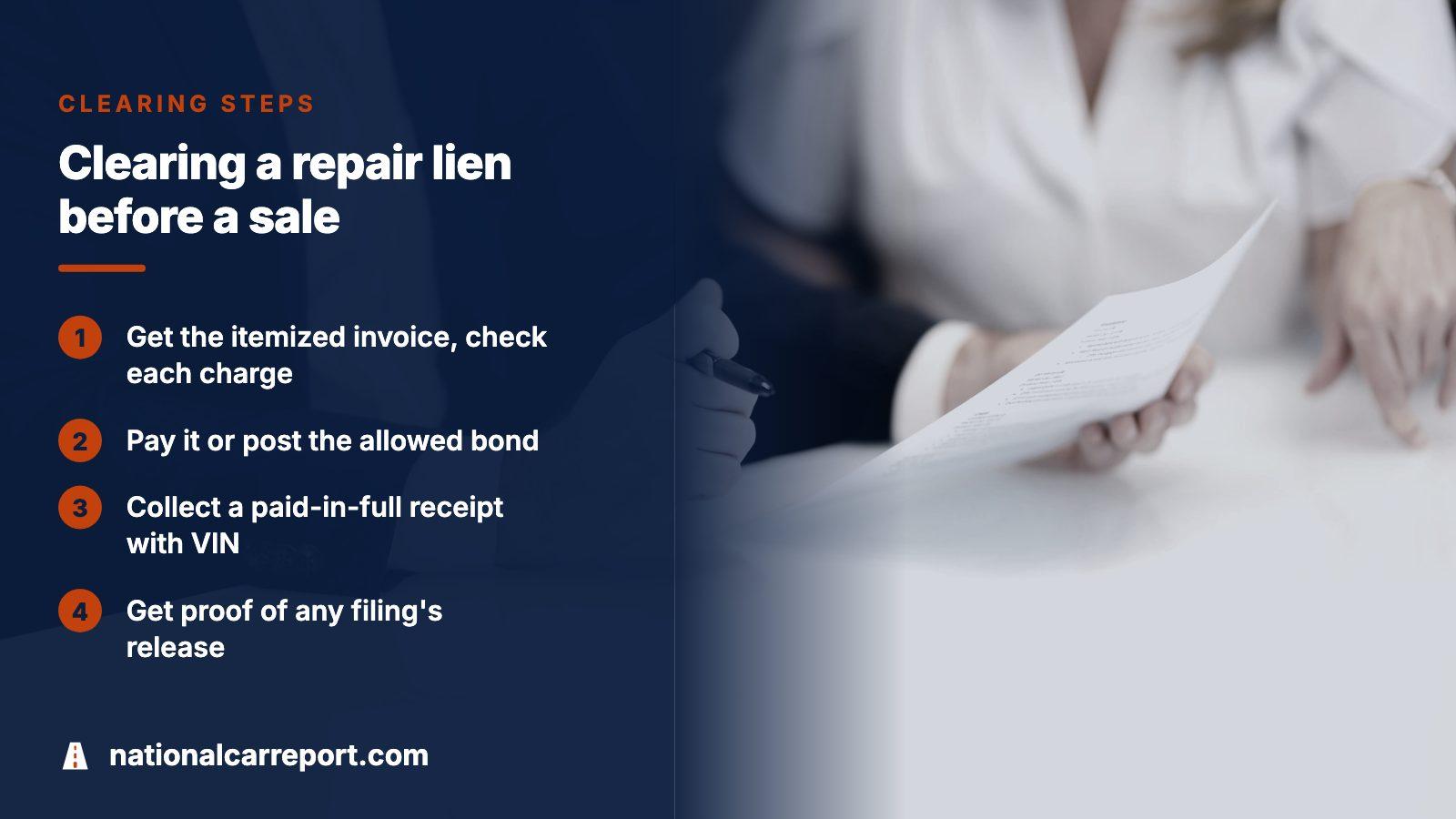
Settling the debt ends the shop's claim, but ask for it in writing. A receipt that marks the invoice paid in full, with the VIN on it, is the paper a buyer or a lender will later want to see. If a county filing exists, as in Washington, the claimant's release or cancellation of that notice is the matching record.
- Get the itemized invoice and check each charge against the work you approved.
- Pay it, or post the bond your state's statute allows if you are contesting the amount.
- Collect a paid-in-full receipt carrying the VIN and the shop's full legal name.
- Where a notice was filed with a county or court, ask for proof it was released.
- Keep every document with the title papers.
Where a VIN check fits
A VIN history report is built from title, lender, salvage, theft and impound records. It can show whether a bank or another lender still has a claim and whether the car sits in an impound or theft file. A shop's possessory claim, or a filing at a county auditor, may not feed any of those databases, so a clean result is not proof that no repair charge is outstanding.
Let the check rule out what it can, then put the remaining questions to the seller and the shop. The preview is the only free part; the full report is a single purchase, with the cost listed on the pricing page. Copy the VIN off the dashboard plate, match it against the title, and see what comes back.
Where this information comes from
- Florida Statutes 713.58: labor or services liens — Backs the lien itself, the loss of it on removal, and the misdemeanor penalty.
- Florida Statutes 713.585: selling a vehicle to enforce a lien — Source for the notice steps, waiting periods, hearing and bond rights.
- Code of Virginia 43-33: lien of mechanic for repairs — Supports the retention right, the cap on financed vehicles and the bond route.
- Washington RCW 60.08.010: chattel lien authorized — Explains the lien surviving delivery and the good-faith buyer limit.
- Washington RCW 60.08.020: notice of lien — Source for the county auditor filing and its deadline.
Sources and photos: Facts checked against the sources above in November 2026. Photos by Mustafa Sheikhmouss, Carrie Allen www.carrieallen.com and Iain on Unsplash; diagrams by NationalCarReport.
Keep reading
- Vehicle Lien Check by VIN: Nationwide Lien, Theft and Impound RecordsRun a lien check on the VIN before you commit to a purchase.
- Buying a Private-Party Car That Has a Lien: Safe StepsSteps for settling a seller's debt as part of the sale.
- Selling a Car You Still Owe On: How a Lien Sale WorksWhat a seller must clear before handing over the car.
- DMV Lien Release Search: How to Confirm a Lien Is GoneConfirm a lien was actually released, not only promised.
Frequently asked questions
Can a mechanic keep my car if I do not pay?
In the states we read, yes. Virginia's statute lets the mechanic retain possession until charges are paid, and Florida ties the shop's lien to holding the car. The owner can sometimes recover it by posting a bond, so look up your own state's rule before arguing at the counter.
Does a mechanic's lien show up on the title?
Not necessarily. The three statutes we opened rely on possession, a county filing or a court process rather than a title entry. Check the title, but also ask the seller about repair history and ask the relevant county or court office where your state requires a filing.
How long does a repair shop have to file a lien?
It depends on the state. Washington requires the notice to reach the county auditor within ninety days after the chattel is delivered back to the owner. Florida works differently, starting with certified-mail notice after storage charges begin. Ask your state's statute or a licensed attorney for the exact deadline.
Can a shop sell my car over an unpaid repair bill?
Florida allows it, but only through a defined process: certified notice, a wait after the repair is done, newspaper publication and a public sale. The owner can demand a hearing or post a bond first. Other states have their own steps, so check yours.
How do I check a used car for a repair lien?
Start with a VIN check for lender liens, impounds and theft, then ask the seller for the last invoice with proof of payment. Where your state records repair liens at a county or court, ask that office. A clean VIN result does not rule out a shop's claim.
Now check the car itself
The guide explains what to look for. The report shows what this VIN has on record.