THE SHORT ANSWER
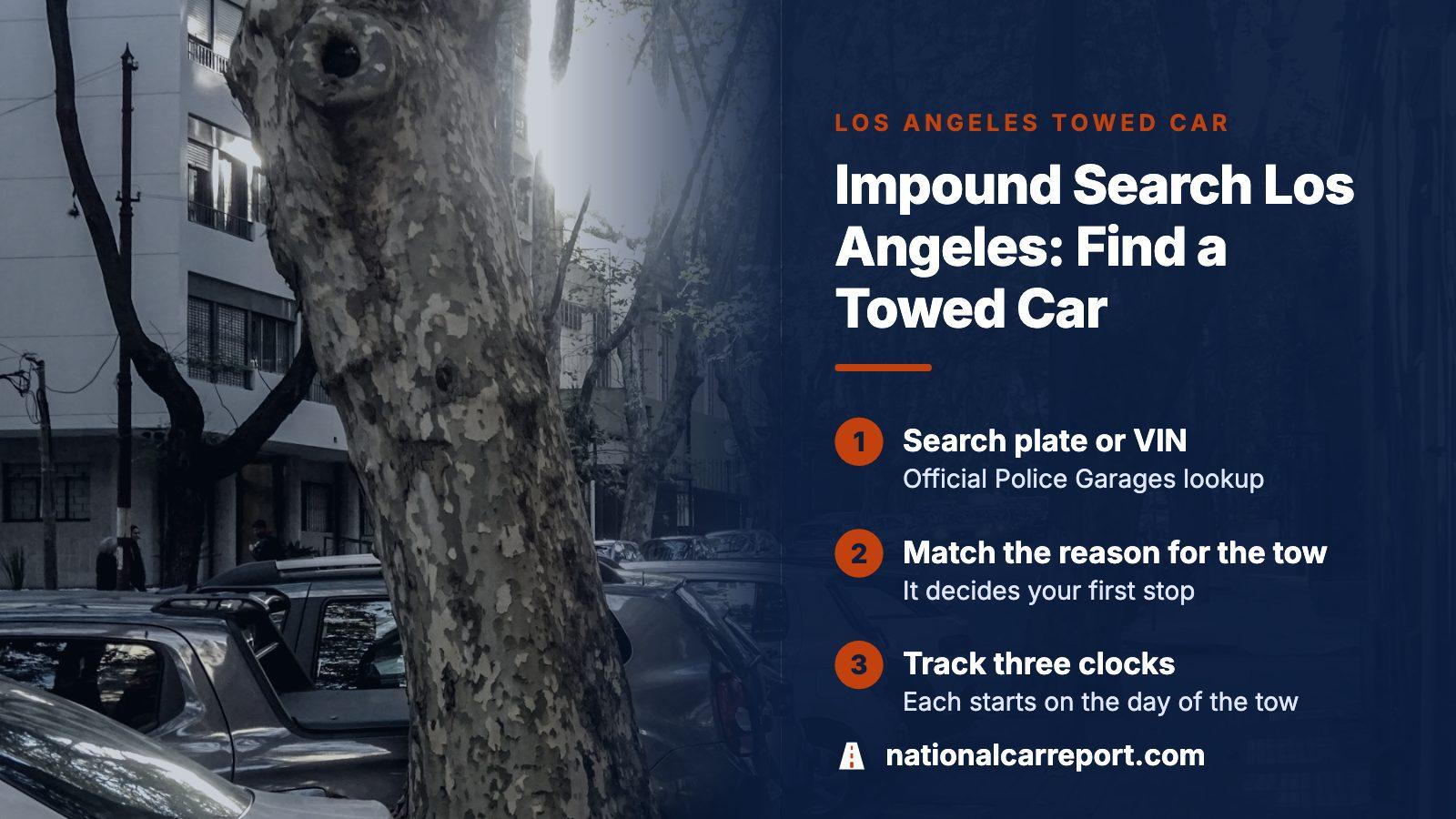
Use the Official Police Garages search with a plate and state, or a VIN. Cars towed over five or more unpaid tickets also need a release order from a city parking service center. Garage rates are set by the city and storage builds daily. An owner has 10 days from the notice date to ask for a hearing. A VIN check shows a car's recorded history, not where it sits now.
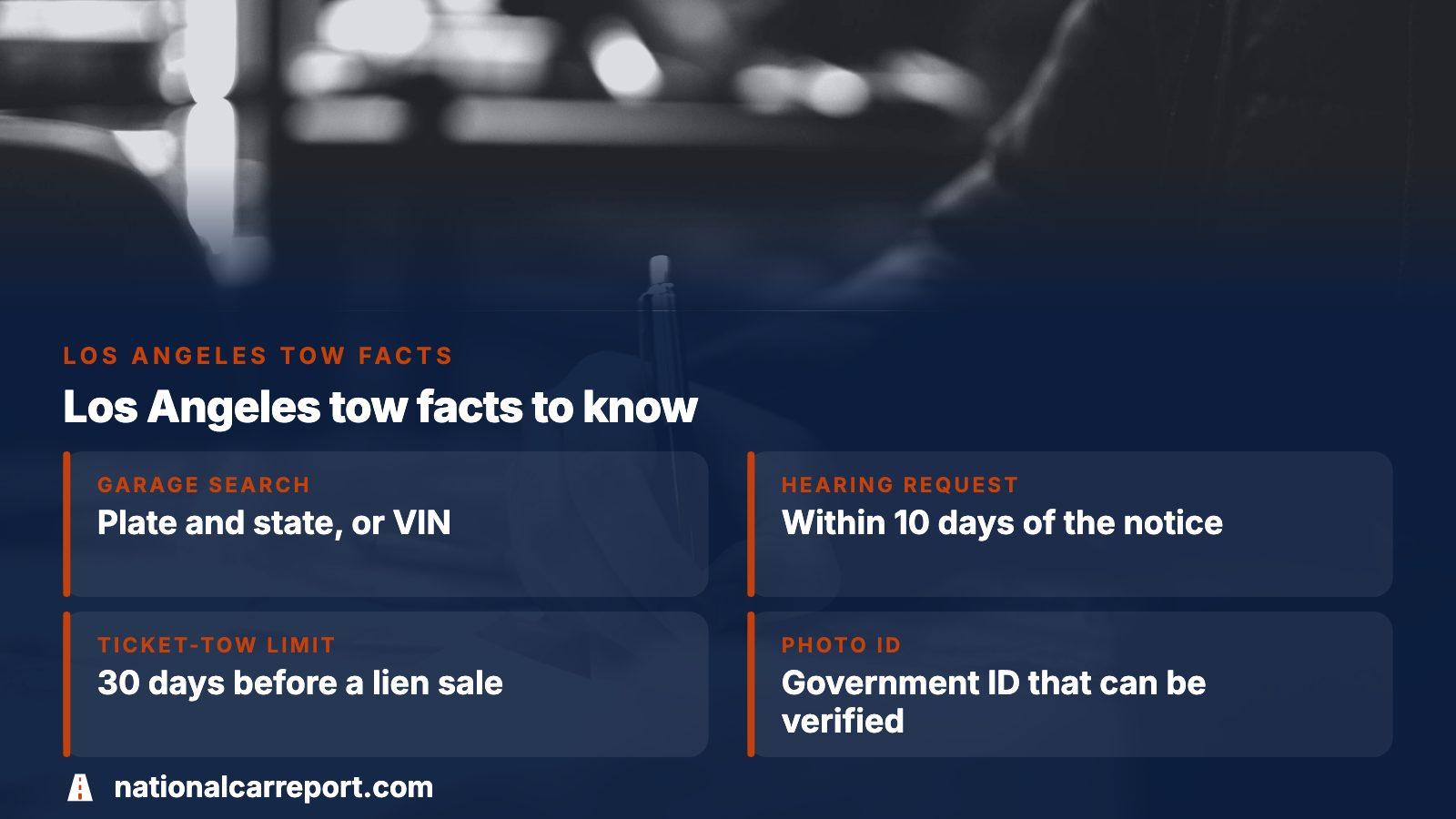
- Garage search
- Plate and state, or VIN
- Hearing request
- Within 10 days of the notice date
- City release fee
- $115 per vehicle
- Ticket-tow limit
- 30 days before a lien sale is possible
The garage search: plate or VIN, then a phone call
The city hands its towing and storage to a group of Official Police Garages, and their trade association runs a public search. A match names the garage with your car. The transportation department's FAQ says to find that garage first, then ask it about the steps for your kind of tow.
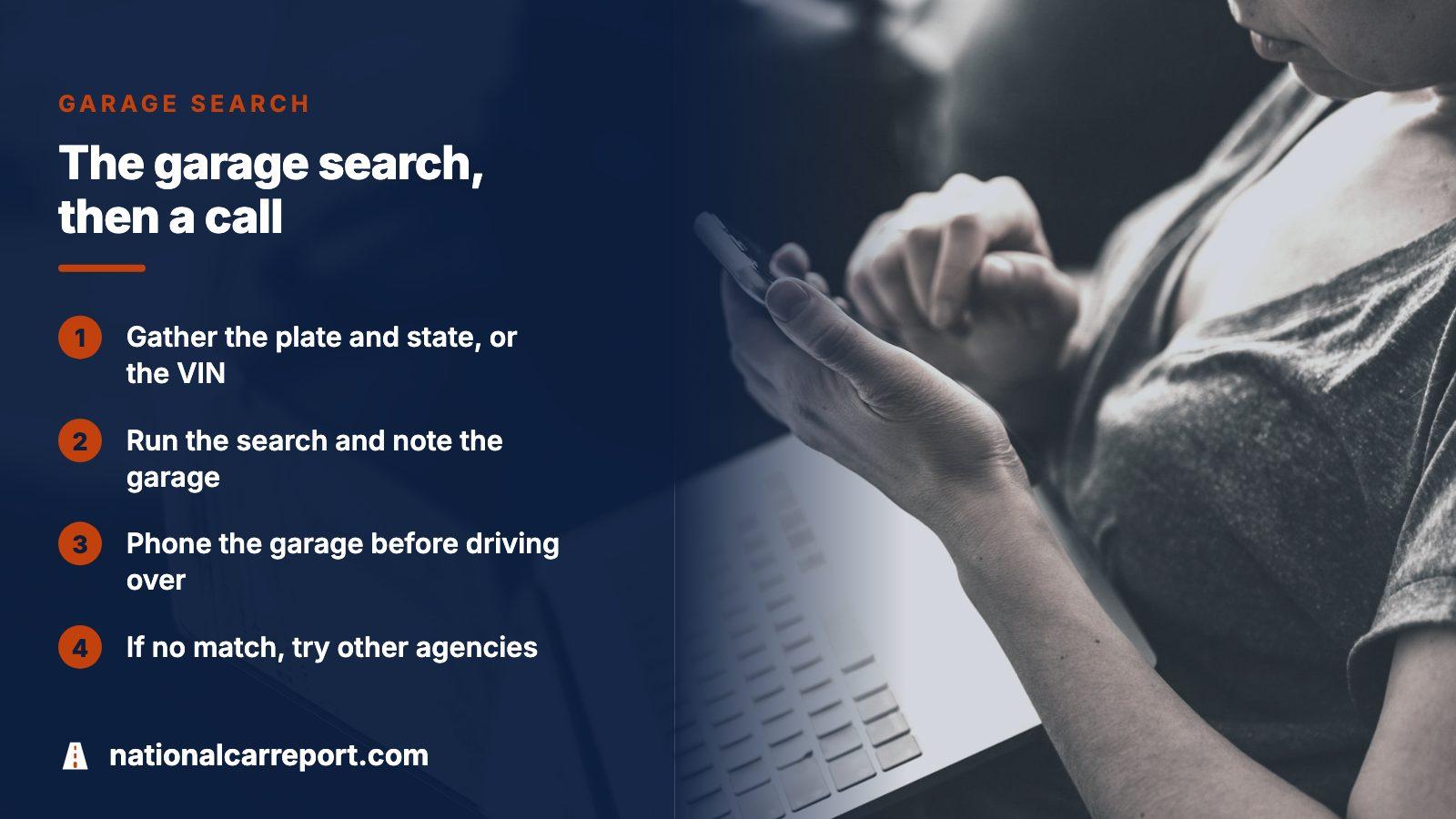
- Gather the plate and state, or the VIN from an insurance card or an old registration.
- Run the search and note the garage name. The association lists garages by service area.
- Phone the garage before driving over and ask about hours, payment rules and the papers it wants.
- No match? Treat the car as towed by another agency, or stolen, and use the steps further down.
Why the car was towed decides your first stop
| Reason for the tow | Where to start | What happens next |
|---|---|---|
| Illegal parking | One of the Official Police Garages | The garage collects its charges before it hands the car over |
| Five or more unpaid parking tickets | A city parking service center | You pay the tickets, get a release order and learn which garage holds the car |
| A boot that was ignored, then a tow | The boot release line, (855) 288-2642 | Tickets can be paid by phone, but the tow release form comes only in person |
| A tow by another agency, such as the highway patrol | The agency that ordered it | An impounded car may need that agency's sign-off first |
A neighboring city can run its own yard. San Fernando posts a separate fee list, yet its page still points owners to the same garage search to learn whether a car was stored.
What the garages charge, and how storage adds up
The city and its police commission set the rates, so every garage works from one schedule. It rose at the start of 2026, and paying by something other than a credit card earns a slightly lower figure.
| Charge | Credit card | Cash or other |
|---|---|---|
| Tow, first hour | $220 | $215 |
| Each added half hour | $109 | $106 |
| Storage per day, standard car | $68 | $66 |
| Storage per day, motorcycle | $18 | $18 |
| City release fee, per vehicle | $115 | $115 |
A 10 percent city tax rides on storage, which starts accruing daily once a car stays past the day of the tow. Garages take cash, Visa, Mastercard and ATM debit cards. Heavy trucks and electric cars carry extra line items, so ask for an itemized total. A lien-sale preparation fee is capped at $70 for a car valued at $4,000 or less and $100 above that, and it cannot be billed when the car leaves within 72 hours of going into storage.
Papers to carry to the counter
Confirm the list with the garage, since it depends on the tow. For tows over unpaid tickets, the city publishes one, and release happens in person.
- Current registration, proof that the fee was deposited, or a suspense copy from the state motor vehicle department.
- A government photo ID that can be verified.
- Cash, cashier's check, money order, debit card or credit card. Personal checks are turned away.
Anyone besides the registered owner adds a notarized note signed by that owner, giving permission, plus a copy of the owner's photo ID. Whoever collects the car is the one answerable to the garage for storage.
Three clocks that start at the tow
Mark these on a calendar
The written notice is due within 48 hours of an impound. A hearing request is due within 10 days of the date printed on it. A tow over unpaid tickets must be settled within 30 days, or the car may be lien sold.
If the car should never have been taken, ask for a hearing through a city enforcement office or the police station behind the tow. Let the 10 days pass and the right ends. An examiner and the impounding traffic officer hear the case, and you may bring witnesses. No reasonable grounds returns the car without charges or repays you. Reasonable grounds leaves you owing tow and storage.
A boot or tow hearing over tickets is booked in person and held within 48 hours of the request. It tests only whether enough overdue tickets existed, so a single ticket cannot be argued there. Paying everything frees the car before any hearing.
No match in the search: another agency, or a thief
An empty result can mean a yard outside the city system, or a thief. The city's traffic officers recover more than 4,000 stolen vehicles a year, and a theft report and a tow record are separate files that can describe one car.
- Call the police agency covering the street where you parked and ask whether it ordered a tow.
- Ask the highway patrol too if the car was on a state road.
- With no record anywhere, file a theft report and give the plate and the VIN.
The highway patrol's manual adds that a storing agency must mail or serve a notice within 48 hours, weekends and holidays excluded, and that a car whose owner cannot be reached goes into the state's stolen vehicle system.
Unclaimed cars: lien sales and what a buyer inherits
Anyone who tows or stores a car and goes unpaid holds a lien on it, and after a public impound the state motor vehicle department says it starts at the tow. The pending-sale notice must reach the registered and legal owners, and they have 10 days to oppose the sale.
The garages hold public lien-sale auctions. Cars sell as is, with no warranty or refund, and payment is due the same day. The auction page contradicts itself on previews, so ask the garage whether you may look first.
A quiet federal screen proves little
The federal title database tracks brands, mileage, insurer write-offs and salvage-yard transfers. Its consumer page does not list tows, it reaches 87 percent of vehicles, and it admits a search can miss history.
Running the check on a car you might buy
NationalCarReport works from the VIN, never the plate. The preview names the record types attached to that number, and nothing is charged for it.
- Copy the VIN straight from the car, then compare it with the seller's title.
- Enter it and look through the preview for impound, lien and theft entries.
- Decide on the full report: one payment, or packs of 3, 5 or 10 for comparing cars. The pricing page lists amounts.
- Phone whoever sits behind an entry, whether a garage, a lender or the police, and ask for release papers.
- A seller who cannot say which agency towed the car, or who paid to get it out.
- An auction car with no paperwork on how its lien was handled.
- A lender's claim or a title change soon after a tow.
- A theft entry on a car sold as an ordinary private deal.
No single flag condemns a car. Each one names an office to phone before money changes hands.
Where this information comes from
- LADOT: Parking in LA, towed and booted vehicles — The reasons the city tows, and the link to the garage search.
- LADOT Parking: Booted and towed vehicles — Release orders, papers for the counter, the 30-day limit and boot or tow hearings.
- LADOT Parking: Request an impound hearing — The written notice, the 10-day request window and the two possible findings.
- Official Police Garages: vehicle search — The plate-or-VIN search the city points owners to.
- California DMV: Lien sales for vehicles — When a tow lien starts, who must be notified and the 10-day opposition window.
- California Highway Patrol: Highway Patrol Manual 81.2, chapter 1 — The 48-hour storage notice, post-storage hearings and the stolen vehicle system entry.
- NMVTIS: for consumers — What the federal title database reports and where its coverage thins.
Sources and photos: Facts checked against the sources above in November 2026. Photos by Nikolai Kolosov, Michal Biernat and Owen Michael Grech on Unsplash; diagrams by NationalCarReport.
Keep reading
- Impound Lookup California: Find a Towed Car, Know the Deadlines, Check the VINStatewide rules for stored and impounded cars, beyond the city of Los Angeles.
- Impound Lookup: Find a Towed Car, Then Check Its VIN for Impound RecordsHow tow records are kept elsewhere, and where a national search fits.
- Vehicle Lien Check by VIN: Nationwide Lien, Theft and Impound RecordsFinding a lender's or a tow yard's claim on a car before you buy.
- How to Find a Stolen Car: Tow Checks, Police Steps and TrackersWhat to do when no garage has the car and theft is the likelier answer.
Frequently asked questions
How do I find out if my car was towed in Los Angeles?
Enter the plate and state, or the VIN, in the Official Police Garages search. If nothing comes up, ask the police agency covering that street whether it ordered a tow, and the highway patrol if it was a state road. A car with no record anywhere may be stolen, so report it.
How long do I have to contest an LA impound?
Ask for a hearing within 10 days of the date on the written notice, which should arrive within 48 hours of the tow. For a boot or tow over unpaid tickets, ask in person at a service center. Waiting past the limit ends the right to a hearing.
What does it cost to get a car out of an LA impound?
You pay the garage's tow charge, daily storage, the city's release fee and a 10 percent tax on storage. Paying with cash or debit costs a little less than a credit card. A ticket tow adds the unpaid tickets. Ask the garage for an itemized total before you travel.
Can a friend pick up my car from an LA impound lot?
For a ticket tow, the city wants a notarized note from the registered owner and a copy of that owner's photo ID, along with the registration and the friend's own ID. Call the garage first, since other tows can carry extra steps.
Does the NationalCarReport preview show where my car is towed?
No, it does not locate vehicles. It shows which impound, lien and theft entries exist for a VIN, so a buyer can judge a car's record. Seeing the preview costs nothing. The full report is one purchase, with the amount on the pricing page.
Now check the car itself
The guide explains what to look for. The report shows what this VIN has on record.