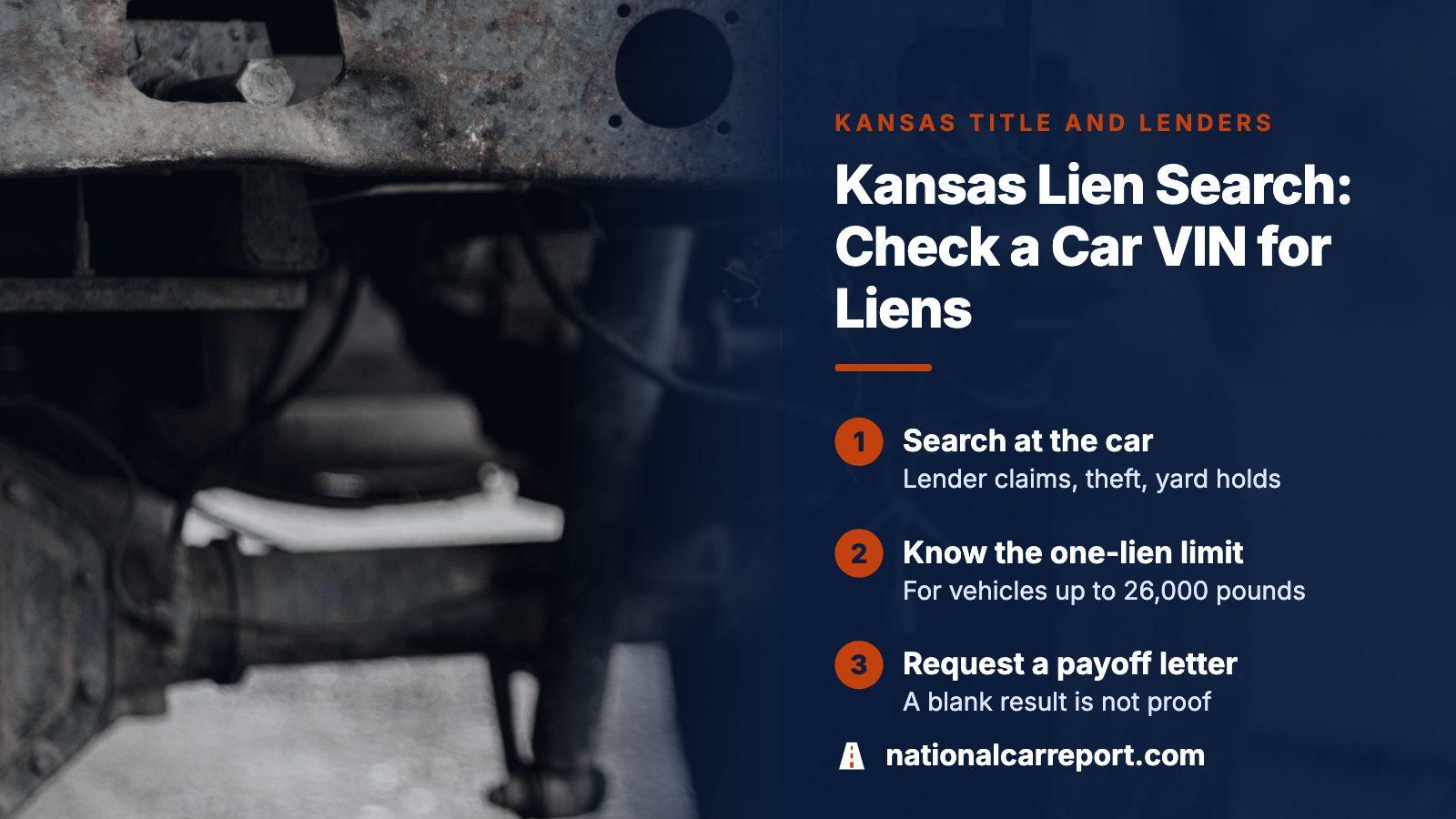
THE SHORT ANSWER
For a Kansas car lien check, key the car's 17-character VIN into the preview, and it searches for lender claims, stolen reports and yard holds under that number. A named lender suggests an open loan, and Kansas will not issue a title over an unreleased lien without the lender's written consent. A blank result is not proof, so ask for a payoff letter.
- Search key
- The VIN, read off the car itself
- Kansas lien limit
- One lien on vehicles rated 26,000 pounds or less
- Lender release deadline
- 3 or 10 business days after payoff, by payment type
- Title on a lien
- Kept electronically by the state since 2003
What the search reads for a Kansas car
A car can carry claims the seller never mentions: the bank or credit union that financed it, a tow yard that once stored it, and the police if it was ever reported stolen. Each files against the VIN. The preview pulls from all three kinds of record, whichever state first titled the car.
- Liens: a lender's claim, where one reached a source the search reads
- Impounds: a sign that a yard once held the car, and whether it was sold for charges
- Theft: a stolen report and what became of the car
- Brands such as salvage, which change what the car is worth
Nothing in the preview costs money. A full report is its own purchase, paid one time, for cars that earn a closer look.
Why a Kansas lender's claim is easy to miss
Since the start of 2003, Kansas has kept the certificate of title electronically whenever the assignment shows a lien or a lender has filed a notice of security interest. The seller of such a car often has no paper title to show, only a registration and a story.
A Kansas title application has to list every lien, and the title prints whatever the application showed. The record exists; it just lives with the state and the lender, not in the glovebox. A seller who says the title is in the mail may be honest, or may be waiting on a lender that has not been paid.
How to take it
If a seller cannot hand you a title on the spot and cannot name the lender, treat the lien question as open until a written payoff or release says otherwise.
Running the search at the car
Begin at the car, not the listing. Find the number on the dash and again on the driver's-side sticker, and see that the two agree. Then match both to the paperwork in the seller's hand. Three matching numbers is the baseline. A mismatch ends the conversation before any lien question matters.
- Copy the VIN exactly, with no letter O or letter I, which VINs never use.
- Enter it in the preview and note any lender, yard or stolen flag.
- If something shows, ask the seller about it before you travel or pay a deposit.
- If nothing shows but the price is low, order the full report anyway.
Reading a hit, and a blank
A lien in the results is a lead, not a verdict. The loan may be nearly paid, paid but not yet released, or active. Only the lender can say which, and a Kansas seller who still owes money can often fix this at the sale itself by paying the lender from your funds and getting the release in return.
| What you see | What it usually means | Your next step |
|---|---|---|
| A lender named | A loan may be unpaid | Ask for a payoff letter dated this week |
| An impound or tow record | A yard once held the car | Ask what happened and how it was released |
| A theft flag | Reported stolen at some point | Walk away until the status is explained |
| Nothing at all | No record reached the sources | Verify with the seller and the state record |
What Kansas law says about liens on titles
Kansas does not issue a title for a vehicle carrying an unreleased lien unless the lienholder has agreed in writing to the transfer. That rule protects buyers, since a clean new title cannot normally be produced over a lender's head.
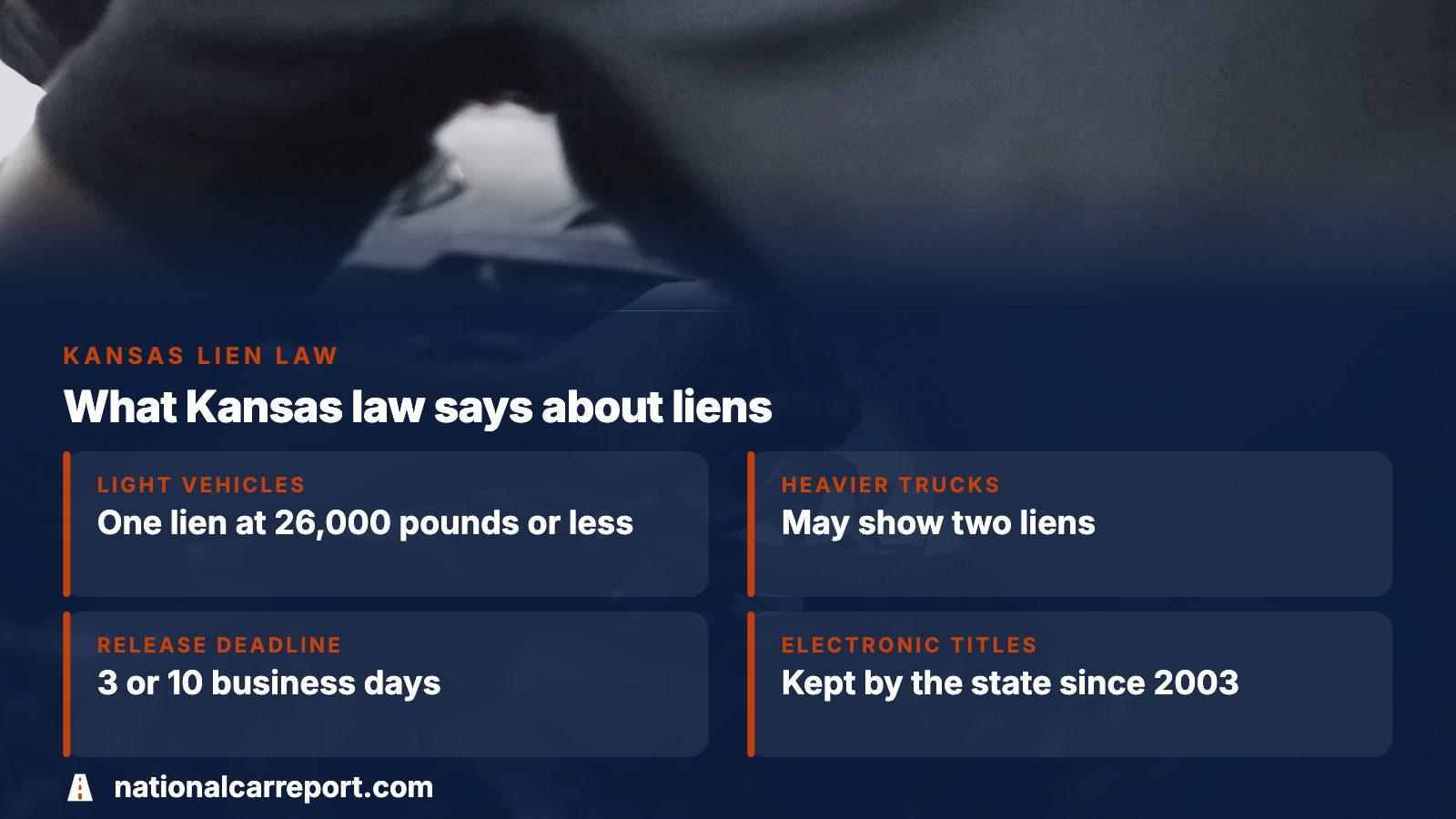
- Cars rated at or under 26,000 pounds can carry a single lien; a second is void.
- Heavier trucks may show two.
- A lender added after the original title was issued goes through a mortgage title application.
- To drop a lender from a title, the division needs evidence the debt was paid.
After a sale, a dealer or lender may file a notice of security interest, and the title that follows displays it.
Payoff and release: who clears the lien
Paying the loan does not erase the lien by itself. The lender has to sign a release on the state's form. Kansas gives it 3 business days when the payoff arrived as cash, an in-house bank transfer or a wire, and 10 business days for any other payment type, counted from payoff plus a release request.
If a lender sits on it, the owner, or anyone who made a valid lien request, can complain to the Division of Vehicles. A hearing officer can then assess a civil penalty, from 100 to 500 dollars for a first violation and more for repeats within twelve months. No penalty applies when the delay traced back to the division or the county treasurer.
Practical takeaway
Ask the seller for the release or a payoff letter before money moves. Once you own the car, the paper chase is yours.
Claims that are not loans
Banks are not the only ones with a claim. A Kansas wrecker or towing company that stores a vehicle for an officer or the owner holds a first and prior lien worth the full value of that service. A known owner must hear of it within 15 days. After 30 days the company may sell the car to cover its charges, unless a court has ordered the vehicle kept as evidence.
So an impound entry in a VIN search is worth a question. Perhaps the owner paid and drove off, or perhaps the yard sold it. You want the seller's account to match the record, and the record to match the title.
What the state record adds, and who can see it
Kansas stores title, registration and lien records in three separate databases at the Department of Revenue: work in process, current and history. No single search spans them, and the state's records portal asks users to certify an acceptable use in writing. Federal driver privacy law shapes that rule.
The federal title system helps with brands and odometer readings, but it does not list lien holders in what a consumer search returns. Its operator, the Department of Justice, says the system holds only part of a state's title record and encourages looking at the state's own. DOJ puts coverage near 87 percent of vehicles, yet not every state reports into it, so an empty answer may be wrong.
Cost, and the steps after the preview
If the car passes your first look and you plan to buy, one payment covers the report and nothing renews afterward. Options sit on the pricing page.
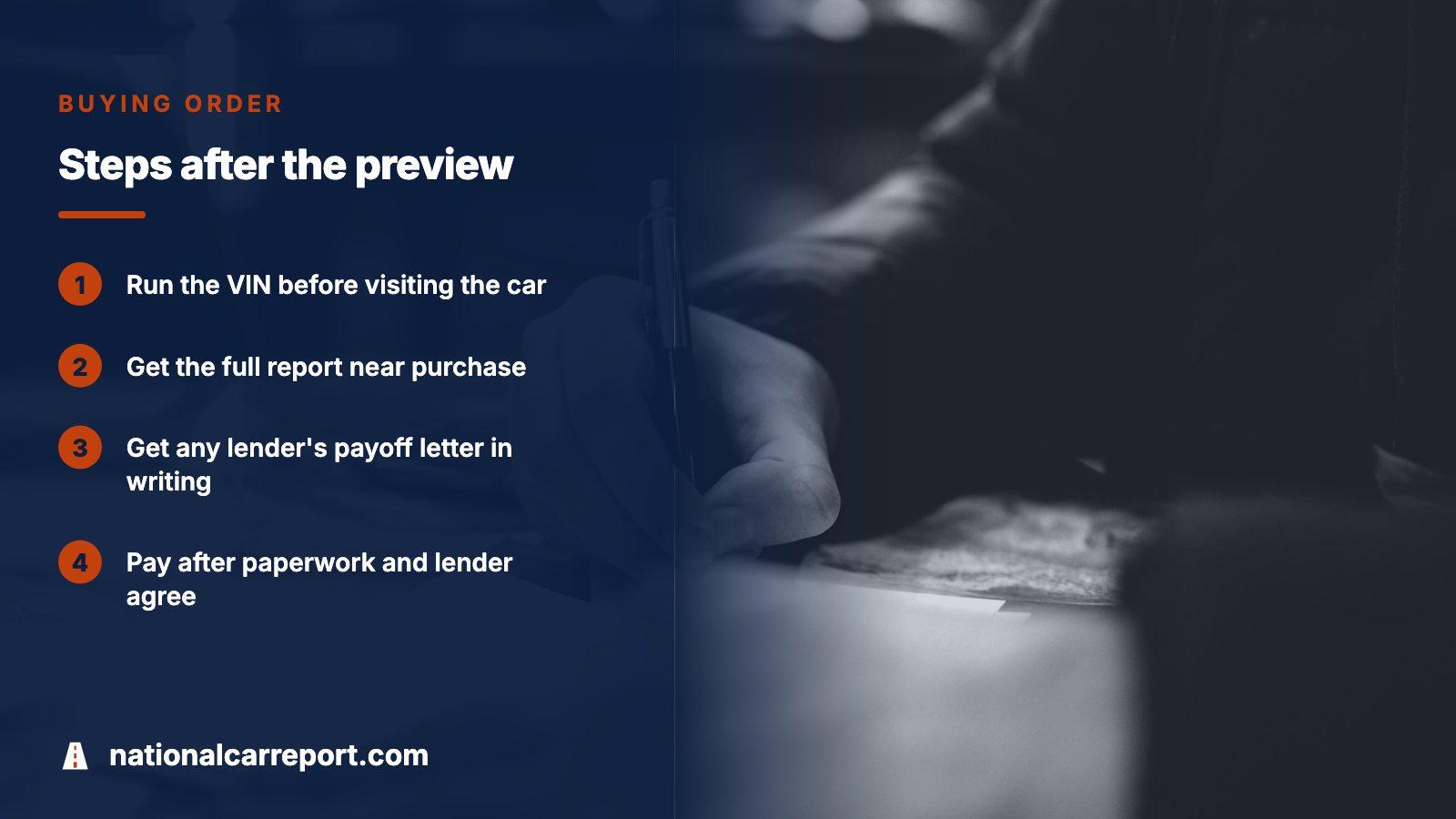
- Run the VIN in the preview before you visit the car.
- Once you are close to buying, get the full report.
- Get a payoff letter or release in writing for any lender found.
- Inspect the title for matching VINs and a clear lender line.
- Pay only after the lender, seller and paperwork agree.
Where this information comes from
- Kansas statute 8-135: titles, transfers and lenders — how liens are listed, limited and consented to on a title
- Kansas statute 8-135d: electronic titles — why lien titles are held electronically
- Kansas statute 8-1,157: lien release — release deadlines and penalties for lenders
- Kansas statute 8-1103: towed vehicles and liens — tow operator lien and sale timing
- Kansas.gov motor vehicle records FAQ — how the state's lien records are stored and who may search
- DOJ NMVTIS for consumers — what the federal title system covers and where it falls short
Sources and photos: Facts checked against the sources above in November 2026. Photos by Zoshua Colah, Owen Michael Grech and Mustafa Sheikhmouss on Unsplash; diagrams by NationalCarReport.
Keep reading
- Kansas Title Check: Seven Steps Through Liens, Impounds and TheftCheck the brands and title history alongside the lien.
- DMV Lien Release Search: How to Confirm a Lien Is GoneConfirm a lender actually released its claim.
- Car Lien Holder Search: How to Find the Lender Behind a VINFind out who holds the loan on a car.
- Vehicle Lien Check by VIN: Nationwide Lien, Theft and Impound RecordsThe same check for a car titled in any state.
Frequently asked questions
How do I do a Kansas lien search on a car?
Copy the VIN from the car into the preview, and watch for lien, impound and theft flags. If a lender shows up, request the title and a payoff letter from the seller. Searching by owner name is not offered by the state's records portal.
Can a Kansas car be sold with a lien on it?
Yes, sellers sometimes sell while a loan is open, usually by paying the lender from the sale. What Kansas will not do is issue a title over an unreleased lien unless the lienholder agreed in writing. Make sure the lender is paid and the release is signed.
Does a clean lien result mean the car is free of debt?
No. A blank only means the sources searched had nothing on that VIN. State title records hold more than national data, and the state keeps lien records in separate databases. Pair a clean result with a written statement from the seller and a close look at the title.
How long does a Kansas lender have to release a lien?
After payoff and a release request, three business days if the lender received cash or a wire or moved funds inside its own bank, and ten business days for anything else. A late lender can face a complaint to the Division of Vehicles and a civil penalty.
Why does the seller not have the title?
Kansas keeps the title electronically when a lien is recorded, so the seller may truly hold none. Ask which lender has the lien, request a payoff letter, and do not hand over money until the release or lender-approved transfer is arranged.
Now check the car itself
The guide explains what to look for. The report shows what this VIN has on record.