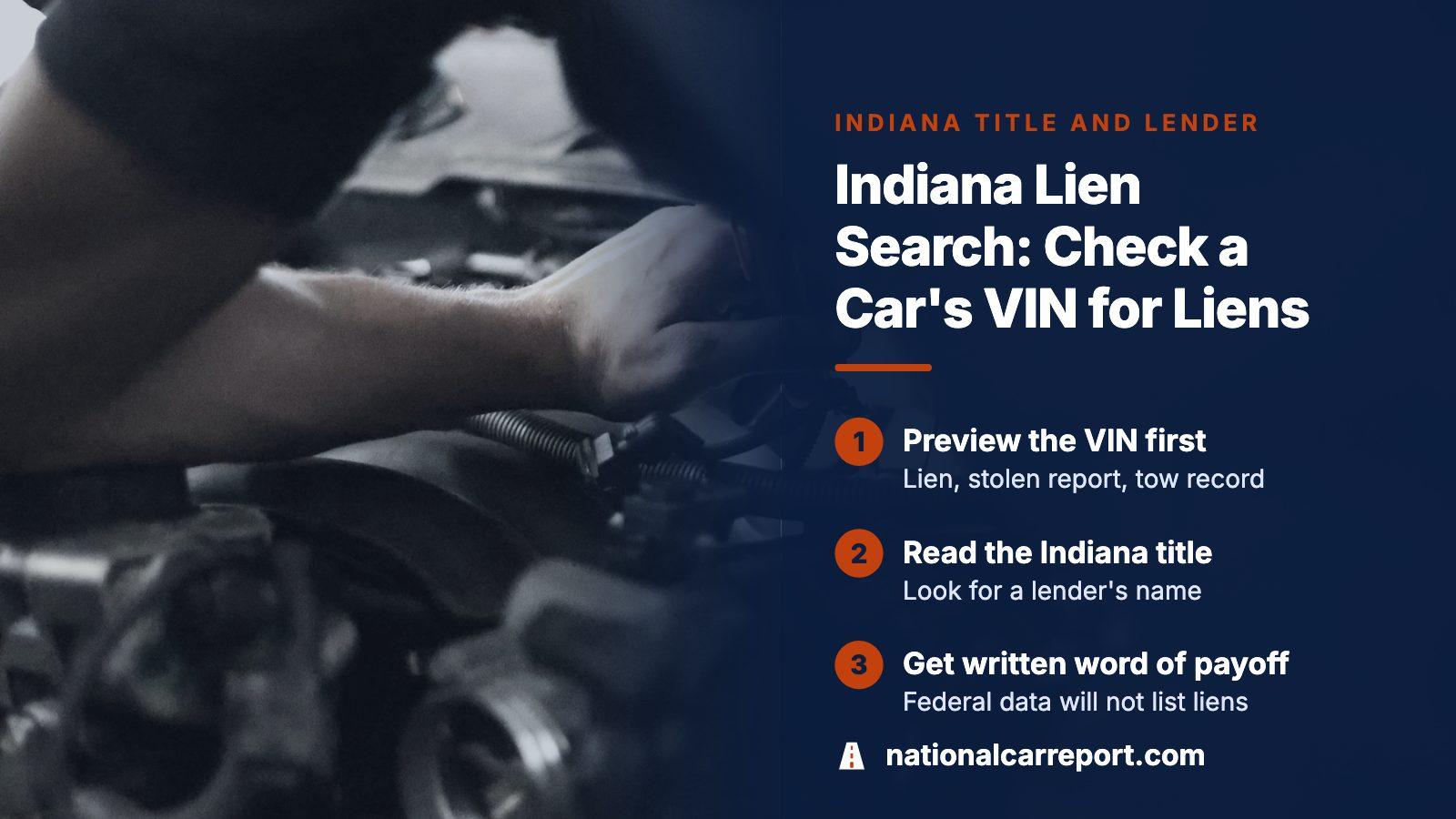
THE SHORT ANSWER
Type the VIN into the preview first. It shows whether a lien, a stolen report or a tow record is tied to that car. Then ask to see the Indiana title and read it for a lender's name. If one is there, get the lender's written word that the loan is paid before any money moves. Federal title data is a poor stand-in, because it is not built to list liens.
- Search key
- The VIN, read off the car itself
- Federal title data
- Does not list liens for consumers
- Final proof
- Title plus the lender's written payoff
- Indiana rules
- Confirm with the BMV; not quoted here
What a lien on an Indiana car means for you
A lien is a lender's claim on a vehicle until a loan is repaid. Buy a car that still carries one and the claim can follow the car into your driveway. The seller may have good intentions and a payoff plan, but the lender is not bound by the plan.
NationalCarReport looks at the claims that can trail a car across state lines: money owed, a theft report, a stay in a tow lot. All of them hang on the VIN, so the search works the same for a truck that never left Fort Wayne and a sedan that came up from Kentucky last month.
Running the Indiana VIN search step by step
Take the seventeen-character number off the vehicle itself, and ignore the one in the ad or the chat thread. Glance at the dashboard plate, the label on the driver's door jamb and the title: all three need to match, and any difference is a reason to stop.
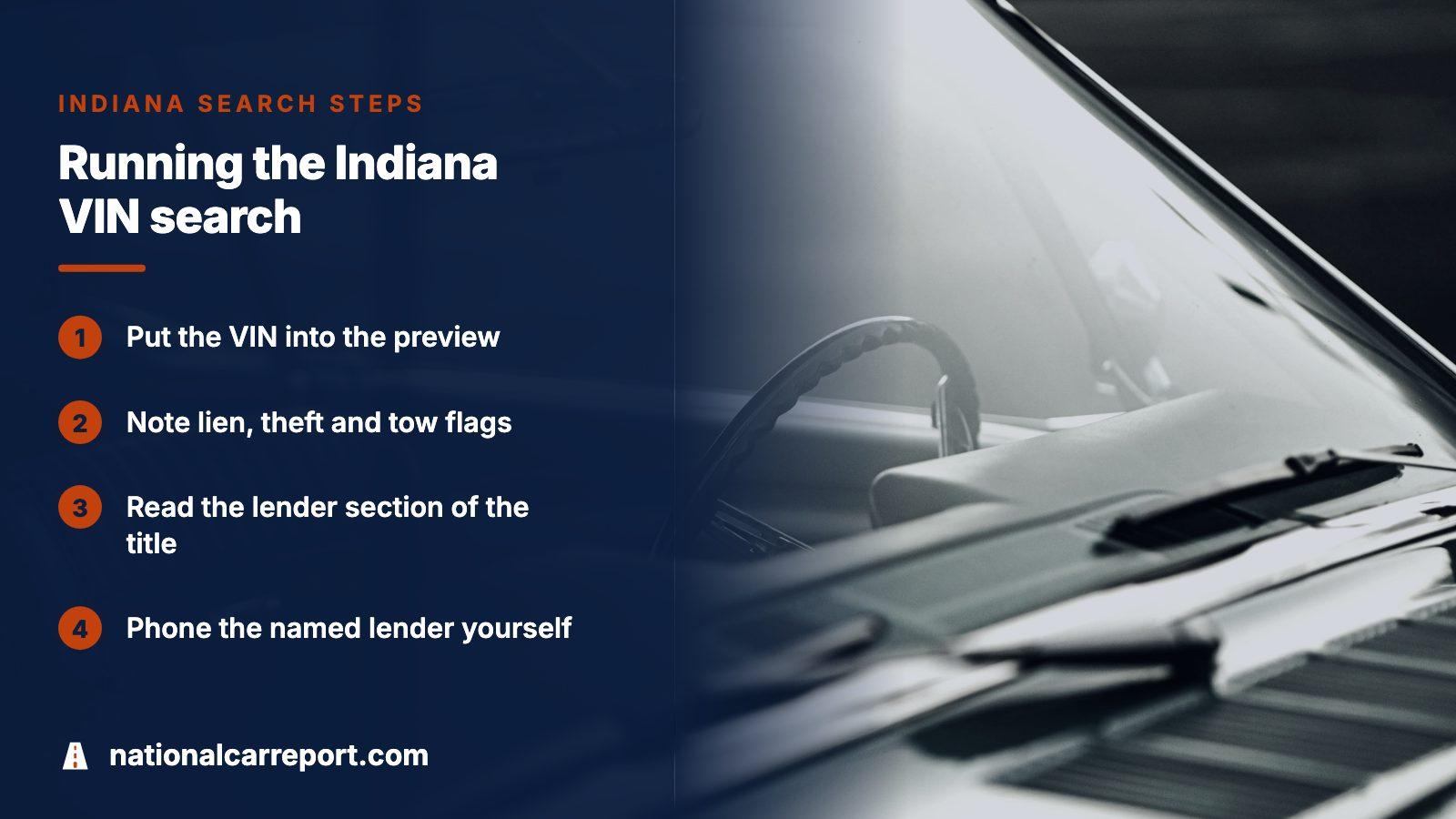
- Put the VIN into the preview here, which carries no charge.
- Note anything flagged for liens, theft or tow-yard stays.
- Ask to hold the Indiana title and look at the lender section.
- Phone the named lender yourself, or listen in while the seller does.
- Settle price and signing details only after those answers are in.
A clear preview lowers the odds of a nasty surprise without replacing the title, which is the paper the state treats as proof of who holds the car.
Why the national title system will not settle it
Buyers often assume the Justice Department's title system answers lien questions. Its consumer page describes the search as returning brand history, the latest odometer reading, insurer salvage or total-loss rulings and yard transfers. It never says liens come back. Federal rules list what states must send every 24 hours, and the lienholder is not on that list.
| Question | Does the federal consumer search cover it? |
|---|---|
| Salvage or junk brand | Yes, where a state or insurer reported it |
| Latest odometer reading | Yes |
| Total-loss ruling | Yes, with limits |
| Money still owed on the car | Not stated on the consumer page |
Coverage has gaps as well. The page puts vehicle coverage near 87 percent but says just over half the states send data, which means an empty result may only reflect missing records.
What I could and could not confirm about Indiana
Indiana BMV pages refused every connection I tried while preparing this guide. So I am not quoting an Indiana release deadline, a fee, a form name or a statute. Those details change, and a wrong number on a lien question is worse than none.
Ask the BMV directly
Before relying on any Indiana lien rule, check the BMV's own title pages or ask a branch how a lender's interest is recorded and how a paid-off loan is cleared. Do the same with the lender. Write down who you spoke to and when.
Signs the car may still be owed on
- The seller says the title is at the bank, or will arrive after the sale.
- The title lists a lender and the seller has no paper showing it was paid.
- The person selling is not the person whose name is printed on the title.
- A price well under what similar cars ask, with a story about urgency.
- A seller who will not let you phone the lender.
A single flag justifies slowing down. Two at once justify leaving, or shifting the whole deal to the lender's branch, where the payoff and the title handover happen at the same desk.
If a lien turns up
Finding a lien does not automatically kill the deal. Plenty of sellers are mid-loan, and paying off at the signing table works when the lender cooperates.
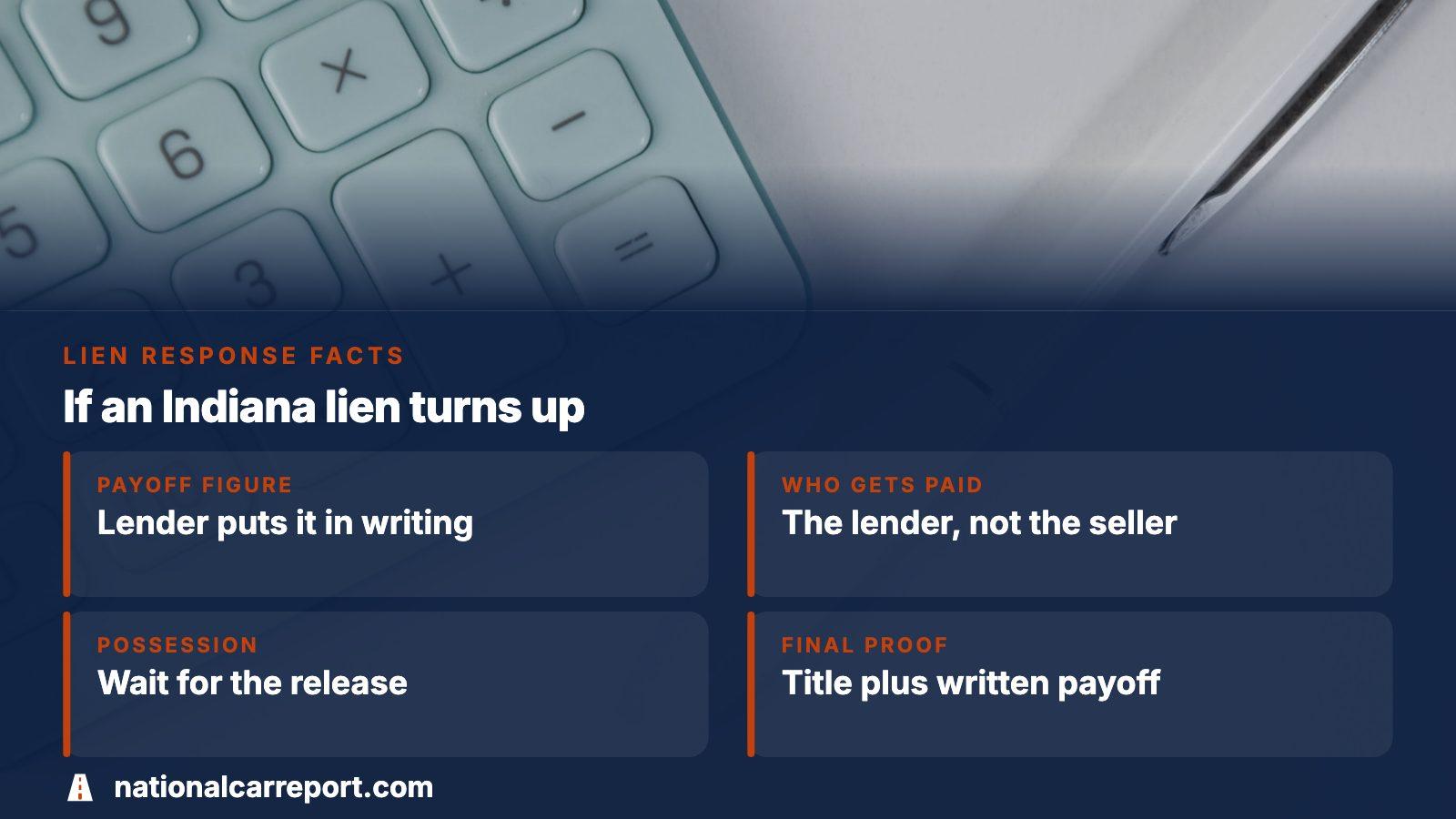
- Get the lender to put the payoff figure and its release method in writing.
- Pay the lender, not the seller, for the loan balance, and keep the receipt.
- Do not take possession until the release or a clear title path is documented.
- Keep every message in writing in case the paperwork stalls.
Our lien release guide covers proof that a lender has let go, and the lienholder guide covers finding who the lender is.
Cost of the full report and your next move
The preview is free. Going deeper means one payment rather than a monthly plan, with the options listed on our pricing page. For a lien question the parts worth reading are the lien and impound entries, theft history and any title brands.
Pull it before you hand over a deposit. Add a mechanic's inspection, since the Federal Trade Commission says reports usually say little about how the engine and gearbox are holding up, and cannot replace a mechanic.
Where this information comes from
- NMVTIS consumer page — returns of the federal consumer search, and its coverage limits
- NMVTIS: State participation — title verification before a state issues a title
- 28 CFR 25.54: State data and verification — what states must send to the system
- FTC: Used car dealer purchase advice — why a mechanic still matters, and the dealer sticker
Sources and photos: Facts checked against the sources above in November 2026. Photos by Mustafa Sheikhmouss, Dylan Michaud and Sasun Bughdaryan on Unsplash; diagrams by NationalCarReport.
Keep reading
- Vehicle Lien Check by VIN: Nationwide Lien, Theft and Impound RecordsThe same check explained without a state focus.
- Car Lien Holder Search: How to Find the Lender Behind a VINHow to work out which lender holds a car's loan.
- DMV Lien Release Search: How to Confirm a Lien Is GoneProof that a paid-off loan has really been cleared.
- Illinois Lien Search: Check a Car's VIN for a Lender's ClaimThe same question for a car coming from next door.
Frequently asked questions
How do I do an Indiana car lien check by VIN?
Start with the VIN in our preview, which looks for lien, theft and impound records. Then read the Indiana title for a lender's name and confirm payoff with that lender in writing. The title and the lender settle the question; no search tool does it alone.
Is there a free Indiana lien search online?
Our preview costs nothing and gives a first look. I could not open the Indiana BMV's pages, so I cannot say what its own online tools show about liens. Check the BMV directly, and treat any free result as a first pass.
Does the national title database show liens?
Its consumer page lists brands, odometer readings, salvage or total-loss rulings and yard transfers. It does not say liens are returned. Lienholder status appears in federal rules only as an example of information a state may verify.
The seller says only a little is left on the loan. Now what?
Treat that as an open lien. Ask the lender for a written payoff figure and arrange for payment to go to the lender, with the release documented. A promise from the seller is not a release.
Can a clean report guarantee no lien?
No. Data from any source can lag or be missing, and the federal system itself cautions that a blank result may just mean data never arrived. Combine the preview, the title in hand and a call to the lender before buying.
Now check the car itself
The guide explains what to look for. The report shows what this VIN has on record.