THE SHORT ANSWER
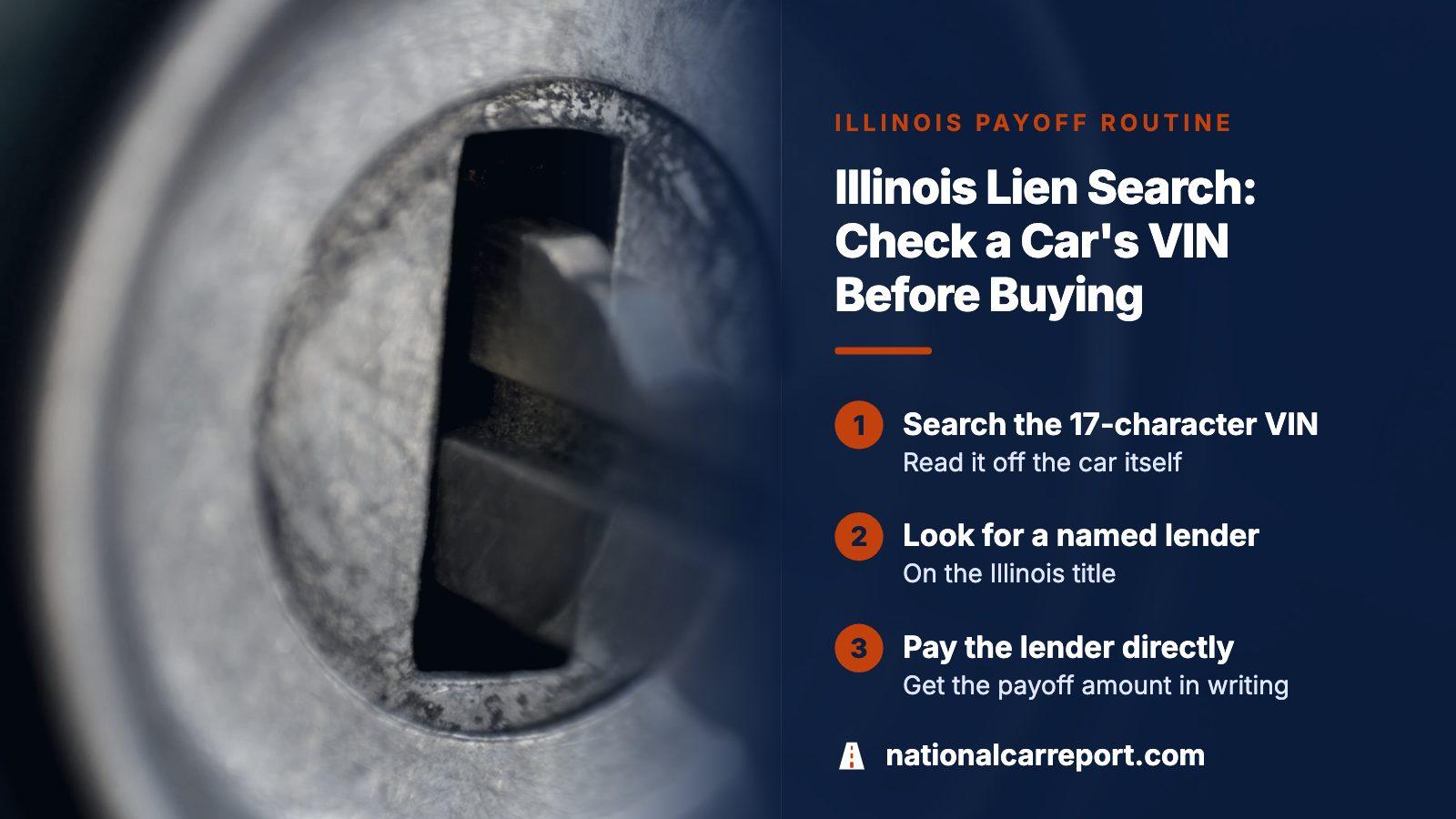
Run the VIN through our preview and see if it turns up a lender, a theft flag or a tow entry. Next, ask the seller for the Illinois title and look for a named lender. When one is listed, obtain the payoff in writing and pay that lender yourself. An empty search is encouraging, though it proves nothing.
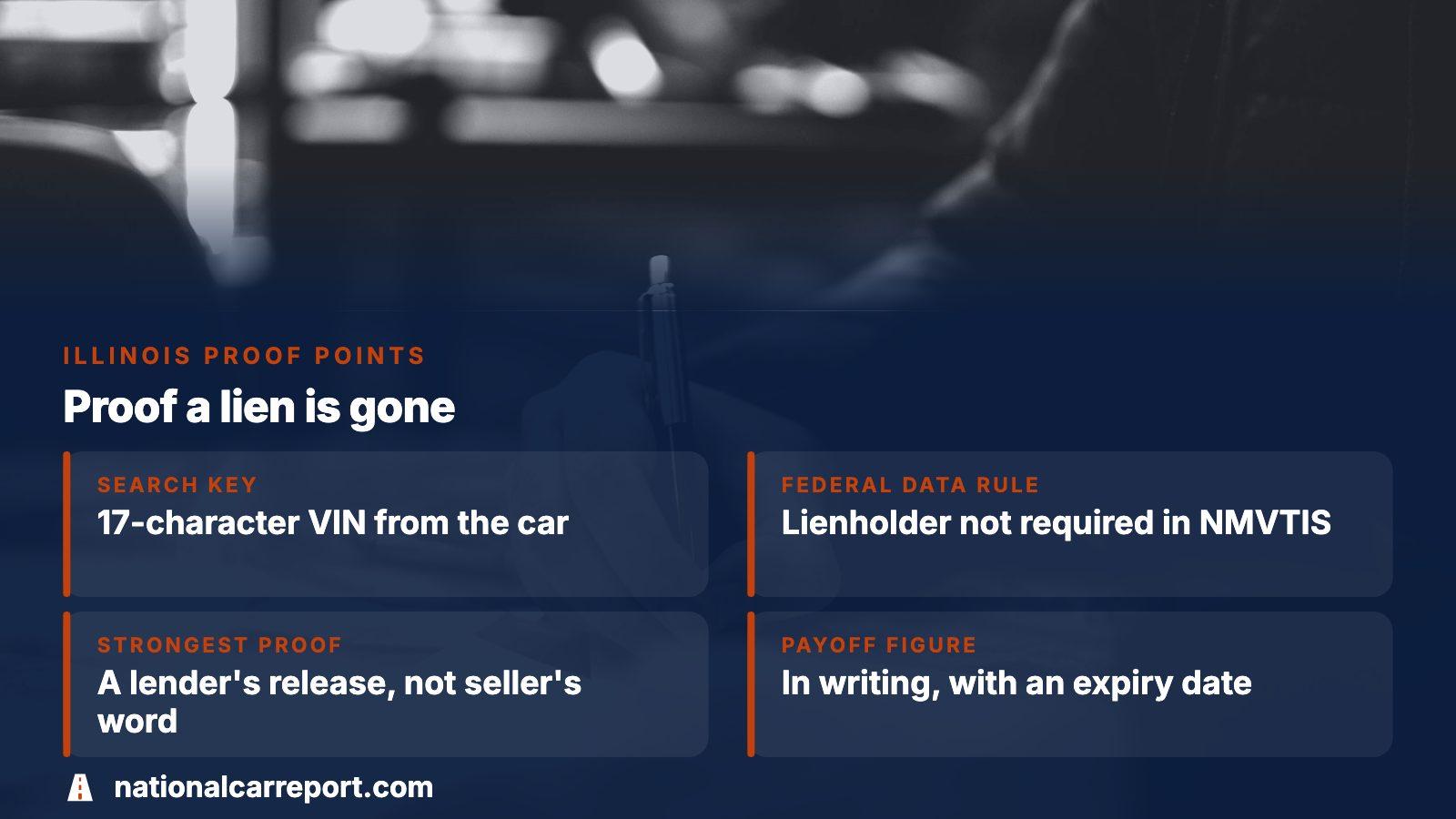
- Search key
- The 17-character VIN from the car itself
- Federal data rule
- Lienholder is not a required NMVTIS field
- Strongest proof
- A lender's release, not the seller's word
- Illinois state pages
- Secretary of State site refused our access
What a VIN search looks for on an Illinois car
NationalCarReport reads a vehicle through the claims that can trail it: money owed to a lender, a stolen-vehicle report, time spent in a tow yard. All three are keyed to the VIN, so a car from Cook County and one shipped in from Indiana get the same search.
- Lender claims that reached a database we draw from
- Theft entries, and whether the vehicle came back
- Impound and storage records
- Salvage and other brands that cut resale value
Nothing is charged for the preview, and it gives an early read on those records. It narrows the risk. It does not replace the paper title, which is where a lender's name is meant to appear.
What we could not confirm about Illinois procedure
While preparing this guide we requested the title pages of the Illinois Secretary of State. Each request came back with an access-denied message, and we left it at that rather than hunt for a way around. That means we cannot quote you the state's lien-release steps, forms or fees, and we will not guess at them.
Check the procedure at the source
Before you hand over money, ask a Secretary of State facility how a lien is released and noted on an Illinois title, and which paper they accept from a lender. Take that answer over anything printed here, including our own summary.
What we can stand behind is general: the Illinois Attorney General's used-car guidance, and the federal rules for the national title database, both of which we opened and read.
Why a national report can miss a lien
A federal regulation sets the titling data each state owes the national title system, delivered every 24 hours. Mandatory items: the VIN, whatever the title says about the car including brands, the person or company the title names, salvage-yard and insurer acquisition reports if the state gathers them, and the odometer figure when the title was issued.
A lender is not on that list. States may send more with the system operator's agreement, which is how some lender detail arrives, but nothing obliges them to.
| Report result | What it tells you |
|---|---|
| Lender shown | Something was reported. Treat it as real and ask the lender. |
| No lender shown | No lien was reported to the source. A lien may still exist. |
| Name differs from seller | Stop. The seller may not control the payoff. |
Running the check, in order
- Copy the VIN from the vehicle, then hold it against the number in the seller's paperwork. If the two disagree, end the conversation.
- Enter it into our preview and read the lender, theft and tow results.
- Ask to see the Illinois title early, before a test drive, and read the owner's name and any lender named on it.
- If a lender is named, ask it for the payoff figure on paper.
- Open the full report if the preview flags anything, or if the price justifies another layer of records.
A full report is one payment and nothing renews. Packages are laid out on the pricing page.

Buying a car that still has a loan
Plenty of good cars are sold with money still owed, and the deal is routine when the money goes to the right place. The rule is simple: the lender gets paid by you, not by the seller on your behalf later.
- Get a payoff figure from the lender in writing, with the date it expires
- The payoff goes to the lender, and the seller receives just what is left
- Arrange to close at the lender's branch where possible, so you see the release happen
- Keep every receipt and every piece of paper the lender hands you
Be wary of any version of pay me now and I will settle the loan tomorrow. Even a sincere seller who pays late leaves the lender's interest riding on a car you already own.
Dealers, trade-ins and who owes whom
The Illinois Attorney General's checklist covers a case buyers forget. Trade in a car with a balance left, and the loan can remain yours until the dealership actually pays it, so chase the dealer and confirm it was settled quickly.
The same checklist splits dealer financing in two. With Buy Here, Pay Here, the lot itself lends the money and takes your payments. With dealer-arranged credit, an outside bank or credit union holds the loan. Which you signed decides who you call for a payoff or a release.
The checklist also notes that dealers generally do not have to offer a three-day right to cancel. Settle your questions about a lender before you sign, not after.
A claim from a repair shop is a different animal
Not every claim on a car comes from a loan. Under the Illinois Automotive Repair Act a garage may not press lien charges for repairs the owner never approved. The act also requires an estimate in writing and a final invoice listing parts, labor and mileage.
For a buyer, the practical point is custody. If the car is being sold straight out of a shop, or by someone who is not the person who authorized the work, ask for the invoice and ask who has had the keys. A VIN search will not show an unpaid bill held at the garage.
Red flags that suggest a hidden lien
- The seller has no title, only a registration or a promise that it is coming
- The person selling is not the one the title names
- Our preview shows a lender and the seller denies any loan
- The title is said to be lost on a car that was recently financed
- The price sits well below similar cars, with pressure to pay fast
Any one of these is reason to slow down. Two together is reason to walk. A seller with nothing to hide can usually show the title and let you call the lender.
Where the full report helps, and where it stops
The Attorney General advises buyers to pull a title history report from a source such as NMVTIS, Carfax or AutoCheck, and notes that a fee applies. It also warns that a car may have problems neither the title nor a report reveals.
Our report sets lender, impound and theft entries next to the title history, and a lien question depends on exactly those entries. A phone call to the lender is still required, and no database can stand in for it. Let the report tell you whether the seller's story merits that call, and book an independent mechanic as well.
Where this information comes from
- Illinois Attorney General: Consumer guide to buying a used vehicle — advice to pull a title history report and its stated limits
- Illinois Attorney General: Used vehicle consumer checklist — trade-in loans, dealer financing types, no automatic cancellation right
- Illinois Attorney General: Auto buying, financing and repair — repair act limits on lien charges, estimates and invoices
- 28 CFR 25.54: Responsibilities of the states (NMVTIS) — required title data and the optional extras
- NMVTIS consumer access (U.S. Department of Justice) — purpose of the national title system
Sources and photos: Facts checked against the sources above in November 2026. Photos by Derek Nelson, Jakub Żerdzicki and Owen Michael Grech on Unsplash; diagrams by NationalCarReport.
Keep reading
- Vehicle Lien Check by VIN: Nationwide Lien, Theft and Impound RecordsThe same check explained without a state focus.
- DMV Lien Release Search: How to Confirm a Lien Is GoneMaking sure a lender has truly let go.
- Car Lien Holder Search: How to Find the Lender Behind a VINFinding who the lender on a title is.
- Stolen Car Check by VIN: Nationwide Theft, Lien and Impound RecordsThe theft side of the same VIN.
Frequently asked questions
Can I do an Illinois lien search online by VIN?
We could not open the Illinois Secretary of State pages, so we cannot say whether the state offers a public lookup. A VIN search through us shows lien, theft and impound records where they reached a database, and the title and a lender's release remain the proof that counts.
Does a clean report mean no lien exists?
No. Federal rules do not require states to send lender details to the national title system, so a report with no lender only means none was reported. Ask for the title and confirm with the lender before you pay.
Who should I pay if the seller still owes on the car?
Pay the lender the payoff amount and give the seller only the balance. Get the payoff figure in writing and, if possible, finish the sale at the lender's branch so the release happens while you are there.
Can a repair shop have a claim on a car?
The Attorney General says Illinois law keeps shops from pressing lien charges on repairs nobody authorized. A shop can still hold a car for work the owner approved, and a VIN search will not show that, so ask for invoices when a car is sold out of a garage.
Does the preview cost anything?
No. You see the first results at no charge, and a full report is paid once with nothing recurring. See the pricing page for packages.
Now check the car itself
The guide explains what to look for. The report shows what this VIN has on record.