THE SHORT ANSWER
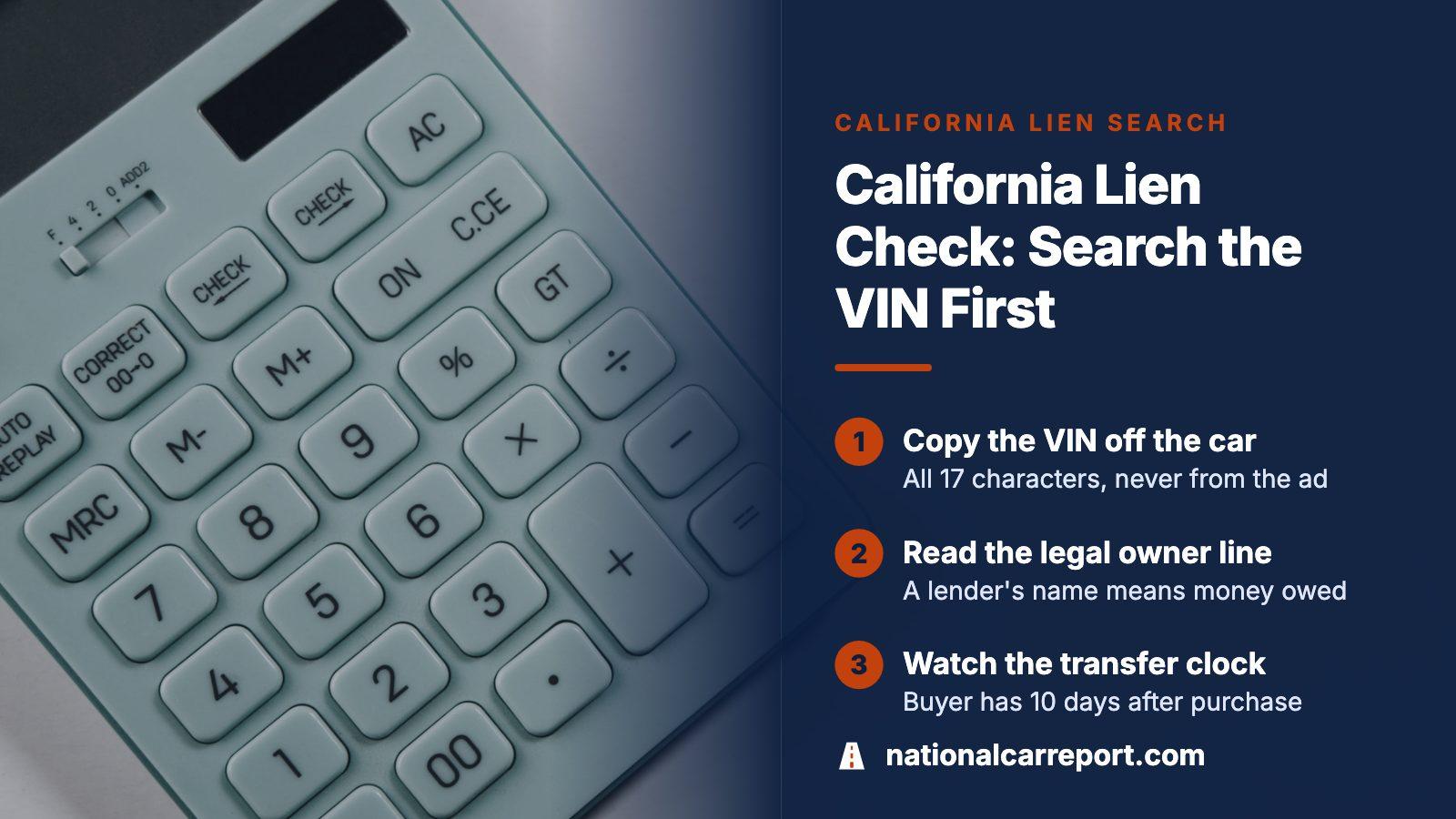
Take the VIN off the car and put it into the preview, which scans for lien, theft and impound records attached to that number. A lien hit points to a lender or shop that could still be owed money. No hit is only a screen, so also get the title in front of you and read who is named as legal owner.
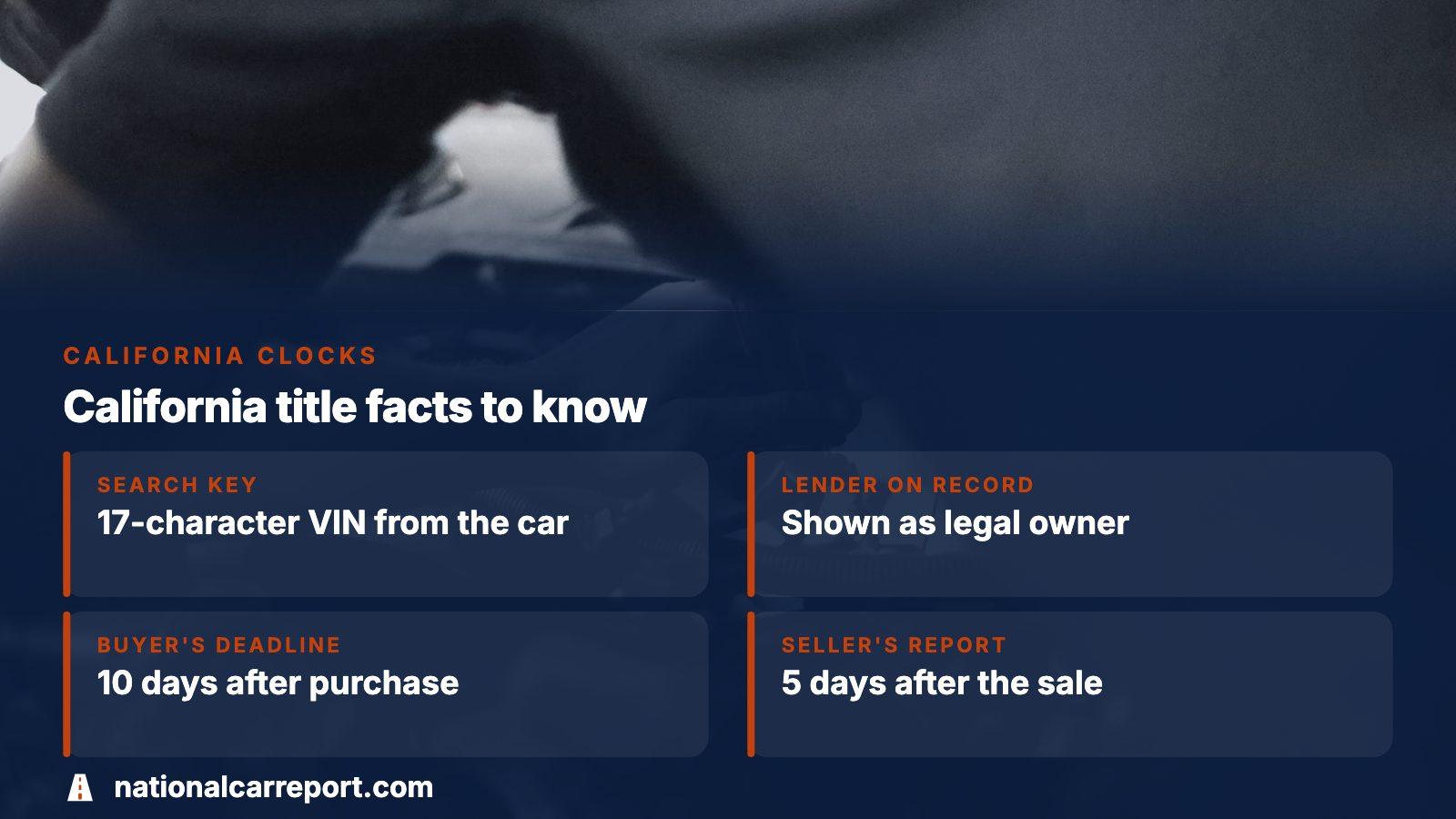
- What you search with
- The 17-character VIN, copied from the car itself
- Lender's title on the record
- Legal owner, shown on the California title
- Buyer's deadline to transfer
- 10 days after the purchase
- Seller's deadline to report the sale
- 5 days after the sale
What a lien search on a California car turns up
NationalCarReport focuses on claims a buyer cannot spot from the driver's seat: a lender that financed the car, a theft report, a tow yard that held it. One VIN search covers all three, since each follows the car even if an earlier state titled it.
- Lien records: a lender or other creditor with a reported claim on the car
- Theft records: a stolen-vehicle report and whether the car was ever recovered
- Impound records: a time when a tow or storage operator held it
- Title brands such as salvage, which can drag down what the car is worth
Seeing the preview costs nothing. Going on to the full report means a single payment with no subscription; the pricing page has the amounts.
Where a lien sits on a California title
The DMV describes the title as the document that names the legal owner and carries the vehicle's identifying details. When money is still owed, the lender's name and information are printed there, and the lender is called the legal owner while you, the person driving it, are the registered owner.
Plenty of lenders hold no paper. In the state's Electronic Lien and Title program, a participating lender keeps an electronic ownership record and the registered owner receives a registration card. A seller with no title in the drawer may be honest and the lien still real. Establish whose name the DMV record shows as legal owner.
How to run the search before you hand over money
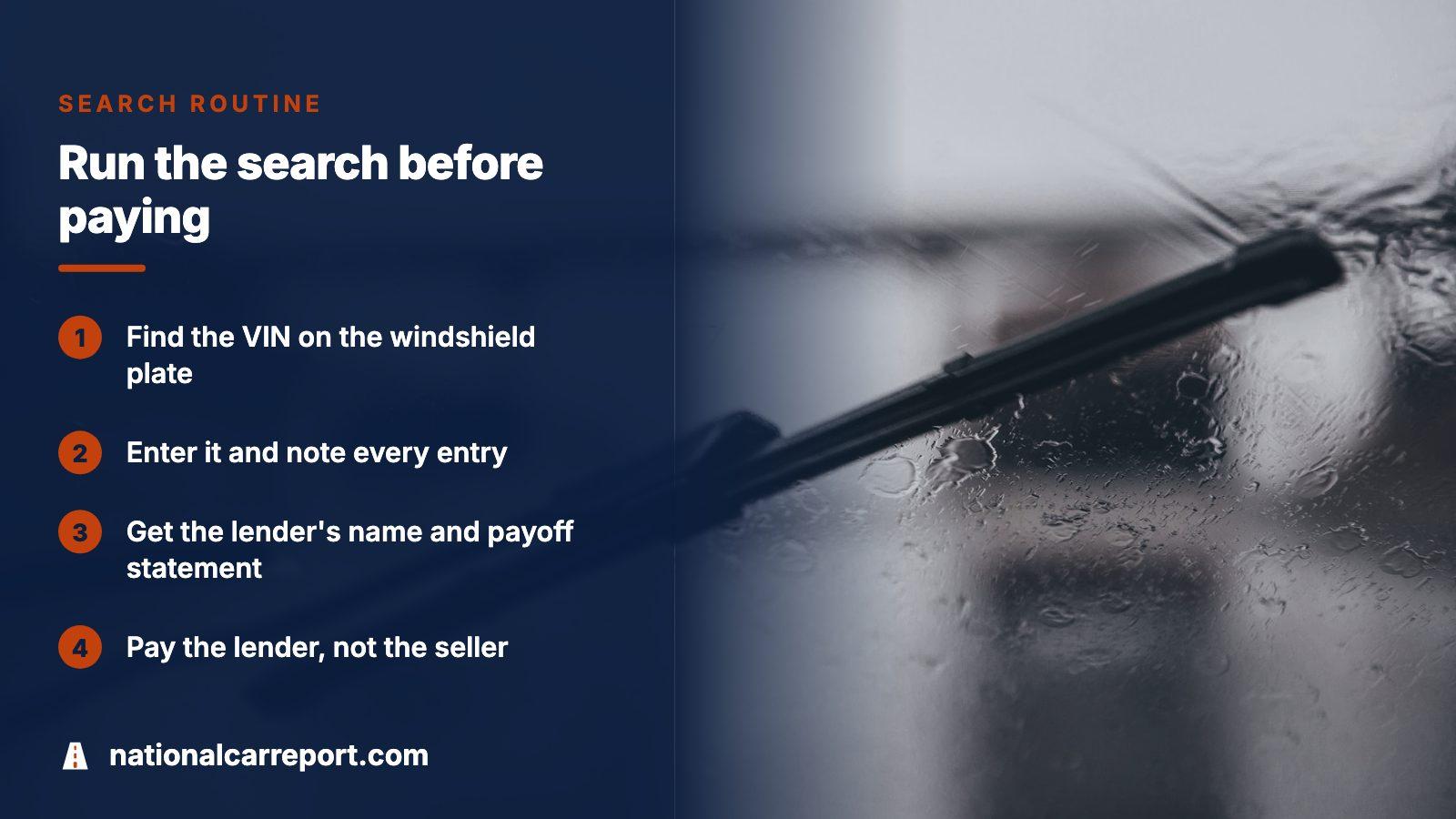
- Find the VIN in two spots: the plate at the foot of the windshield, seen from outside, and the sticker on the driver's doorjamb. Compare both with the listing.
- Enter it in the preview and jot down every lien, theft or impound entry.
- If a lender turns up, request its name from the seller plus a payoff statement giving the balance and an expiry date.
- Ask to see the title, or the registration card if the lender keeps an electronic record, and match the VIN and names against the car.
- Settle in writing how the loan gets paid, and send that money to the lender, not to the seller.
What each result means and your next move
| Result | What it suggests | What to do |
|---|---|---|
| Lien reported | A lender may still hold a claim | Identify the lender and get a written payoff before any money moves |
| No lien shown | Nothing reached the sources searched, which is not proof of a clean title | Ask for the title or card and confirm the legal owner field |
| Theft record, no recovery | The car may still be listed as stolen | Walk away and tell police if you know where the car is |
| Impound record | A tow or storage operator once held the car | Ask who paid the bill and whether a sale followed |
| Seller not the named owner | The person selling may be unable to sign | Pause until the paperwork and names line up |
| Loan paid, lien still listed | The lender's release may be stuck | Ask for a signed release and see the section on clearing a lien |
Why a clean result still needs a second look
The Justice Department's national title system centers on brands, odometer figures, insurer total-loss determinations and transfers to salvage yards, and its consumer page does not list liens among the results. The federal rule on what each state must send names the VIN, the title description with brands, the person the title was issued to, salvage acquisitions and odometer data. A lender is not in that list.
What this means for you
No federal record will tell you a car is free and clear. Use the VIN search to catch what it can, then settle the question with the California title or electronic record and a statement from the lender.
For a record straight from the state, the DMV's online request prints only your own vehicle's record. Another person's is requested by mail on form INF 70, and the page does not promise liens are included.
Liens that come from a repair shop or a tow yard
A bank is not the only possible creditor. Under California rules, a shop or yard that fixes, hauls or stores a car and goes unpaid holds a lien on it, and it must keep physical possession to enforce it. For an impounded car, the claim starts at the tow.
The DMV splits lien sales at $4,000 in value. For a car worth less, the yard mails notice well ahead, posts it publicly, and the listed owners get 10 days to oppose. If the seller says the car just came back from a shop or yard, ask to see the paid bill, because an uncleared lien can follow the car to you.
Getting a lien released and the title cleaned up
Once the loan is paid, the lender gives up its interest. If the lender is in the electronic program and the registered owner satisfied the lien, the DMV mails a paper title in the owner's name, with an average wait of eight days. A lender holding paper signs it over. The DMV lists form REG 166, Lien Satisfied/Title Holder Release, among its forms.
- If the lender merged or closed, use the DMV's financial institution locator to find a successor
- If nobody will sign, send a certified letter to the address on the registration, then wait 30 days
- After that, file a Statement of Facts, REG 256, with the returned letter and a bond for the car's current retail value
- If the lender says it has no record, ask for a notarized statement saying it has no interest
On the bond route the DMV expects to respond in 4 to 6 weeks. Skip a car whose release depends on that process unless the price covers the wait.
California paperwork and deadlines once the lien question is settled
In a private sale the buyer has 10 days to put the car in their name, while the seller has 5 days to tell the DMV about the sale. The seller signs line 1 of the title, and a bill of sale signed by both is needed when the seller differs from the titled owner. Cars under 10 years old need a mileage record, and a smog certification, fees and use tax complete the package.
A change of owner or lender must reach the DMV within 10 days, so a payoff is not something to tidy up next month. A lost or damaged title is replaced with REG 227.
Run it now, then verify the answer
Put the VIN into the preview and read the lien, theft and impound lines first. If something shows, the full report adds detail you can take to the seller or lender. If nothing shows, the check that counts is still ahead: the title or electronic record in the seller's name, and a lender's written word that the car is paid off.
Where this information comes from
- California DMV: Titles — what appears on a California title, including the lienholder
- California DMV: Title transfers and changes — reporting deadlines and forms for lien release and replacement titles
- California DMV: Financial institution locator — what to do when the lender has closed or will not release
- California DMV: Lien sales for vehicles — how repair, towing and storage liens work
- California DMV: Electronic Lien and Title program — how electronic lender records replace paper titles
- US Department of Justice: NMVTIS for consumers — what the national title system does and does not report
Sources and photos: Facts checked against the sources above in November 2026. Photos by Sasun Bughdaryan, Thibault Valjevac and Mustafa Sheikhmouss on Unsplash; diagrams by NationalCarReport.
Keep reading
- Vehicle Lien Check by VIN: Nationwide Lien, Theft and Impound RecordsThe same search without the California rules, for a car from any state
- Car Lien Holder Search: How to Find the Lender Behind a VINFind out who the lender is and how to reach them
- DMV Lien Release Search: How to Confirm a Lien Is GoneConfirm a paid-off loan was actually released
- Stolen Car Database in Los Angeles: How to Check a VINThe theft side of a California VIN search
Frequently asked questions
Can I do a California lien search with just the VIN?
Yes, the VIN is the search key. Enter it in the preview and it looks for lien, theft and impound records on that car. Treat the answer as a first screen, then confirm the legal owner on the California title or the lender's electronic record before you pay.
Is the lender always printed on a California title?
When money is owed, the DMV says the lienholder's name and information appear on the title. Lenders in the electronic program hold the record instead of paper, so a seller may have no title to show. Ask for the registration card and the lender's name in that case.
Does the national NMVTIS record show liens?
No. The consumer page lists title information, brand history, odometer readings, insurer salvage calls and transfers to salvage yards, but not liens. The federal rule on what states send does not include the lender, so a clean national report says nothing about a loan.
What if the lender closed or merged?
The DMV keeps a locator that lists lenders that closed, merged or changed names, with a possible successor. If no one can sign a release, the DMV describes a route using a certified letter, a Statement of Facts and a bond, and tells owners to expect an answer in 4 to 6 weeks.
Can a mechanic or towing company claim a lien on a car?
Yes. Anyone who repairs, tows or stores a vehicle and goes unpaid can claim a lien and may sell the car through the DMV's lien sale process, but only while holding it. If the car recently left a shop or yard, ask the seller for paid bills.
Now check the car itself
The guide explains what to look for. The report shows what this VIN has on record.