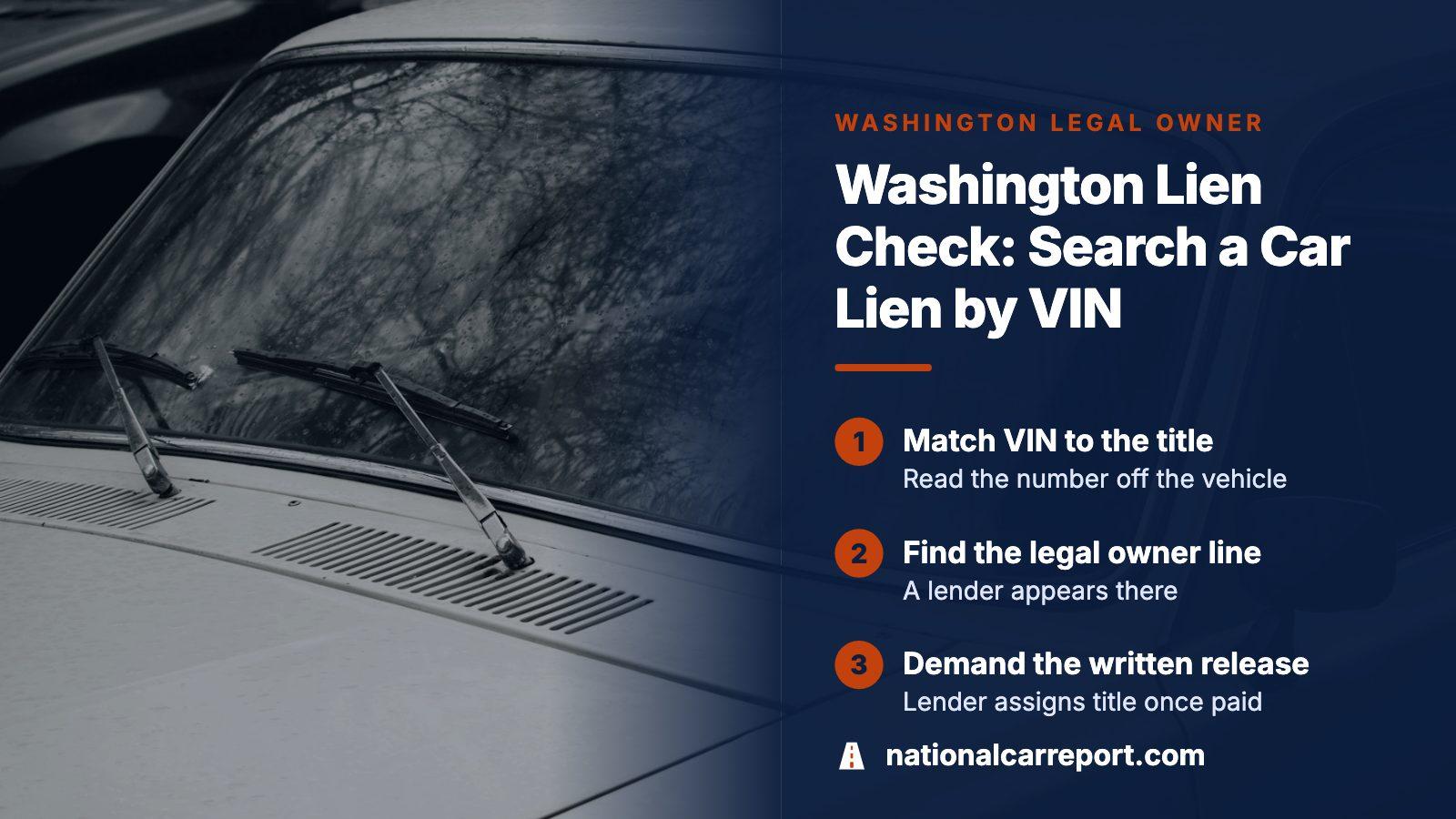
THE SHORT ANSWER
Searching a Washington car for a lien starts with the VIN read from the vehicle, compared against the title. A lender shows up as legal owner on that title. Next, run the VIN through a lien and impound screen. If a lender appears, demand its written release before paying. The licensing agency keeps individual owner details private, so title and report do the work together.
- Where a lender shows
- The legal owner line on the title
- Lender's payoff duty
- Assign the title once nothing more is owed
- Seller's report of sale
- Due within five business days
- Buyer's title application
- Due within 15 days of delivery
What a Washington lien search can and cannot answer
Most people typing this want a yes or no on a loan. The answer comes in two layers. The first is paper: Washington treats a lender's claim as official once its name and address are on the newest title, or once the state receives the title or an application with fees. So the title is your first document.
The second layer is the VIN. A report built on the number can pull lien and impound entries the seller never mentioned, beside theft and brand history. We could not confirm that the state's licensing agency runs a public lien lookup for buyers, because its title pages refused our automated read, so this page describes none.
Reading the title: registered owner and legal owner are different people
Washington titles name two roles. The registered owner drives and registers the car. The legal owner holds a perfected security interest, and on a car with no loan is just the registered owner again. A bank, credit union or finance company on that second line means a loan is open or was never cleared.
| What you see | What it usually means | What to do |
|---|---|---|
| Legal owner is the seller | No lender on record | Still run the VIN; paper can be out of date |
| Legal owner is a lender | Loan open, or release not filed | Ask for a written payoff and release |
| No paper title offered | Lender holds it, or only an electronic record exists | Ask which, and get proof from the lender |
| Title marked duplicate | A replacement was issued | Ask why, and who signed for it |
A dealer selling with financing can also file a transitional ownership record, letting a lender secure its claim before the paper title is in hand. Such a car can look free and clear on one document and encumbered on another.
Running the check from the VIN
Get the number before you make the trip. Copy it from the car itself, where it shows through the lower windshield or on the driver's door post, and request a photo of the registration. If the three differ, walk.
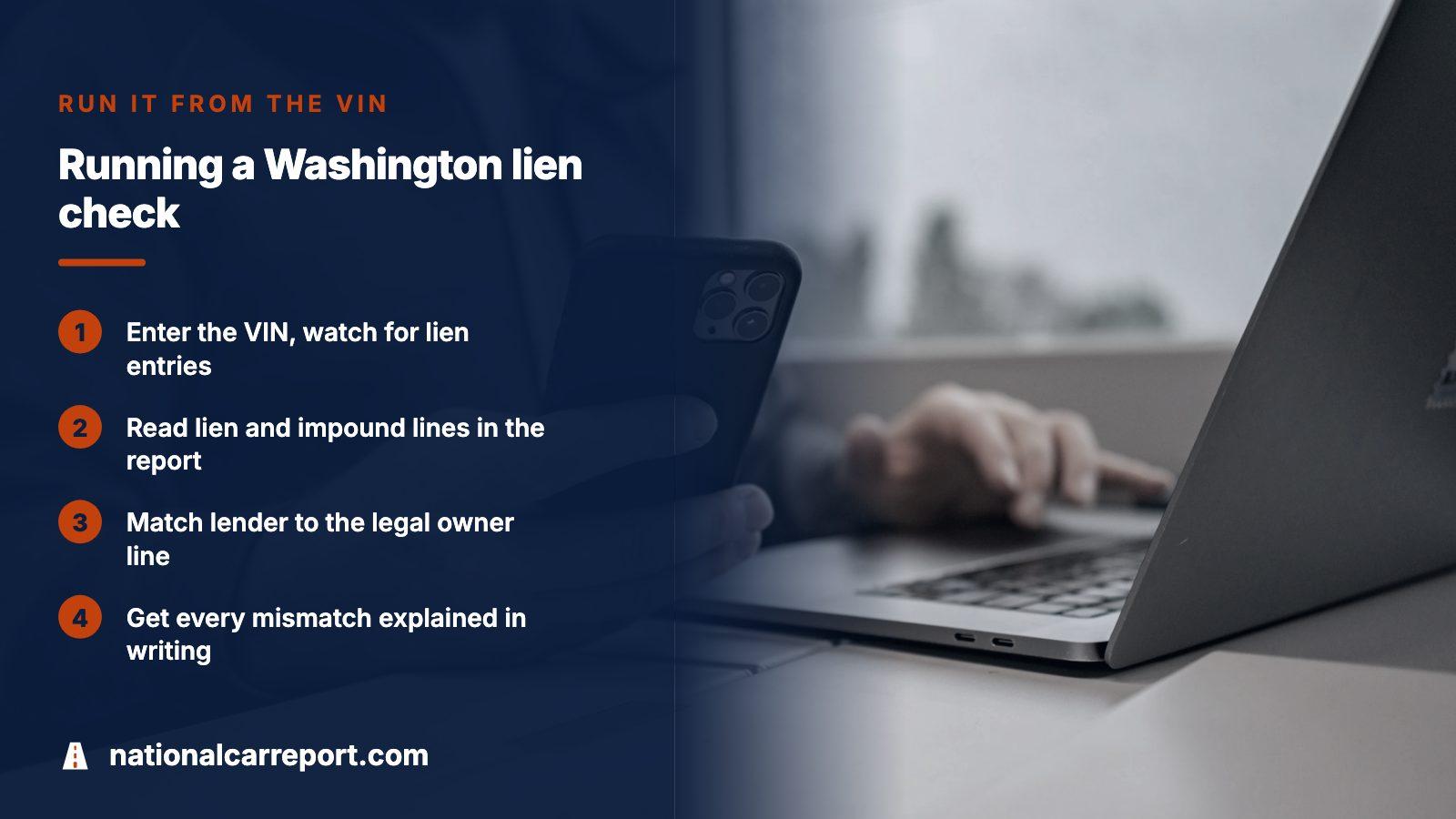
- Put the VIN into the preview here and watch for lien, theft or impound entries.
- For a car still on your shortlist, open the full report and read the lien and impound lines first.
- Match any lender named there to the legal owner line on the seller's title.
- Ask the seller to explain every mismatch in writing, before the deposit.
The preview shows whether a record is worth opening. It does not replace the seller's paperwork.
What a Washington lender owes at payoff
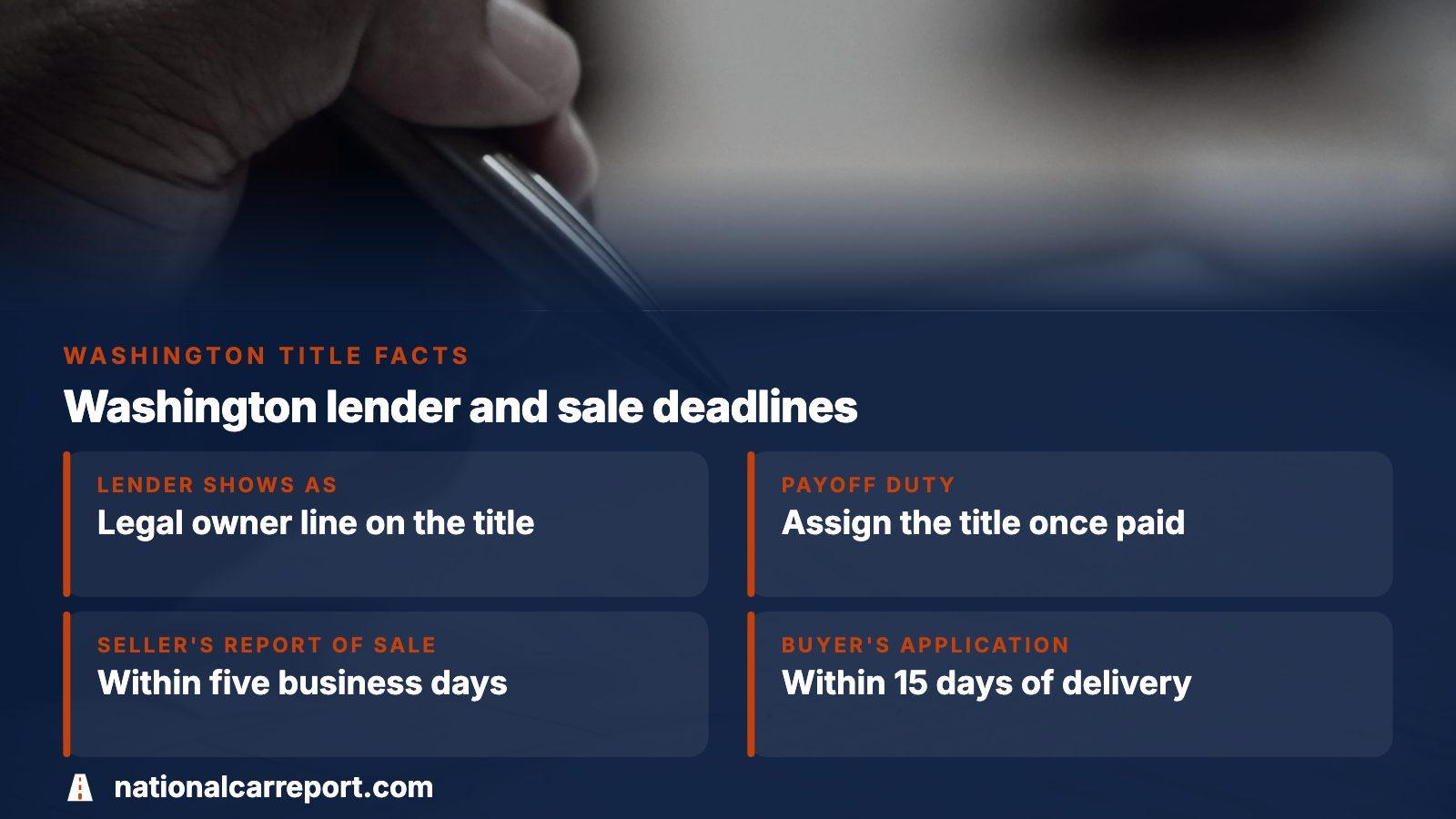
The state's rules put the duty on the lender. Once the borrower has met the agreement and owes nothing further, the lender has to let go in one of two ways: sign the title over to the registered owner and send it to the state with the fee, or sign it over to the person buying from that owner, using the owner's release of interest.
If a lender ignores a proper demand for ten days, and the delay costs the owner or buyer money, it owes $100. That is a modest figure, which is exactly why you should not close a deal on the promise that the paper is on its way. Ask for the lender's written release showing the VIN, or insist that the payoff happen while you are present and the title is handed over the same day.
A seller's word is not a release
Hold out for a dated letter or release form from the lender, or a title already signed over. A text saying the loan is paid leaves the lender's claim exactly where it was.
Shop, storage and repair liens
A bank is not the only party that can hold a claim. A garage that repaired a car and never got paid can use a chattel lien to sell it or take ownership. A self-storage operator can sell a stored vehicle to cover unpaid rent. Both routes run through county filings and state forms, and both end with a title that may look clean.
- A chattel lien needs a certified copy of the county filing and proof of mailed notices to both owners on record.
- Someone other than the owner of record who ordered the work, or a car the state has no record of, calls for a court order.
- A storage sale also needs a court order if the car left the operator's hands, or a lender is already on the record.
Ask the seller how the car arrived. If a tow yard, repair shop or storage unit is in the story, read the lien and impound lines of the report slowly.
Red flags that suggest an unresolved lien
- The seller will not show the title and cannot say who holds it.
- The registered owner's name differs from the seller's photo ID.
- A lender appears on the report, and the seller says it was paid off years ago.
- The seller wants cash today and offers to mail the title later.
- The VIN on the car, the paper and the report is not identical.
Any one sign can have an innocent cause. When two or three pile up, call the lender yourself. Washington keeps private owners' contact details out of public reach, so an unverified claim should be treated as genuine.
Closing the sale when a lender is involved
Best case, you and the seller meet at the lender's branch, the loan is paid, and the title is signed over to you on the spot. A seller with no loan signs the release section of the title, hands it over, and provides an odometer statement when one is required. The state then expects a written report of sale from the seller within five business days.
You, in turn, have 15 days from delivery to apply for a new title. Filing later draws a penalty, and passing 45 days is a misdemeanor counted day by day. The penalty is waived when a legal owner dragged its feet on the release, so save every message to the lender.
A separate release paper generally needs a notary or certification. A signature in the title's own release section does not.
What national title data adds, and where it falls short
The national title database reaches 87 percent of U.S. vehicles, but only a little over half of the states feed it. Its consumer report is built around five indicators, and a lender's lien is none of them. That omission is the gap a VIN report with lien and impound entries aims to fill.
No database sees everything. A clean result can mean nothing was filed, so treat it as a cross-check, then ask the lender or inspect the car. NationalCarReport screens stolen, lien and impound records nationwide, so an out-of-state import gets the same look as a local car.
Price of a full report, and your next move
Start with the preview at no charge to see whether a lien entry exists for your VIN. If it does, one purchase gets you the detail: a lone report, or a pack for a shopper with several Washington cars in mind. Nothing renews, and the pricing page has the dollar figures.
Run the preview, confirm the legal owner on the title, and request a written release if a lender appears. A theft or impound entry means stepping back first.
Where this information comes from
- Washington Legislature: RCW 46.12.675, perfection of security interest — How a lender's claim is recorded and what the lender must do at payoff.
- Washington Legislature: RCW 46.12.650, releasing interest and reports of sale — Seller duties at sale, the report of sale and the buyer's title deadline.
- Washington Legislature: RCW 46.04.270, legal owner — Defines the legal owner, the role where a lender appears.
- Washington Legislature: WAC 308-56A-265, releasing interest — Acceptable release documents and when signatures need notarizing.
- Washington Legislature: WAC 308-56A-310, chattel lien — Documents and court-order triggers for a repair-shop lien title.
- Washington Legislature: WAC 308-56A-312, self-storage lien — Storage-facility sales and when a court order is required.
- NMVTIS: information for consumers — Coverage figures and the warning about false negatives.
Sources and photos: Facts checked against the sources above in November 2026. Photos by Tigran Shishmanyan, Anastasiia Nelen and Masjid MABA on Unsplash; diagrams by NationalCarReport.
Keep reading
- Washington Title Check: Liens, WA Rebuilt Brands and Theft by VINBrands, rebuilt cars and the rest of a Washington title.
- DMV Lien Release Search: How to Confirm a Lien Is GoneHow to verify that a lender has actually released its claim.
- Car Lien Holder Search: How to Find the Lender Behind a VINFinding out which lender holds a claim on a car.
- PricingReport and pack options, one payment, no subscription.
Frequently asked questions
How do I check if a Washington car has a lien?
Read the title for a lender on the legal owner line, then run the VIN through a lien and impound screen. If the two disagree, ask the lender directly. Neither source alone is enough.
Can I buy a car that still has a lien in Washington?
Yes, if the loan is paid at the sale and the lender releases its claim. The lender must assign the title to the owner or to you once nothing more is owed. Pay the lender directly where you can and get the release in writing.
Who is responsible if the seller never pays off the loan?
The lender's claim stays on the car whoever holds it. A buyer who skipped a written release can lose money or the vehicle, so the payoff should happen with the title or release in your hands.
Does a clean title mean there is no lien?
Not by itself. A title can be outdated, a dealer may have filed an interim ownership record, and shop or storage liens follow other filings. Pair the title with a VIN report and ask how the seller got the car.
What if I bought the car and the lender never released its claim?
Send the lender a written demand with the VIN and the date. If it fails to act within ten days and you lose money, it owes $100. The late title penalty is waived when a legal owner failed to release, so keep your records.
Now check the car itself
The guide explains what to look for. The report shows what this VIN has on record.