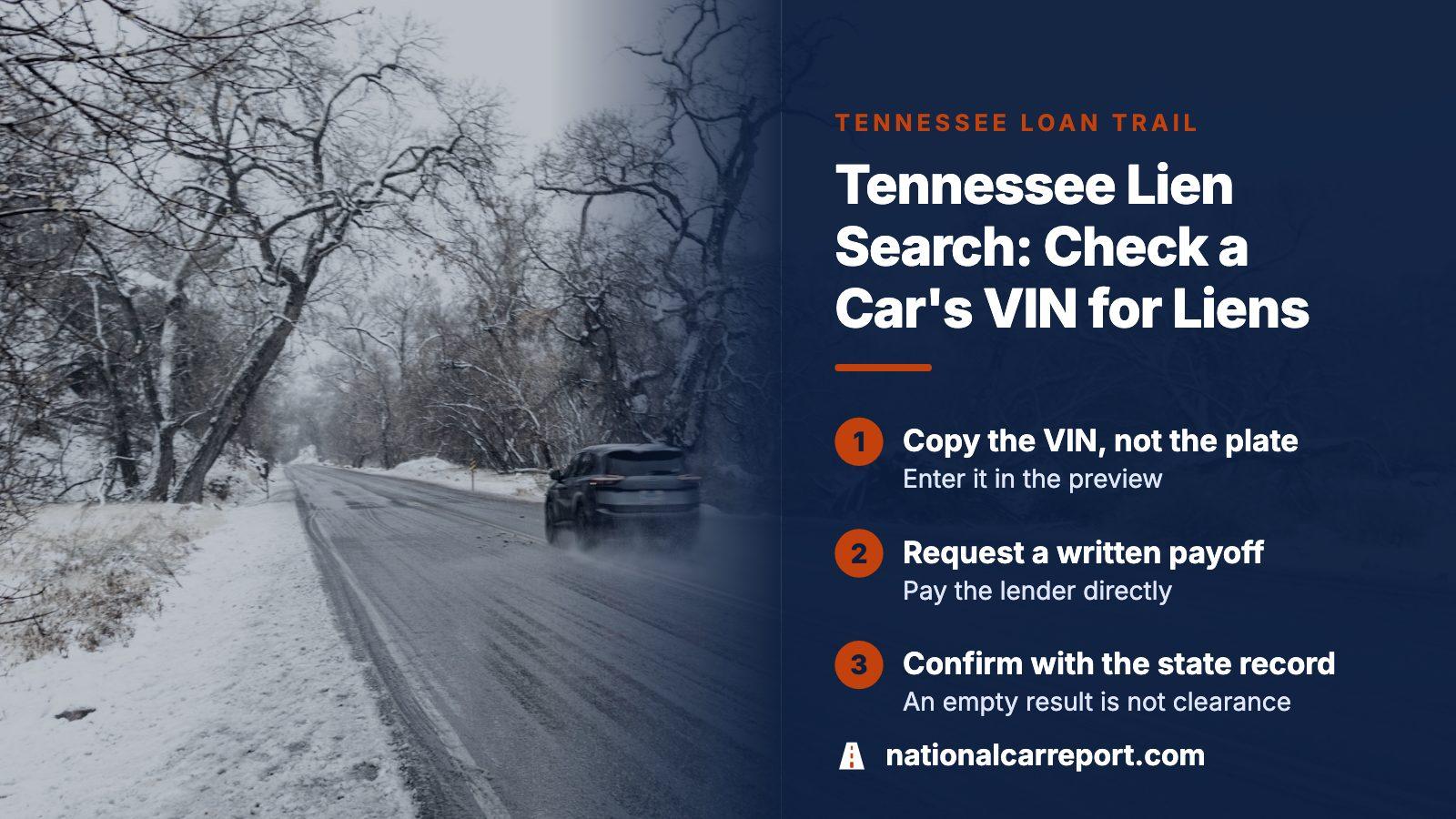
THE SHORT ANSWER
To run a Tennessee car lien check, copy the VIN from the vehicle and enter it in the preview. It searches for lien, theft and impound entries. If a lender appears, ask the seller for a written payoff and pay the lender directly. No lender listed does not prove the car is clear, because the national title feed does not require lienholder names. Confirm with the state record.
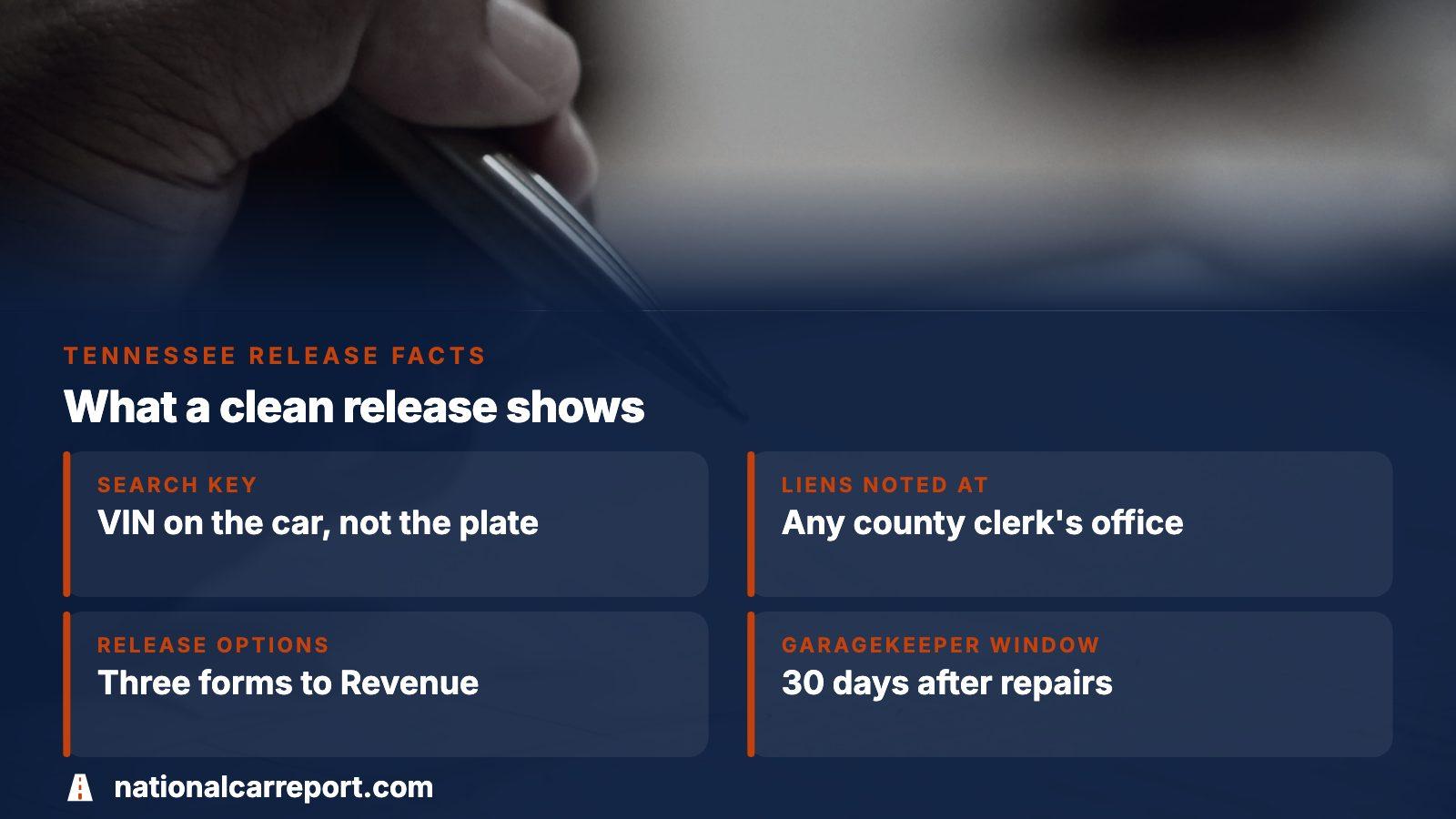
- Search key
- The VIN on the car, not the plate
- Where Tennessee liens are noted
- At any county clerk's office in the state
- Lender's release options
- Three forms, sent to the Department of Revenue
- Garagekeeper's window
- 30 days after repairs to pay the bill
What the VIN search looks for on a Tennessee car
The bank that financed a car is only one possible claimant. A tow yard may hold a bill, a repair shop may be owed for work, and a police report may still list the car as stolen. Each of those attaches to the vehicle. NationalCarReport's preview gathers what it can find on those fronts for any VIN, whichever state issued the first title.
- Lender claims that reached a source we read
- A yard's custody record, and a possible sale afterward
- A stolen report and whether the car came back
- Brands like salvage, which change what the car is worth
How a loan ends up on a Tennessee title
When a Tennessee buyer finances a car, the paperwork to note the lien goes to a county clerk, and any clerk in the state can take it. The Department of Revenue lists $11 to note the lien, $11 for the title, and whatever county processing charges apply. The lender's claim lives on the certificate of title, so a title the seller cannot produce deserves a question.
Other rules shape a sale. While a lien is open, only the lender can order a replacement title. Tennessee also refuses electronic signatures on titles, so one signed over on a phone screen is not valid. A car passed along with a loan attached counts as a refinance, so a family transfer can carry the debt with it.
A missing title is the loudest signal
If the seller claims the title is misplaced, in a safe, or sitting at the bank, the lender may be holding it. Find out which before paying.
Five steps from VIN to payoff letter
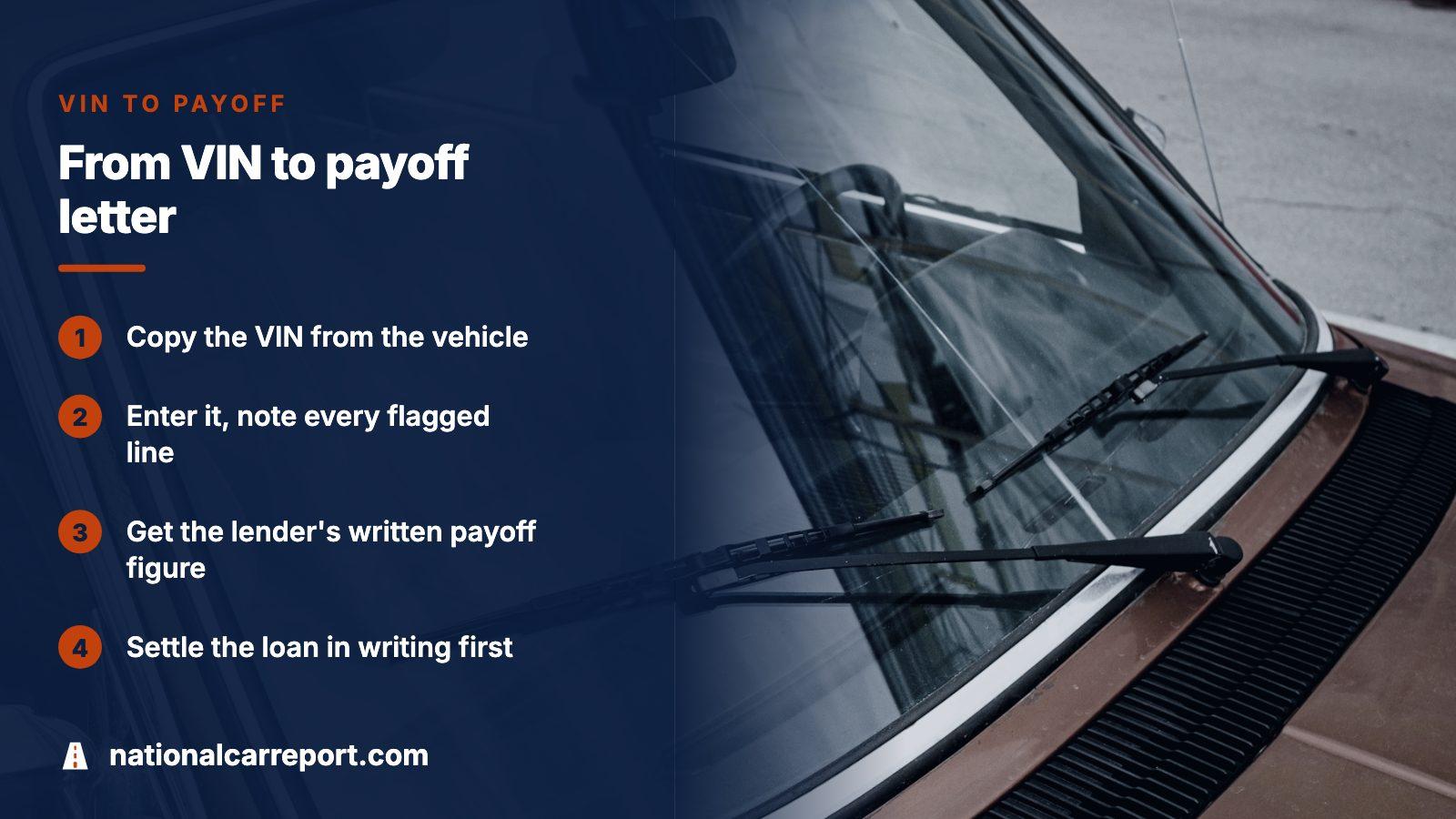
- Copy the VIN from the vehicle in person. The windshield-base plate and the driver's door-frame label should match each other and the seller's papers.
- Enter it in the preview and jot down every lien, impound or theft line.
- If a lender shows, ask the seller for its name and a written payoff figure that carries an expiry date.
- Ask to see the title. A paper one naming a lender needs that lender's signature on a release.
- Agree in writing how the loan gets paid, ideally straight to the lender, before cash moves.
What each result suggests, and what to do about it
| Result | What it points to | Your move |
|---|---|---|
| Lender listed | A claim that could still be open | Get a written payoff and pay the lender |
| Nothing listed | Nothing reached the records searched | Ask the seller for proof and confirm with the state |
| Theft, not recovered | The car may still be reported stolen | Walk away and tell police if you know its location |
| Impound entry | A yard once had custody | Ask who covered the fees and whether it was sold |
| Title in another name | The seller may lack authority to sign | Hold off until the names match |
| Loan paid, entry remains | The lender may not have filed its release | Request the release in writing first |
Why an empty result still needs a second look
Federal rules list what states must send to the national title system every 24 hours: the VIN, the title description with any brands, the owner or entity on the title, salvage acquisition data where the state collects it, and odometer disclosures. A lienholder is not on that list. A state may add more if the operator agrees, but nothing forces it.
That explains why federal consumer pages describe title, brand, odometer and total-loss data without promising lien coverage, and why they urge buyers to also request the state's own record. A quiet result is one more source to ask, not a green light.
What a clean release looks like in Tennessee
After payoff, the lender must tell the Department of Revenue. The department takes one of three documents: the signed, dated tear-away strip from the top of the title (its preferred choice), a photocopy of the title whose release section is signed, or a letterhead release showing the full VIN. An authorized representative signs, and the lender's legal name must match state records.
- Ask for the release itself, not a spoken assurance that the loan is settled
- Compare its VIN with the car's, character by character
- Confirm the lender named is the one on the title
- After a bankruptcy, a judge-signed release of debtors filed through the trustee is needed
Repair shop and tow yard claims
Tennessee lets a garage that fixed or stored a vehicle seek approval to sell it when the owner agreed to the work but never paid or collected it. The owner gets 30 days after the repair to settle. The shop then asks the state for owner and lienholder names, notifies each with proof of delivery, and allows ten days to pay and claim the car.
With no answer after 20 days, the shop may auction it, but no sooner than 15 days after the first newspaper ad. A car bought from such a sale can look tidy while earlier parties went unpaid. If a car's story involves an impound or a long repair, ask for the sale paperwork.
Getting the state record when the stakes are high
For a big purchase, go to the source. Tennessee's Vehicle Services Division answers mailed requests on Vehicle Information Request Form RV-F1313801. It is open to people eligible under the federal Driver's Privacy Protection Act and Tennessee law, the fee varies with what you request, and payment is by check or money order, never cash. As a buyer, you can also ask the seller or the lender to confirm the payoff in writing.
What running the check costs and what to do next
The VIN preview costs nothing and needs no account. If it surfaces something and you want the detail behind it, a single payment buys the full report on that vehicle, and packs exist for comparing several cars. Nothing recurs. See the pricing page for current rates.
Then hold the result up against the seller's story. A lender that appears should appear in the seller's account. A theft or impound entry needs an explanation you can verify. If a piece does not fit, pause and keep the paperwork and VIN together.
Where this information comes from
- Tennessee Revenue: LIEN-2 lien discharge — Supports the three accepted release documents and the lender-name match.
- Tennessee Revenue: LIEN-7 duplicate title with a lien — Supports the rule that only the lienholder can obtain a duplicate while a lien is open.
- Tennessee Revenue: LIEN-12 garagekeeper's lien — Supports the repair-shop timeline, notice and auction steps.
- Tennessee Revenue: LIEN-1 noting a lien — Supports the county clerk as the place a lien is noted.
- NMVTIS: state vehicle record request information — Supports the Tennessee record request form, eligibility and payment method.
- 28 CFR 25.54: responsibilities of the states — Supports what states must send to the national title system.
Sources and photos: Facts checked against the sources above in November 2026. Photos by Zoshua Colah, Max Tokarev and Masjid MABA on Unsplash; diagrams by NationalCarReport.
Keep reading
- Vehicle Lien Check by VIN: Nationwide Lien, Theft and Impound RecordsThe same check for a car from any state, not only Tennessee.
- DMV Lien Release Search: How to Confirm a Lien Is GoneHow to tell whether a lender has truly let go of its claim.
- Car Lien Holder Search: How to Find the Lender Behind a VINFinding which lender holds the claim, so you know whom to ask for a payoff.
- PricingOne report or a pack, paid once, with no subscription.
Frequently asked questions
How do I do a Tennessee lien search on a used car?
Pull the VIN off the vehicle and run the preview for lien, theft and impound entries. Next, request the title and have the seller name any lender. If one is listed, request a written payoff and plan to pay that lender directly. For extra certainty, the state can supply its own record.
Can I search for a Tennessee lien by license plate?
We do not offer plate lookups. Liens attach to the vehicle, so the VIN is the key. If you only have a plate, get the VIN from the seller, or find it on the title, registration card or insurance card, which normally carry it. Then run the VIN.
Does a clear result mean the car has no lien?
No. It means nothing turned up in the records searched. States are not required to send lienholder names to the national title system, so coverage varies. Treat a blank as one data point, then ask for the title and, on a larger purchase, the lender's written confirmation.
Who can remove a lien from a Tennessee title?
Only the lender. After the loan is paid, the lender sends the Department of Revenue a signed release in one of three accepted forms. The owner cannot clear it alone. If the lender is slow, keep your payoff proof and ask again in writing.
What if the loan is supposedly paid but there is no title?
Ask for the lender's release or a payoff letter showing a zero balance, and hold back full payment until the title or release arrives. A paid loan with no paperwork may still be on record. Without a release, you could inherit the problem.
Now check the car itself
The guide explains what to look for. The report shows what this VIN has on record.