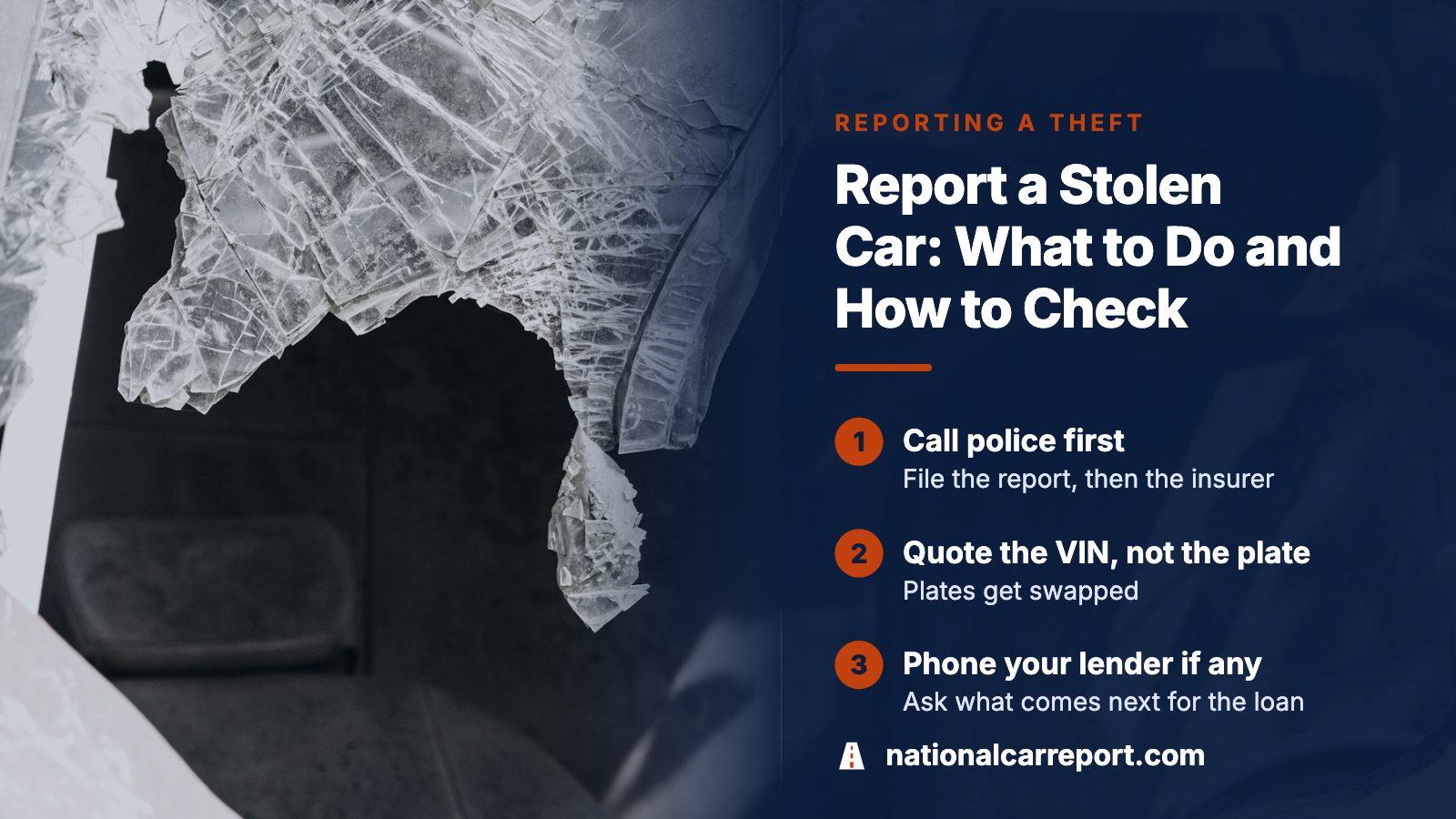
THE SHORT ANSWER
Call the police first and file the report, then phone the insurer, and the lender if there is a loan. Quote the VIN, because plates get swapped and the VIN stays put. A theft only shows up in nationwide records once someone has reported it. If you are buying instead, a VIN check pulls theft, lien and impound records for that exact car before you pay.
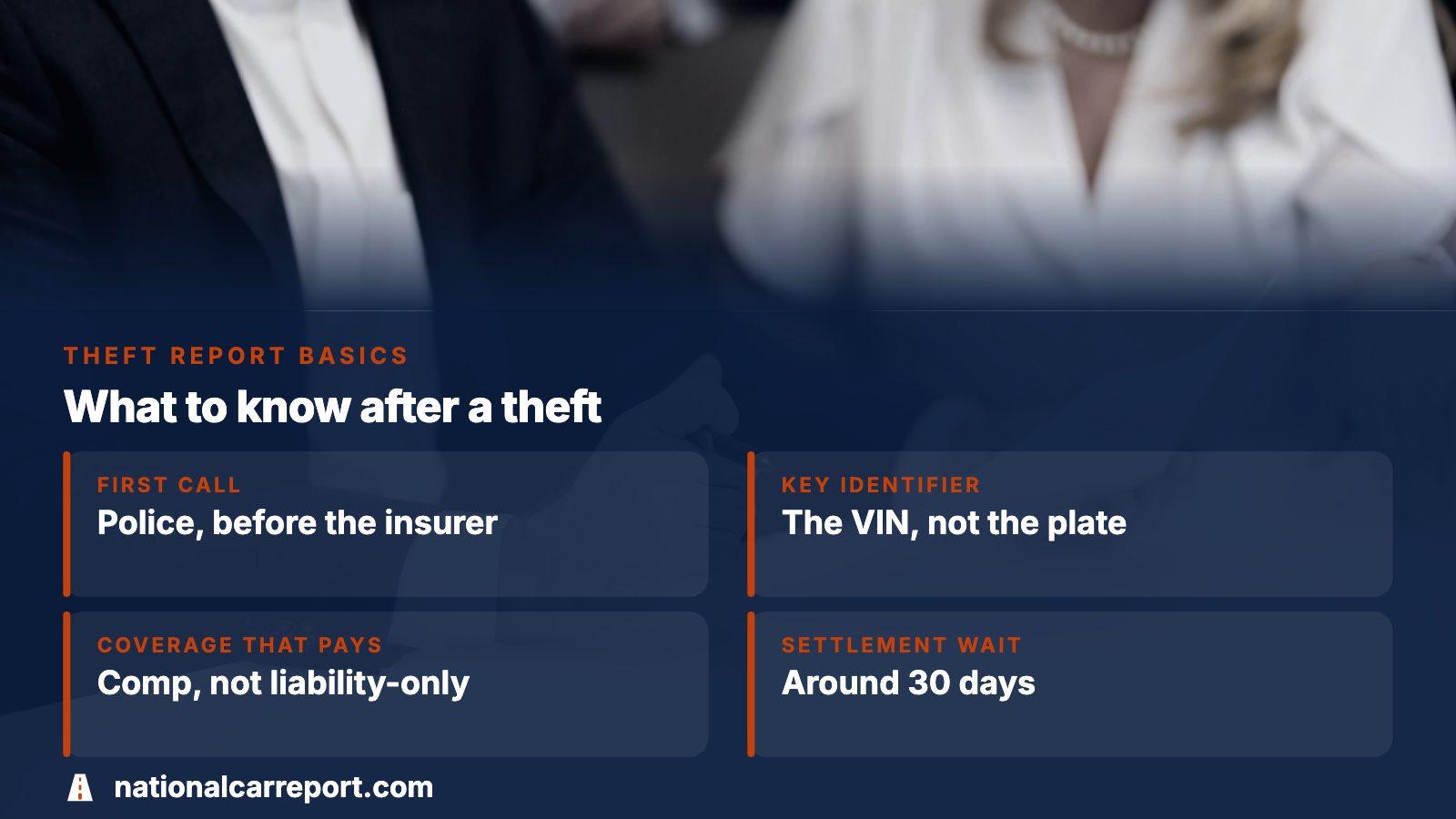
- First call
- Police, before the insurer
- Best identifier
- The VIN, not the plate
- Coverage that pays
- Comp, not liability-only
- Typical settlement wait
- Around 30 days
A police report turns into a nationwide record
Two kinds of reader arrive here: the owner looking at an empty parking space, and the buyer who wants proof the car for sale is not someone else's. Both depend on one thing, a record that stays attached to a VIN as the car crosses state lines.
When police take a report, the car is entered in the national database of stolen vehicles. An officer in any state who runs that VIN sees the flag. Recoveries mostly come from the flag, not from detective work: a routine traffic stop, an impound lot, a plate reader on a patrol car, or a title application that surfaces the record.
Tags are the thief's weak point and the VIN is the strong one. Swapping a tag takes seconds, but a car that needs a new identity has to get past its VIN.
Reporting it, step by step
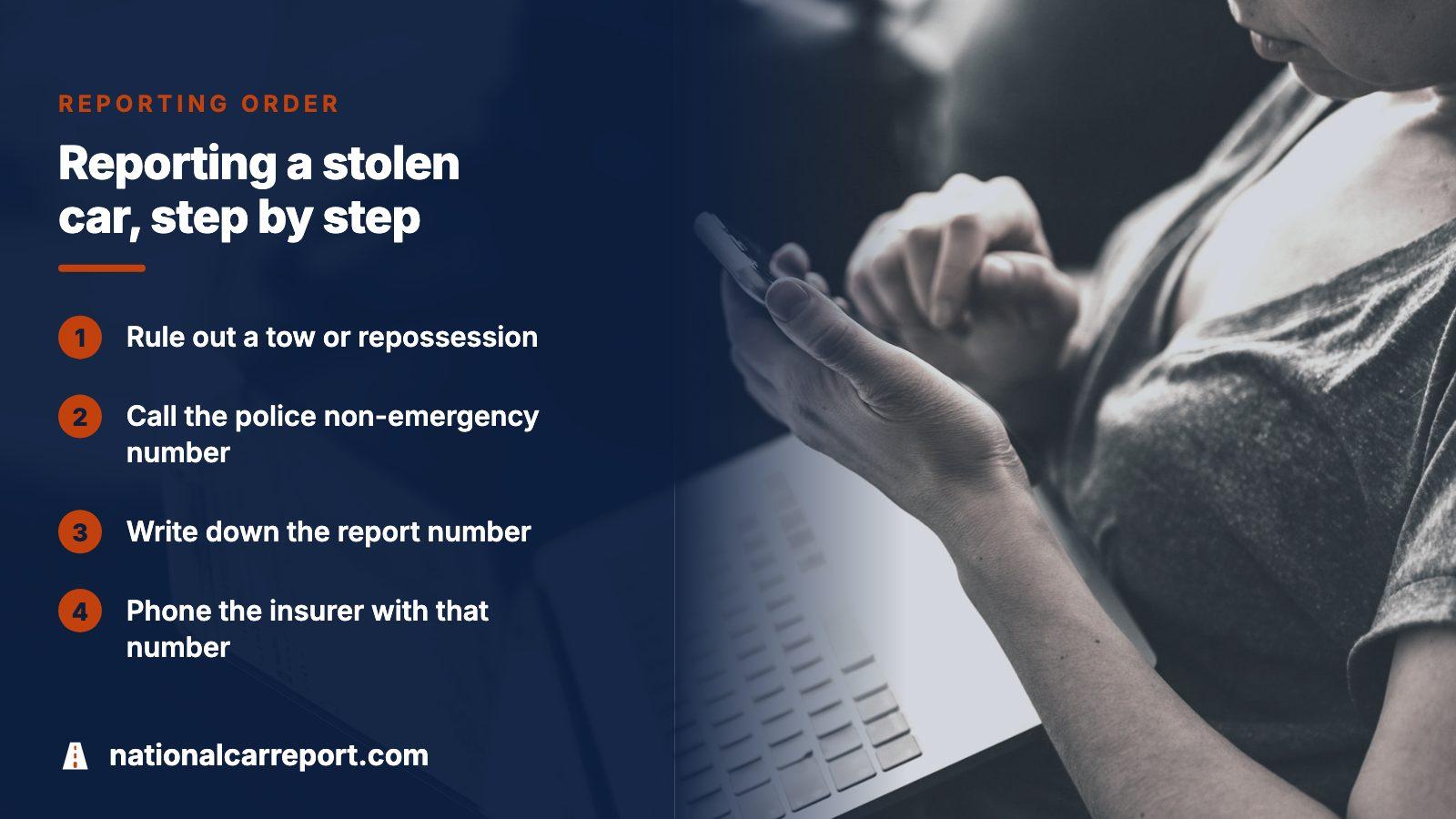
- Rule out a tow, a repossession, a relative with a spare key, or a street you misremember. Two minutes here can save a false report.
- Call the police. Choose the non-emergency number unless the theft is underway or someone is in danger. Some departments take reports online, some only in person, so ask first.
- Write down the report number and which department took it. Everyone downstream asks for both.
- Phone the insurer with that number and answer the key question honestly: were the keys inside?
- Tell the lender if there is a loan. It does not disappear with the car.
- Open any tracking app, or check for a tag left aboard. Pass a location to the officers and keep your distance.
File first, search second
Circling the neighborhood before you call feels productive, but it burns the head start. The car cannot be flagged nationally until the report exists.
What the officer will ask for
| Detail | Why it counts |
|---|---|
| VIN | Stays with the car whatever tags it wears |
| Plate | The first thing patrol officers and plate readers look at |
| Year, make, model, color | The description broadcast to units |
| Odd details | Body damage, decals, custom wheels, racks |
| Last seen | The place and the time you are sure of; it sets the search area and the camera window |
| Policy number | Lets the claim open right after the report |
Give a time you know, not a guess. Keep a picture of the VIN plate and the door label on your phone or in cloud storage, since the paperwork in a glove box leaves with the car.
Insurance, the lender and what you get back
Theft is paid out under comp coverage. A policy that carries liability only pays nothing when the car is stolen. Settlement is the car's market value just before the theft minus your deductible, a number that can land far below the price you paid or the balance you owe.
With a loan or lease, the settlement goes to the lender first. If you owe more than the car was worth, you cover the gap yourself unless you bought gap coverage. Ask the lender how to handle payments in the meantime, and keep the policy active until the claim closes.
Insurers commonly wait around 30 days before paying, in case the car is found; the policy and state rules set the actual date. Belongings that were inside, such as a laptop or child seat, usually fall under homeowners or renters insurance with a separate deductible, so list them now.
What a nationwide stolen, lien and impound check shows
The police report is something you file; a VIN check is something you read. It looks up a single vehicle and returns records tied to that VIN from sources collected nationwide, not just from the state where the car sits.
- Theft records filed against the VIN
- Liens, where a lender holds a claim on the car
- Impounds, where the car was held at a tow lot
- Title brands, such as salvage and theft-recovery
- Salvage and auction history with photos, plus insurance records
- Odometer readings and open recalls
What it cannot do matters as much. It does not file anything with police, locate a missing car or halt a sale, and a theft no one reported will not appear. Weigh a clean result alongside an inspection.
Running the check from the VIN
- Locate the 17-character VIN. A small plate at the dashboard corner on the driver's side shows it through the glass, and the door jamb label, title and registration carry it too.
- Read it from the car itself rather than an advert or screenshot, and type it exactly.
- Start the preview, which costs nothing, and check that the vehicle it names is the one in front of you.
- Buy the full report to see the theft, lien and impound records.
Compare the number on the dashboard plate, the door label and the paperwork. A mismatch between any two is a reason to stop and press the seller for an explanation.
Reading theft, lien and impound results
| What you see | What it usually means | What to do |
|---|---|---|
| Theft record, no recovery shown | The car may still be listed as stolen | Do not pay; give police the VIN and the location |
| Theft-recovery or salvage brand | Stolen, found, branded for good; value drops | Price it down and inspect it mechanically |
| Lien listed | A lender still holds a claim | Get written proof the lien is cleared before paying |
| Impound record | The car sat in a tow lot | Ask why, and ask for the release paperwork |
| VIN differs from the car | Plates or labels may have been swapped | Walk away |
Other warning signs sit outside the record: pressure to pay in cash fast, a title in a stranger's name, and VIN labels that look scratched, glued or mismatched.
When the stolen car is found
Cars often come back, in states from untouched to stripped. Found before payout, the car is assessed and either repaired or written off. Found after payout, it is normally the insurer's property, although a few insurers let the former owner buy it back.
- Hold off moving it until police and the insurer clear it
- Photograph its condition before it is towed or repaired
- Inspect the VIN plates for signs of tampering
- Ask a mechanic to look past the paint
- Ask who pays the tow and impound charges
Expect a theft-recovery or salvage brand on the title that never comes off. Run the VIN afterward to see how the record reads, because a future buyer will see the same version.
What it costs and where to go next
You can begin without paying, since the preview needs no payment. Unlocking the full report is one charge and never a subscription, a pack suits a buyer weighing a few cars, and our pricing page gives the specifics.
If your own car was taken, report it and call the insurer first, then return for the VIN check once it turns up or when you shop for a replacement. Buyers should run the VIN before a second viewing, and again if the seller's story changes.
Two outside lookups are worth adding: NICB's VINCheck, a free search of cars that member insurers reported stolen and unrecovered, and the NHTSA recall lookup, also free.
Where this information comes from
- NICB: VINCheck — A free lookup of vehicles that member insurers have reported stolen and not recovered.
- NMVTIS: National Motor Vehicle Title Information System — The federal title system where theft and salvage records surface.
- NHTSA: Recalls lookup — A free recall check by VIN, handy when inspecting a recovered or used car.
Sources and photos: Facts checked against the sources above in November 2026. Photos by Macro.jr, Michal Biernat and Carrie Allen www.carrieallen.com on Unsplash; diagrams by NationalCarReport.
Keep reading
- Theft Recovery Vehicle: Stolen, Lien and Impound Checks Before You BuyWhat a theft-recovery brand does to a title and a car's value once it is found.
- Vehicle Lien Check by VIN: Nationwide Lien, Theft and Impound RecordsHow to confirm a lender has no claim on the car before any money changes hands.
- Most stolen cars: the national list and how to check a VIN for theftNational theft data on the models taken most often, useful when choosing your next car.
- Sample reportSee how theft, lien and impound records appear in a finished report.
Frequently asked questions
How do I report a stolen car?
Contact the police and supply the VIN, plate, year, make, model, color, and the last known time and place. Before ending the call, confirm the report number. If the VIN escapes you, your insurance card or registration should list it. After that, notify your insurer, and the lender if there is a loan.
Can I report a stolen car online?
Some police departments let you file a car theft report on a website or by phone, and others only take it in person, so ask when you call. If the theft is in progress or anyone is at risk, skip the web form and use the emergency line. Whatever route you pick, leave with a report number.
Do I need a police report to claim on insurance?
In practice you do. A theft claim starts from the police report number, and with no report there is little to claim. The coverage that pays is comp, so check that your policy carries it, because liability-only will not help.
Will a VIN check show that a car was reported stolen?
It shows theft records on file for that VIN. It cannot show a theft that was never reported, and a very recent one may not have reached the records yet. Pair the result with a hands-on look at the VIN plates and the seller's paperwork before paying.
What happens to my loan if my financed car is stolen?
The loan stays with you. The insurer's settlement is applied to the balance, and when the car was worth less than you owe, you pay the difference unless you carry gap coverage. Let the lender know early and ask how payments should be handled until the claim closes.
Now check the car itself
The guide explains what to look for. The report shows what this VIN has on record.