THE SHORT ANSWER
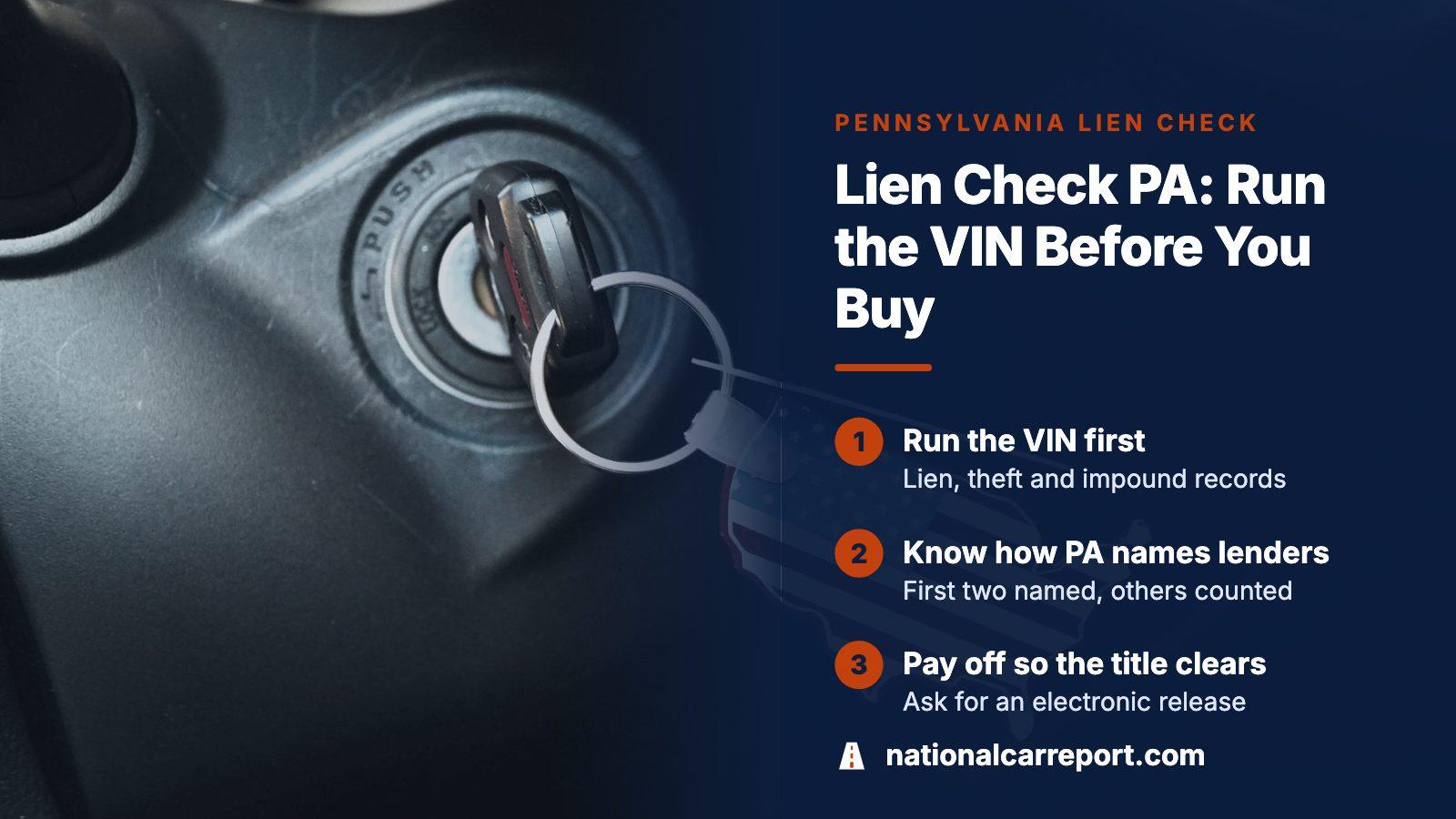
To run a lien check on a Pennsylvania car, put its VIN through the preview and look at any lien, theft or impound record that comes back. A lien means a lender may still be owed money and keeps its claim until it files a release. A clear result is not proof, because national title data does not require lender details. Settle it with the title and the lender: a Pennsylvania title names the first two lienholders.
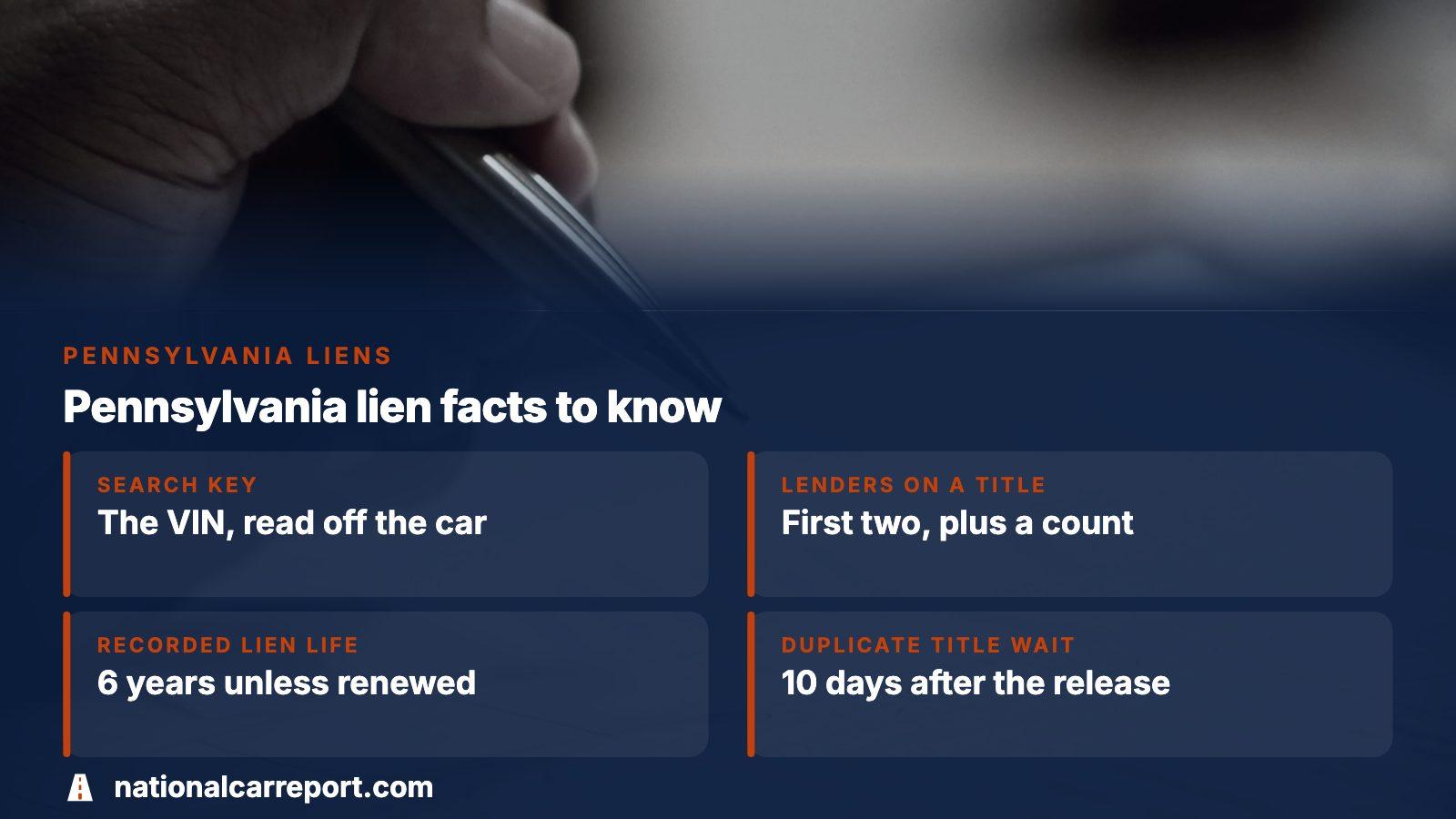
- Search key
- The VIN, read off the car itself
- Lenders named on a PA title
- The first two, plus a count of any others
- Usual life of a recorded lien
- 6 years unless the lender renews it
- Wait before a duplicate title
- 10 days after the title or an electronic release is processed
Three claims a Pennsylvania VIN search looks for
Several parties can hold a claim on one car, and every claim follows the VIN rather than the owner. NationalCarReport searches by VIN nationwide, so one Pennsylvania lookup can surface a loan, a theft report and a tow-yard record filed years apart.
- Lien: a loan secured by the car, where it reached a record the search reads
- Theft: a stolen-vehicle report, and whether the car came back
- Impound: a record that a tow or storage operator held it
- Title brands, such as salvage or flood, that cut value even when nothing is owed
How Pennsylvania ties a lender to a title
A Pennsylvania lender's claim counts once PennDOT has three items in hand: the application naming the lender, the fee, and either the current title or the maker's origin statement. The date PennDOT logs for that package is conclusive proof of when the claim began.
The resulting title names the first two lenders and counts any others. The Vehicle Code treats a title as notice to creditors, later lenders and buyers that a lien exists, so read the lender line first. Most liens lapse after 6 years unless renewed during the last six months, and each renewal adds three years.
Running the search on a Pennsylvania car
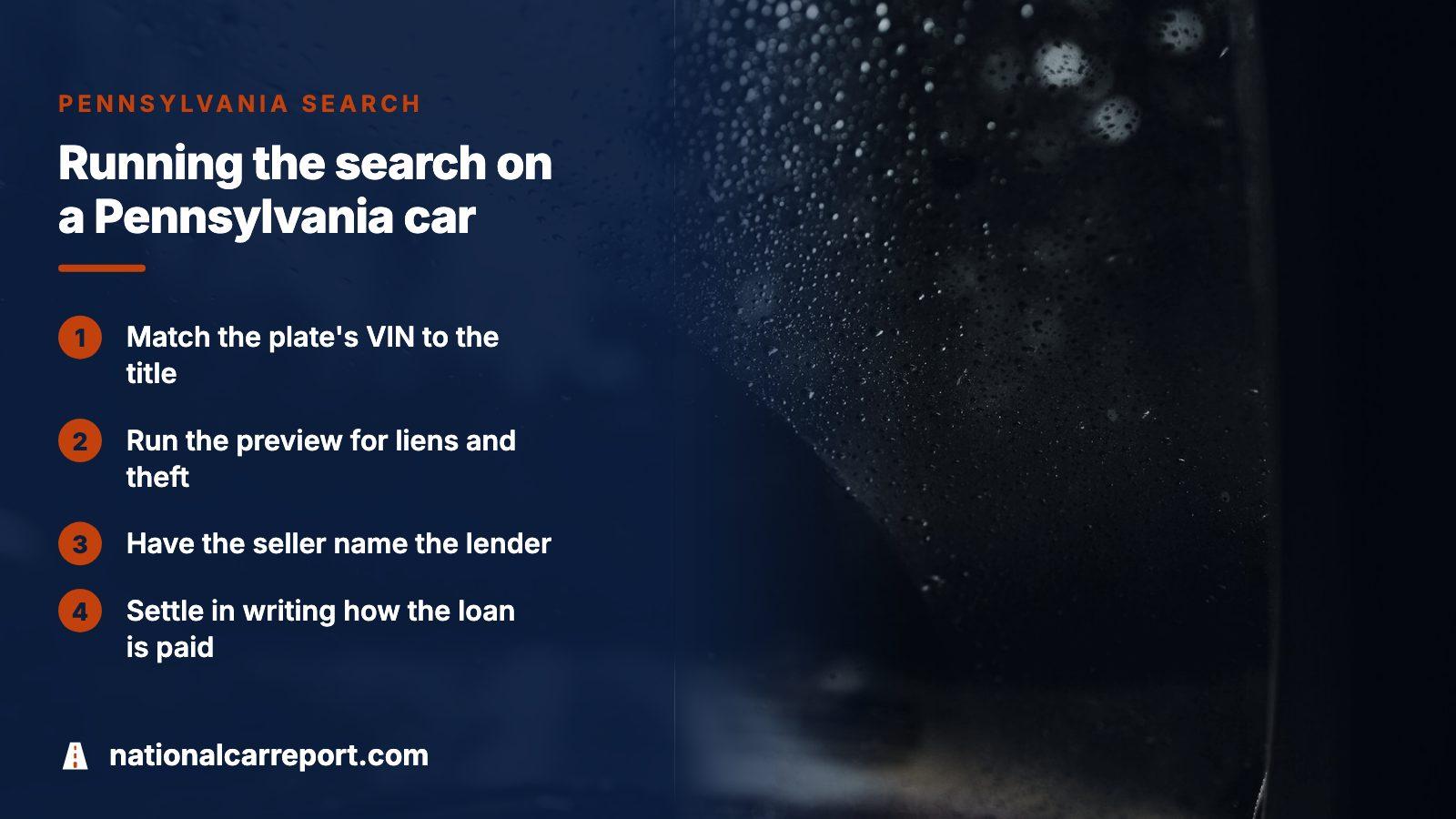
- Take the VIN from the plate fixed to the vehicle and match it to the title and to the registration card.
- Run it in the preview and note every lien, theft or impound record.
- If a loan shows up, have the seller name the lender and supply a payoff letter.
- With a paper title, match its lender line to the search result.
- Settle in writing how the loan will be paid before anyone signs.
Pennsylvania transfers go through an authorized agent, tag service or dealer, with the seller signing in front of the agent. Finish the check before that appointment.
What each result means for the deal
| Result | What it can mean | What to do |
|---|---|---|
| Lien listed | A lender recorded a claim that may be open | Name the lender, request a payoff letter, pay the lender directly |
| Nothing shown | No record reached the sources searched, which is not the same as no loan | Ask for the title and have the lender confirm in writing |
| Lien listed, seller says paid | The release may be missing or still processing | Ask for the lender's release or a title with no lender |
| Theft record, not recovered | The car may still be reported stolen | Do not buy until the report is cleared |
| Impound record | A tow or storage operator once held it | Ask who paid the charges and what the title says now |
| Title in another name | The seller may lack the right to sign | Wait until the names match |
When the seller says the lender has the title
Pennsylvania runs an electronic lien and title program, and any lender that finances cars as a business has to enroll to be recorded on a title. For the borrower, the title may then exist only as a record at the lender. PennDOT's buyer fact sheet says a paper title must be obtained before that seller can transfer the car or you can apply in your own name.
Individuals who lend on a car are exempt unless financing is their business, so a loan from a relative can sit on an ordinary paper title.
Buying from a dealer
A dealer may resell a financed car before the title changes hands if its powers of attorney and PennDOT's verification are in order. If the dealer's own act or omission leaves the lien uncleared 90 days after the purchase, the Vehicle Code requires it to accept the car back and return the price minus actual depreciation.
Paying off a Pennsylvania loan so the title comes clean
After a loan is repaid, the lender is supposed to move at once. PennDOT's guidance says the lender completes an electronic release immediately, and the department then prints the paper title and sends it to the owner on the next business day. A lender that will not deliver a satisfied title on demand commits a summary offense, fined $50 the first time and $100 later.
- A duplicate cannot be issued until 10 days after the title was processed or the electronic release was recorded.
- The owner then applies on form MV-38O, and if the record still shows the loan, the lender completes a section confirming the payoff date.
A duplicate replaces the original
Processing a duplicate voids the earlier title. If a seller says the first one was lost, check that you are handed the current title and that it shows no lender.
Cars from other states and liens that look old
A car titled elsewhere brings its lender along. PennDOT notes that out-of-state lenders often refuse to release a title until the loan is paid, so call the lender before the paperwork goes in. On a transfer from another state, PennDOT records the existing lender on the Pennsylvania record.
Age cuts both ways. An unrenewed lien lapses, yet PennDOT's guidance says a lender whose lien expired may record it again if the debt is unpaid. A missing lender on an older car is a reason to ask whoever financed it.
Towed, abandoned and auctioned cars
A tow record matters for more than the bill. When a salvor holds a car as abandoned, PennDOT mails certified notice to the last registered owner and each lender of record. They get 30 days from the mailing to reclaim it by paying towing, storage and a state fee; a lender that does nothing is treated as agreeing that its lien ends.
If the car then sells at public auction, the buyer receives an abandoned branded title, which the Vehicle Code calls free and clear of earlier liens. Such a car can look clean on lender records because the law erased the claim, not because anyone repaid the loan.
What a national title record leaves out
National title data comes from what states must send. The federal rule lists the VIN, the title description with brands, odometer readings, the party who received the title, and junk or salvage acquisitions where a state gathers them, refreshed every 24 hours. Lender details are absent from that list; a state and the system's operator may agree to add them, but nothing forces it.
A blank is not a clearance
A search that shows nothing tells you only that no lender record reached its sources. The Pennsylvania title and the lender's own word are what settle it.
What a report costs and how to order the steps
The preview is the part with no charge. The report itself is a single purchase, covering one car or bought in a pack of several, and nothing renews; the pricing page shows each option. Run the VIN before you meet the seller at the tag service, and bring the lender's payoff letter if a lien showed up. A buyer has 20 days from the assignment to apply for a new title.
Where this information comes from
- Pennsylvania Vehicle Code, Title 75, Chapter 11: certificates of title — Source for how a lien is perfected, what the title shows, the six-year life, satisfaction duties, fines and the dealer rule.
- Pennsylvania Vehicle Code, Title 75, Chapter 73: abandoned vehicles — Source for notice to lenders, the reclaim window and what an abandoned-vehicle sale does to earlier liens.
- PennDOT: Mandatory Electronic Lien and Titling Program FAQs — Source for who must enroll, the payoff release, the next-business-day paper title and expired liens.
- PennDOT: buying or selling a vehicle — Source for the notary meeting and the warning about out-of-state lenders.
- PennDOT fact sheet: buying or selling your vehicle in Pennsylvania — Source for the paper-title requirement when a lender holds the title electronically.
- PennDOT form MV-38O: duplicate title by owner — Source for the 10-day wait, the lender's confirmation section and the voiding of the old title.
- 28 CFR 25.54: what states report to NMVTIS — Source for the list of items states must send, which leaves out lenders.
Sources and photos: Facts checked against the sources above in November 2026. Photos by Jake Kling, Justin Cron and Masjid MABA on Unsplash; diagrams by NationalCarReport.
Keep reading
- Vehicle Lien Check by VIN: Nationwide Lien, Theft and Impound RecordsThe same search for a car from any state, not only Pennsylvania.
- DMV Lien Release Search: How to Confirm a Lien Is GoneHow to tell whether a lender has really let go of its claim.
- Car Lien Holder Search: How to Find the Lender Behind a VINWorking out which lender holds the claim, so you know whom to call for a payoff.
- PricingOne report or a pack, paid once, with no subscription.
Frequently asked questions
How do I do a lien check in PA?
Run the VIN in the preview for lien, theft and impound records, and next request the title and the name of any lender from the seller. A Pennsylvania title shows the first two lenders and a count of any more. A written release, or a title showing no lender, closes the question.
Is there a free lien check for Pennsylvania cars?
Only the preview carries no charge here; the report is one payment. The federal title database leaves lender details off its required list, so a quick lookup elsewhere can miss a loan too. For a firm answer, rely on the title and a written word from the lender.
Can I buy a Pennsylvania car that still has a lien?
Yes, if the lender is paid and releases its claim before the transfer. Get a payoff figure in writing, pay the lender directly, and wait for the paper title PennDOT mails after an electronic release. Then finish the sale at the tag service.
How long does a Pennsylvania lender have to release a lien?
The Vehicle Code says immediately, with no day count, and a lender that gets the title to PennDOT within 5 days of payoff is not in violation. If no title arrives, the owner can request a duplicate on form MV-38O after the 10-day wait.
Can I ask the lender how much is owed?
Not as a buyer. The Vehicle Code requires a lender to share pertinent loan details when the owner or another named lender asks in writing. You are neither yet, so have the seller make the request, or sit in on the call.
Now check the car itself
The guide explains what to look for. The report shows what this VIN has on record.