THE SHORT ANSWER
Take the VIN from the car and enter it in the preview, which searches that number for lender, impound and theft entries. A lender in the results means the loan may be unpaid. Because Oklahoma lenders keep the title until a release is filed, get the lender's name and a dated payoff statement, and keep your cash back until the lender says the release is done.
- Search key
- 17 characters, copied from the car
- Who holds an Oklahoma title with a loan
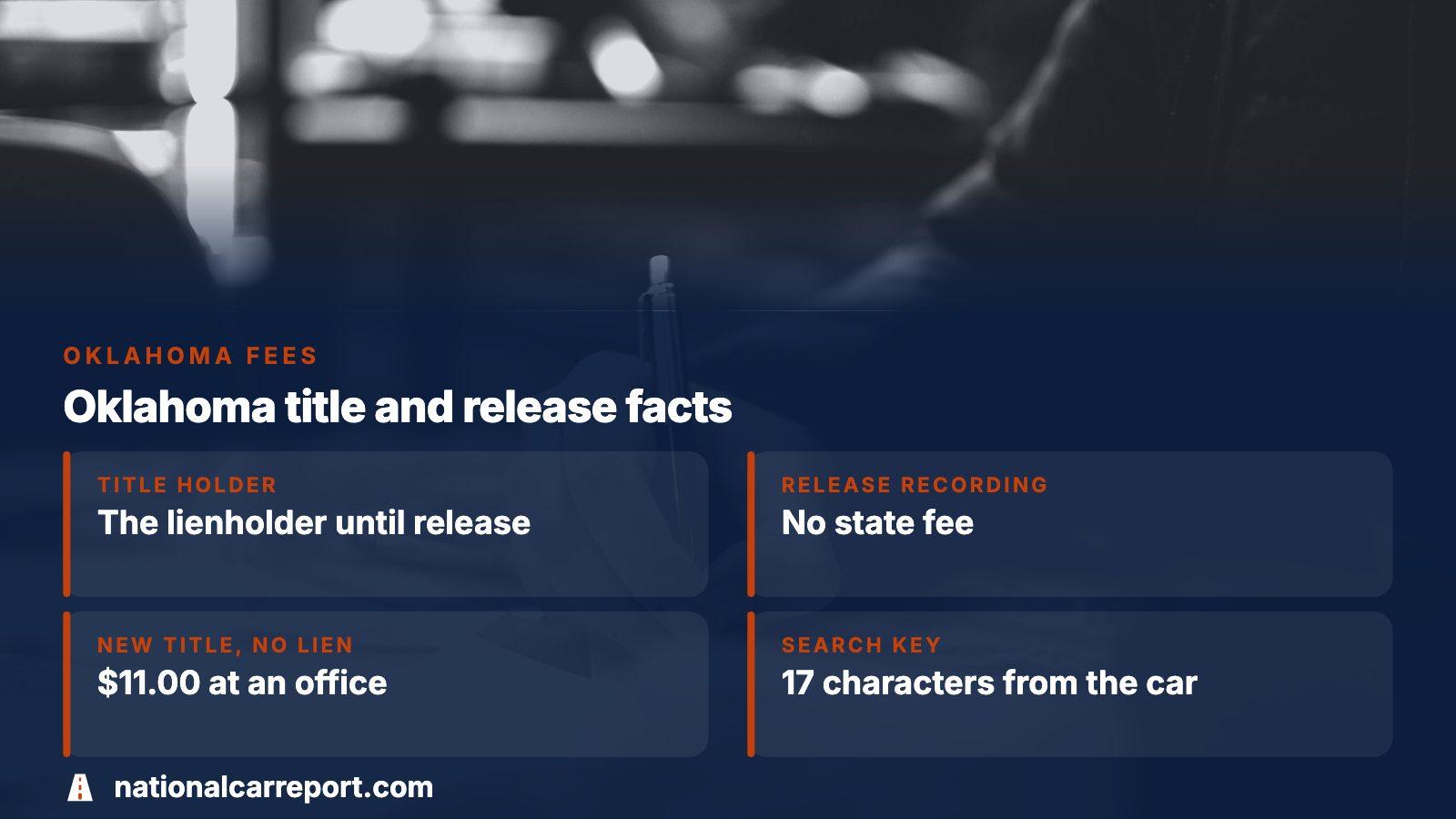
- The lienholder, until the lien is released
- State fee to record a release
- None, per Service Oklahoma
- New title without the lien
- $11.00 at a Service Oklahoma office or Licensed Operator
What the VIN search looks for on an Oklahoma car
NationalCarReport starts from a simple idea: a car's problems usually sit in other people's files, not in the seller's glovebox. The preview takes a VIN and checks for three kinds of outside claim, namely a lender's lien, a tow or storage record, and a theft report. Each of them is filed under the car's VIN, so the search behaves the same for a car first titled in Oklahoma or one that arrived from another state.
- Liens: a lender whose claim reached a source the search reads
- Impounds: a tow or storage yard held the vehicle, possibly selling it
- Theft: a report of the car missing, and whether it was found
- Brand history, salvage or flood for instance, that cuts resale value
You pay nothing to see the preview. Going further means a single purchase for the full report, with no recurring charge, and pricing details sit on their own page.
Why the lender, not the owner, usually holds the title here
Service Oklahoma describes the state as a title holding state. Once a title issues on a financed car, it sits with the lienholder rather than the person driving the car, and it stays there until the lien is released. That one rule explains a lot of what a seller says to you. If a seller says the bank has the title, that is an ordinary Oklahoma answer, not a dodge.
It also means you cannot judge a car by whether the seller can hand you a title. Some honest sellers cannot yet, because the loan is open. Some dishonest ones can, because they hold an old paper title for a car that has since been financed. Neither situation tells you anything until you know who the lender is and what is owed.
Electronic titles change what you can inspect
Since July 1, 2025, Oklahoma issues titles electronically, with limited exceptions. For a financed car that is the default, and the lender holds the record. An older paper title stays valid, but it turns into an electronic record the next time something happens to it, such as a sale, a transfer or a lien being placed.
For you as a buyer, the practical effect is that a seller may have no paper to show even when everything is in order. When an electronic title is sold, the state points to Form 718, a printed and notarized bill of sale for an electronic title, in place of the title itself.
Paper in hand is not proof
A paper title that predates a loan can look perfectly clean. If the VIN search shows a lender and the seller shows an old document, believe the search and call the lender.
Running the check, step by step
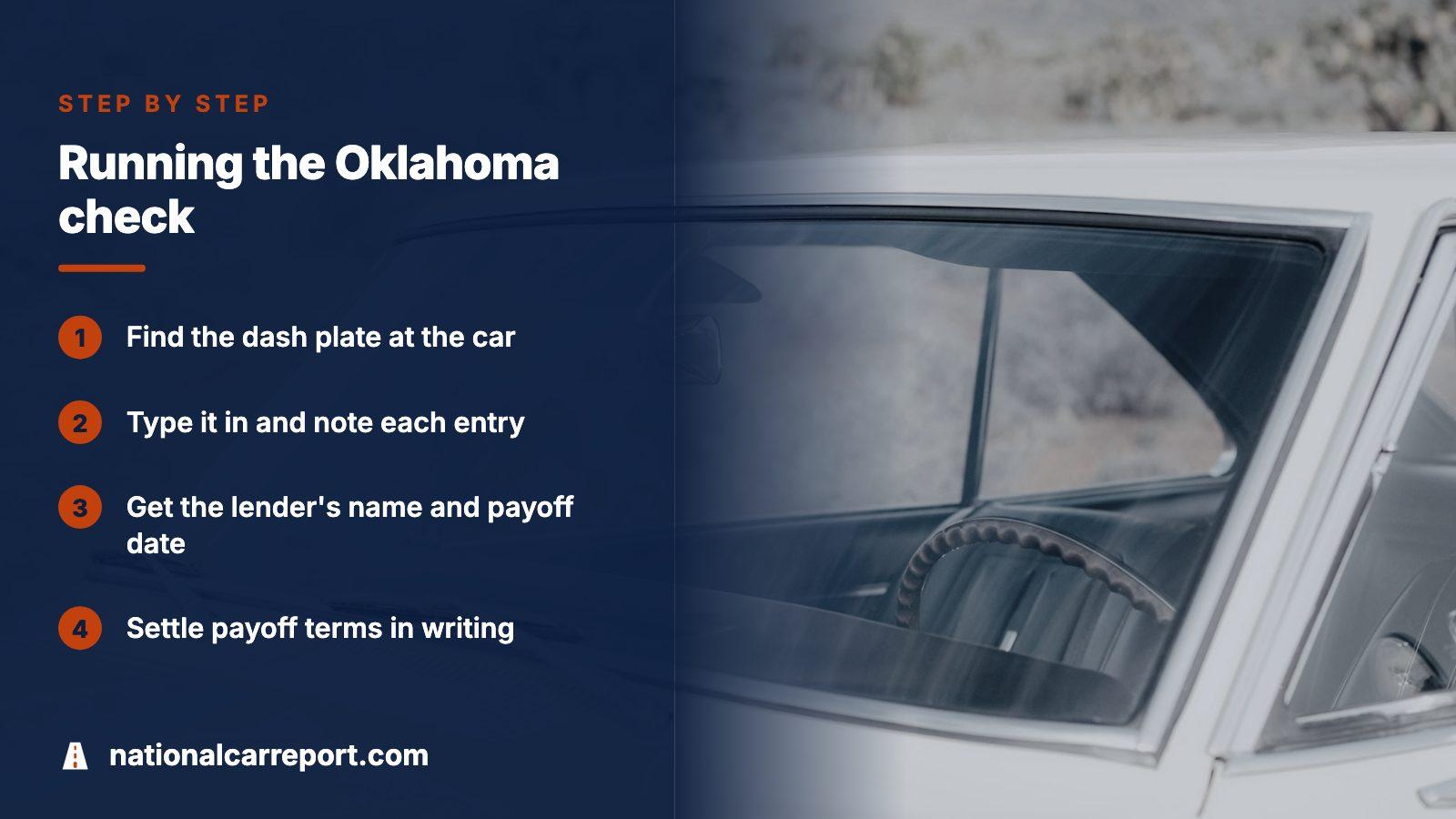
- Get the VIN by walking to the car. Find the plate on the dashboard near the windshield and the label inside the driver door, and make sure the two agree with the paperwork.
- Type the number into the preview and note every lender, tow or theft entry that comes back.
- When a lender appears, get its name from the seller, plus a dated payoff statement in writing.
- Ask whether the title is electronic or paper, since that decides how the release will be proven.
- Settle in writing how the payoff will be paid before any cash moves.
What each result means for the sale
| What you see | What it suggests | What to do |
|---|---|---|
| A lender is listed | A loan may still be open | Identify the lender, obtain a written payoff, and pay it straight to the lender |
| No lender shown | Nothing reached the records searched | Ask the lender or seller for a written confirmation anyway |
| Theft record, not recovered | Police may still list it as missing | Stop the sale and contact police |
| Impound entry | A yard once held the car | Find out who settled the storage bill and whether the yard sold it |
| Seller is not the titled owner | The seller may be unable to sign anything | Pause until the names match |
| Loan paid but lien still shows | The release may not have been filed | Ask the lender for a written release |
Why a clear result still gets a phone call
The national title system exists to stop stolen, branded and washed cars from slipping between states. Under the federal rule, what a state sends covers the car's VIN, brands and other wording from the title, the name the certificate was issued under, any salvage or junk intake the state gathers, and mileage disclosures. No lender field appears among them. So a national record can be clean while a bank in Tulsa still holds a claim.
That gap is the reason to treat the search as the first step. When it finds a lender, you have a name to call. When it finds none, you still ask the seller who financed the car, if anyone did, and you ask that lender to confirm the balance is zero in writing.
How Oklahoma handles a payoff and a release
A filed lien keeps displaying as open in Service Oklahoma's records until someone surrenders a correctly executed release. Releases can be mailed to the Motor Vehicle Liens address the agency publishes, and recording one costs nothing. Getting a fresh title without the lien printed on it is its own step: carry both the release and the old title into the agency's licensing office or a Licensed Operator, where the title fee is $11.00.
If the loan was paid off but no paper title was ever issued, the owner can ask Service Oklahoma for an electronic title release. A defaulted loan follows a different path: the lender may repossess and must obtain a repossession title before it can transfer ownership.
The agency also keeps a title history, a log of past title transactions. You ask for it with Form 769, Vehicle Information Request, and only in person or by mail, so it will not answer quickly.
Red flags in an Oklahoma lien situation
- The seller will not name the lender or says the loan does not matter
- A payoff figure with no date, or one that exists only as a text message
- The seller asks you to pay them and promises to settle the loan afterward
- The paper title looks clean but the VIN search lists a lender
- Names on the registration, the title and the seller's ID do not agree
- A bill of sale with no notary stamp
Oklahoma expects a bill of sale to list the price, the VIN and the buyer and seller, and to be notarized. A missing stamp is a reason to slow down.
If the search finds a lien
A lien does not end the deal. Obtain the payoff in writing, send that exact amount to the lender, hand the seller the difference, and then secure the release or evidence of its filing. A seller who insists on all the cash up front is the one arrangement to turn down.
Haven't run a VIN yet? Begin with the preview, and see the pricing page for single reports and packs.
Where this information comes from
- Service Oklahoma: Vehicle titles — Supports lender-held titles, electronic title rules, lien release steps, fees and the title history request.
- Service Oklahoma: Motor vehicle glossary — Supports the definitions of lien, lienholder, repossession and the notarized bill of sale.
- NMVTIS: information for consumers — Supports the kinds of title data the national system keeps and who feeds it.
- Federal rule on state data for NMVTIS (28 CFR 25.54) — Supports the required state data feed, where no lender field appears.
Sources and photos: Facts checked against the sources above in November 2026. Photos by Richard R, Wesley Tingey and Owen Michael Grech on Unsplash; diagrams by NationalCarReport.
Keep reading
- Vehicle Lien Check by VIN: Nationwide Lien, Theft and Impound RecordsRun this search on a vehicle titled in any state.
- DMV Lien Release Search: How to Confirm a Lien Is GoneConfirming that a lender has actually dropped its claim.
- Car Lien Holder Search: How to Find the Lender Behind a VINIdentifying the lender to call for a payoff figure.
- PricingWhat buying a single report or a pack involves.
Frequently asked questions
How do I do an Oklahoma lien search?
Run the VIN through the preview, which checks for lender, tow and theft entries. Next, find out from the seller who financed the car and request a payoff in writing. An Oklahoma lender keeps the title during the loan, which makes it the party who can confirm a release.
Is there a free Oklahoma car lien check?
Just the preview is free. A full report is a separate purchase made once. Service Oklahoma's titles page describes no public online lien lookup for buyers, and its title history goes through Form 769, in person or by mail, so the VIN search is the quicker first step.
Does a clean-looking title mean the car has no lien?
No. Financed Oklahoma cars have their titles kept by the lender, and an older paper title can predate the loan. If the seller produces a title while the search names a lender, call that lender and request the balance in writing.
What happens to the title after the loan is paid off in Oklahoma?
The state keeps showing the lien as active until a proper release is surrendered, and recording that release costs nothing. A reissued title without the lien comes from a Service Oklahoma office or Licensed Operator for $11.00.
Can I buy an Oklahoma car that still has a lien?
Yes, provided the loan is settled in the right order. Pay the lender its written payoff, give the seller what is left, and gather the release or proof it was filed. Send the money to the seller instead and the lender's claim follows the car into your driveway.
Now check the car itself
The guide explains what to look for. The report shows what this VIN has on record.