
THE SHORT ANSWER
To search for a lien on a Minnesota car, enter its 17-character VIN in the preview and read any lien, impound or theft entry. A named lender means the loan may still be open. Minnesota lenders are recorded on the title only after they file with the state, and towing, repair and federal claims can sit outside that record. Ask the seller for a written payoff and a signed release before any money moves.
- Search key
- The 17-character VIN, read from the car
- Lender release deadline
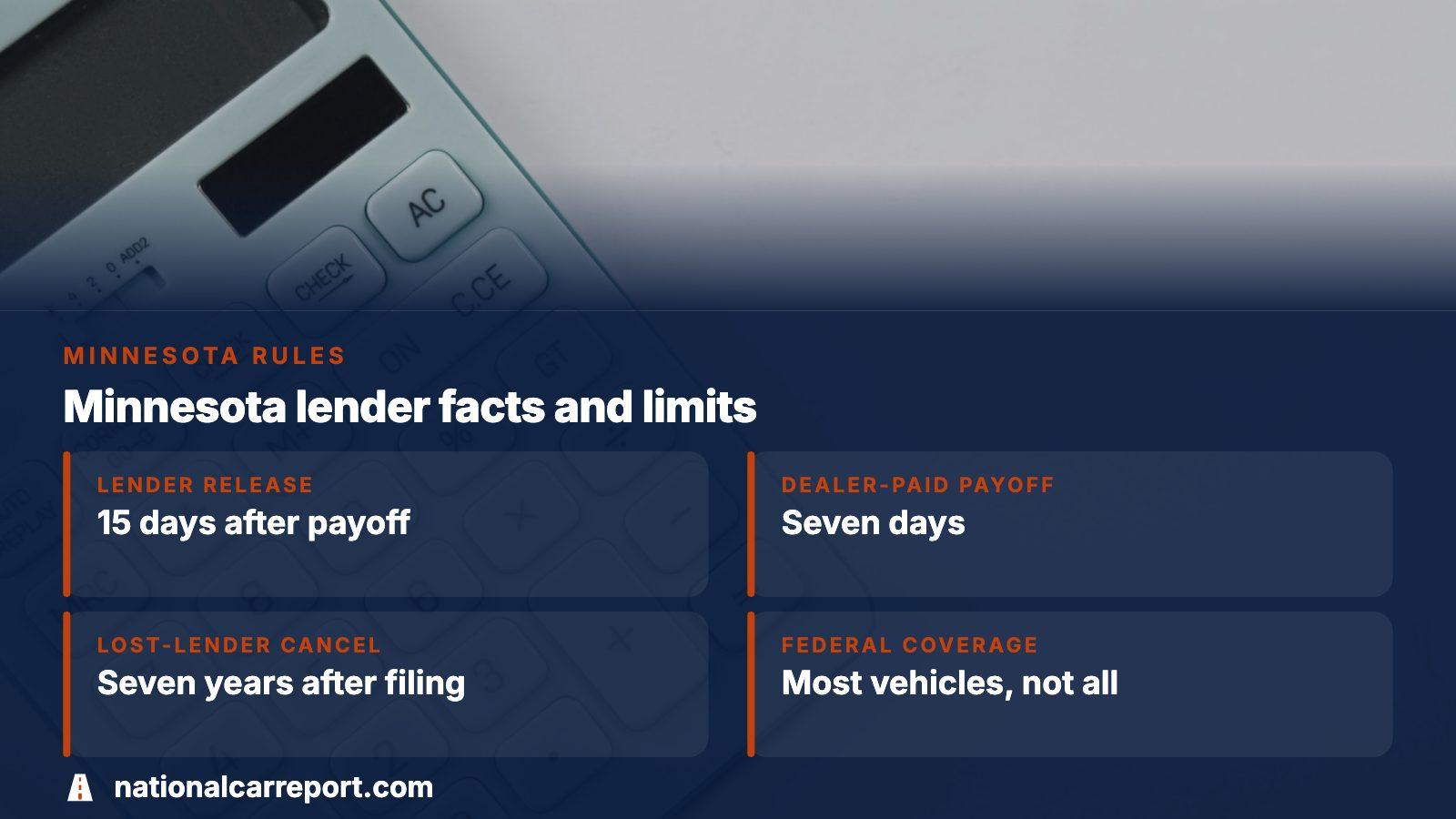
- 15 days after payoff, seven if a licensed dealer paid it
- Lost-lender cancellation
- Possible seven years after the lien was filed, for passenger cars
- National coverage
- Federal title data covers most vehicles, not all
What the preview digs up on a Minnesota car
NationalCarReport exists for the trouble that travels with a used car: an unpaid loan, a tow yard bill, a theft flag. Enter a Minnesota VIN in the preview and it gathers whatever lien, impound and theft records it can reach for that car, no matter which state titled it first.
- Liens: a lender or other creditor with a claim on the vehicle
- Impounds: a sign that a tow operator held the car at some point
- Theft: a stolen flag, with any recovery noted
- Brands such as salvage or flood, which change what the car is worth
The search is keyed to the vehicle, not to the seller's name. That matters in a private sale, where the person across from you may not know, or may not say, what is still owed.
How a lender ends up on a Minnesota title
Minnesota law says a car loan binds other creditors and later buyers only after the lender perfects it. To do so, the lender delivers four items to the state: the existing title where one exists, a form with the lender's name and address, the date of the loan agreement, and the filing fee. The claim dates from delivery.
The state's title record is organized by VIN, title number and owner name, and it notes each lender recorded, assigned, ended or released. Lenders print on the certificate in priority order. A dealer that sold the car may give the lender a statement showing when the filing was delivered.
Loans change hands
A lender can sell its interest to another company without telling the owner. The lender named on the title stays liable until the buyer of the loan is recorded, so the name you see may not be the company that gets paid. Ask who holds the loan today.
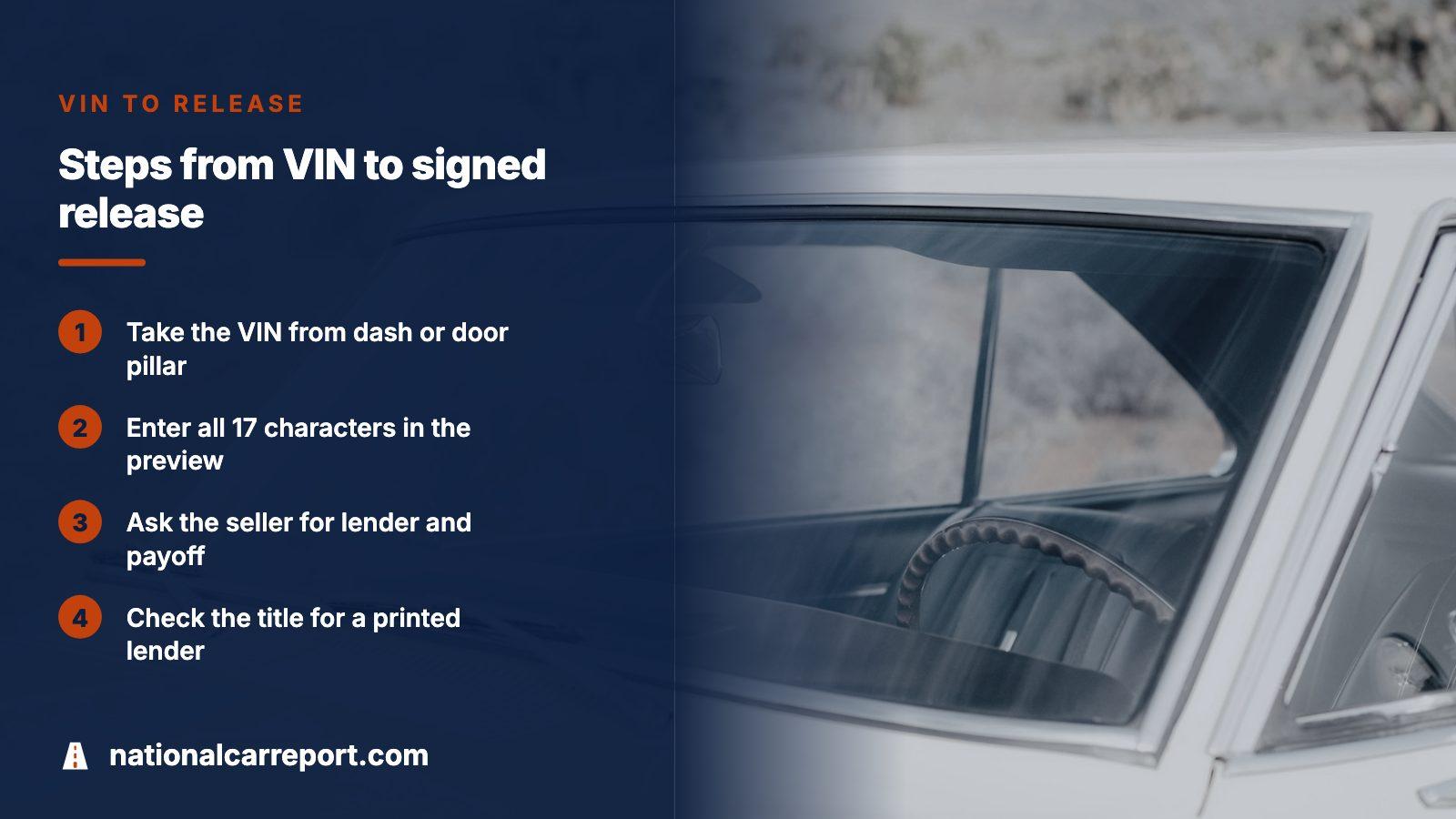
Five steps from VIN to signed release
- Take the VIN from the vehicle, whether the dash plate or the door pillar, then set it beside the paperwork and the listing.
- Enter the full 17 characters in the preview and jot down each lien, impound or theft line.
- If a lender is listed, ask the seller for its name, a payoff amount and the date that amount expires.
- Ask to see the title. If a lender is printed on it, you need that lender's release, not the seller's word.
- Put in writing who pays the lender and when, with the money sent to the lender, not through the seller.
A few minutes here costs little. Skip it and you may own a car that a lender has the right to take back.
Claims that can exist without a lender on the title
Minnesota's title law carves out a few claims. A lien given by statute or common law to someone who supplied services or materials for the car sits outside the title chapter, and so does a federal statutory lien. So does financing a manufacturer or dealer arranges on stock held for sale. Claims belonging to the state or a local government escape the perfection rules too.
- Repair or storage shops may keep a car until their bill is paid, and the later-filed notice route does not apply to motor vehicles.
- A business that tows a car at an officer's request has a lien for the tow, the storage and the site cleanup.
- Support enforcement can place a lien in the state's name or that of the person owed support, if a court or agency orders it and the car is worth more than the legal exemption.
- Dealer floor financing is outside the title chapter while the car is on the lot.
No VIN search can promise to see every item above, which is a good reason to ask the seller where the car has been and who has worked on it.
What each result means for your next step
| Result | What it suggests | Your move |
|---|---|---|
| Lender listed | A loan may be unpaid | Get the payoff in writing and pay the lender directly |
| No lien shown | Nothing reached the records searched | Have the seller show a release or lender letter |
| Impound entry | A tow operator held the car | Ask who paid and whether a sale followed |
| Theft, not recovered | The car may still be reported stolen | Step back, and call police if you know where it is |
| Title in another name | The seller may not be able to sign | Wait until the names match |
| Loan paid, lien still shown | The release may not have been filed | Ask the lender for a written release |
When the screen shows nothing, keep asking
The national title database is intentionally brief. Justice Department material says its consumer report limits itself to five indicators built around theft and fraud, and that a state keeps more in its own file. A search can also look cleaner than the car is: about 87 percent of vehicles are covered, just over half the states report in, and salvage or total-loss records number about 20 million.
Minnesota's own record is where a lender files, and the federal page tells buyers to consult the state record as well. Read a blank screen as unknown, not as clear.
Blank means not found
No lien on screen only means none reached the records searched. Ask the lender, or the seller's payoff letter, to settle it.
What Minnesota requires once the loan is paid
When the lender holds the title, it has 15 days after payoff to release its claim and pass the certificate along, either to a second lender, to you, or to someone you authorize. A licensed dealer that pays the loan off shortens that to seven days. You then mail the certificate and the signed release to the state with the required fees and taxes, and the state clears the lender or prints a new certificate.
If the owner already holds the title, the lender owes a release inside the same window, and may also tell the registrar the lien is satisfied. Support liens run on the same clock once the debt is settled or a written payment plan is accepted.
Lender cannot be found
For a passenger car, an individual owner who has paid in full can ask to cancel a lien seven years after it was filed. Start with a certified letter to the lender requesting a release, with a return receipt, then show the state or its agent the letter that came back.
What the preview costs and what comes next
Running the preview costs nothing; it says whether the VIN carries a lien, impound or theft entry. To see the detail behind a hit, you can buy the report once, with nothing recurring, and the pricing page shows today's rates. Buy it when a preview hit or a missing release leaves a question the seller's paperwork cannot settle.
After that the work happens offline: get the payoff letter, pay the lender, and collect the signed release before the car leaves the seller's driveway.
Where this information comes from
- Minnesota Statutes 168A.17: perfection — what a lender must deliver to the state for its claim to count
- Minnesota Statutes 168A.20: satisfaction — release deadlines and the seven-year cancellation rule
- Minnesota Statutes 168A.16: inapplicable liens — claims outside the title chapter
- Minnesota Statutes 168B.045: towed vehicles — the tow operator's lien and right to hold the car
- Minnesota Statutes 514.18: personal property liens — storage and care liens, and the motor vehicle exclusion
- Department of Justice: NMVTIS for consumers — coverage limits of the federal title database
Sources and photos: Facts checked against the sources above in November 2026. Photos by Martin Fennema, Wesley Tingey and Sasun Bughdaryan on Unsplash; diagrams by NationalCarReport.
Keep reading
- Minnesota Title Check: Seven Steps Covering Liens, Theft and ImpoundsWhat a Minnesota title shows besides the lender, including brands.
- DMV Lien Release Search: How to Confirm a Lien Is GoneHow to confirm a lender really released its claim.
- Minneapolis Impound Lookup: Find a Towed Car, Then Check Its VINTow and storage claims in Minnesota's largest city.
- Car Lien Holder Search: How to Find the Lender Behind a VINHow to find who holds a loan when the name is unclear.
Frequently asked questions
Can I search for a lien on a Minnesota car with just the VIN?
Yes. The VIN identifies the vehicle, so you do not need the owner's name. Enter it into the preview to see lien, impound and theft entries. If nothing appears, ask the seller for a lender letter or a signed release, because a blank result does not prove the car is free and clear.
Who clears a lien in Minnesota after I pay it off?
The lender does. It has 15 days to sign a release after payoff, or seven if a licensed dealer paid it. Depending on who holds the title, the lender sends the title and release onward or sends the release to you. Then the state is asked to update the record.
What if the lender went out of business or cannot be found?
For a passenger car, an individual owner who paid in full can ask to cancel the lien once seven years have passed since it was filed. The route requires a certified request for a release first, and the returned envelope goes to the state or its agent as proof of the attempt.
Does a tow or repair bill show up as a lien?
Not always. Minnesota law gives tow operators and shops a right to hold a car until they are paid, and some of those claims sit outside the title chapter. An impound entry on a VIN search is a hint to ask who paid the bill.
Is the lien search free?
You pay nothing for the preview, which flags any lien, impound or theft entry. Going further means buying the report once, with nothing recurring, and rates are on the pricing page. Buy it when the preview raises a question the seller's paperwork cannot answer.
Now check the car itself
The guide explains what to look for. The report shows what this VIN has on record.