THE SHORT ANSWER
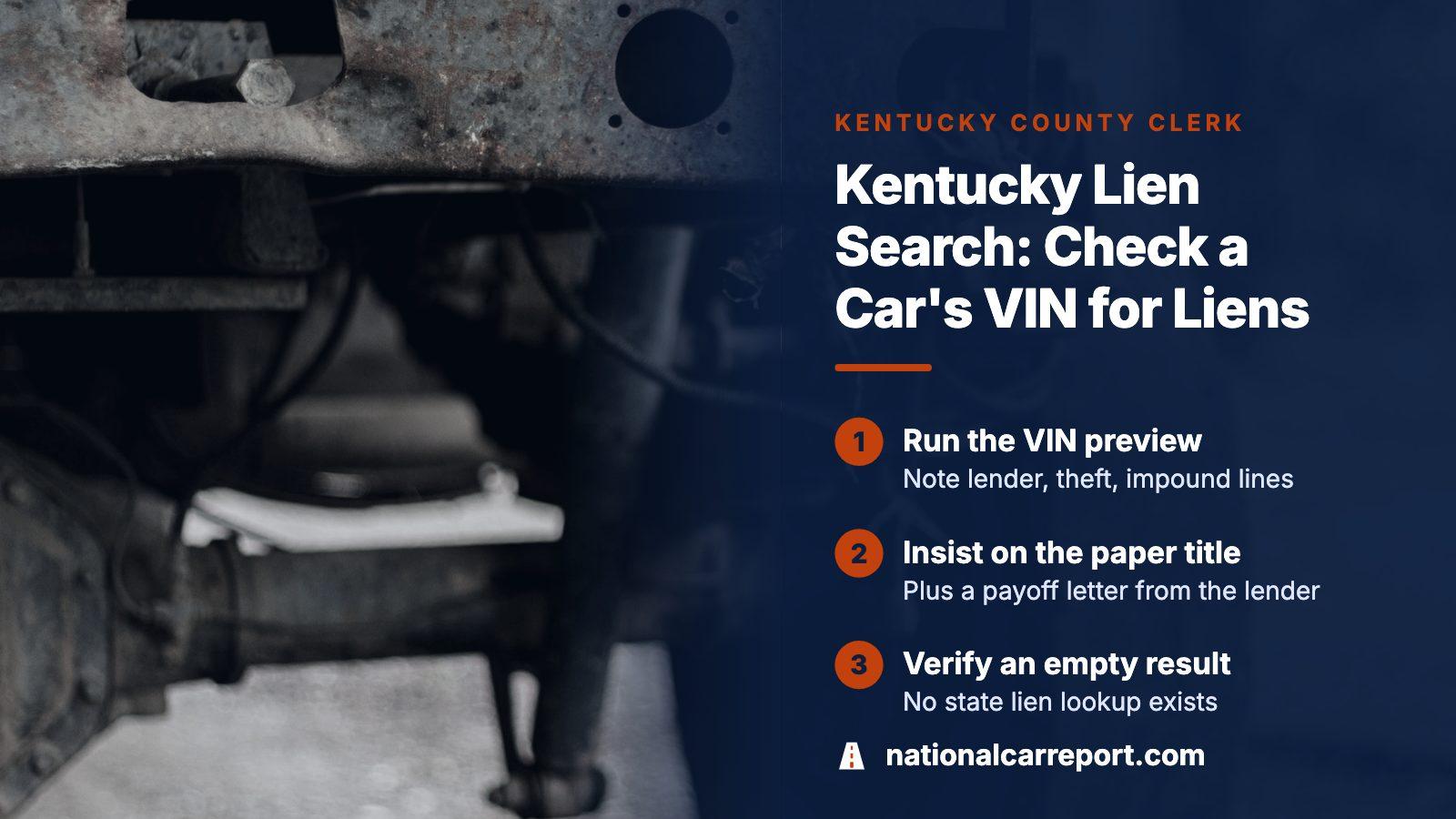
To check a Kentucky car for a lien, copy the VIN from the vehicle, run the preview, and note any lender, theft or impound line. Next, insist on the paper title and a payoff letter from whichever lender is involved. Kentucky's public tools cover taxes and title history, not a live lien search, so an empty result is a reason to verify, not to relax.
- Where liens are filed
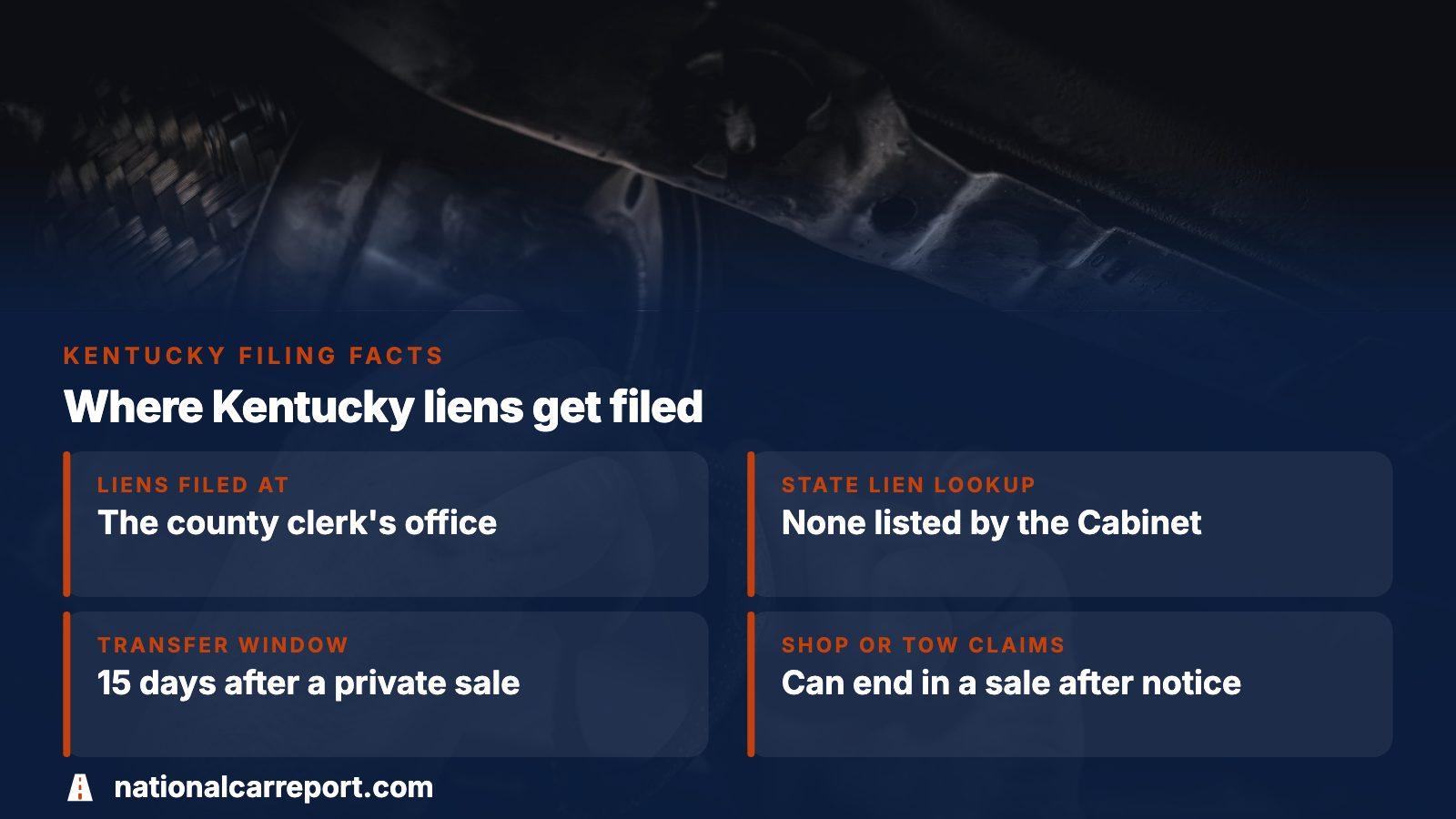
- The county clerk's office
- State lien lookup
- None listed by the Transportation Cabinet
- Title transfer window
- 15 days after a private sale
- Shop or tow claims
- Can end in a sale after notice and newspaper ads
What the VIN search turns up on a Kentucky car
NationalCarReport is built around the records that decide whether a car is really the seller's to sell: stolen reports, impound custody and lender claims. Kentucky cars raise the same questions as any other. A loan on a pickup financed in Louisville and sold in Bowling Green does not vanish at the county line.
Run the VIN and read three things first. Is any lender named? Does a theft entry exist without a recovery? Did a tow yard ever hold the car? Each answer changes what you say to the seller. The preview costs nothing and needs no account, so skip nothing: run it before you spend a Saturday driving to look at the car.
Where a Kentucky lien is actually recorded
In Kentucky, a lender's claim is handled through the county clerk. The Transportation Cabinet says a Title Lien Statement goes to the clerk's office, which processes the title and registration. Lien paperwork or payments sent straight to the Cabinet are mailed back to the sender, and a clerk may ask the lienholder to hand over the title.
The practical lesson is that the paper title matters. When a loan is open, the lender can be the one holding it. If a seller claims the title is lost, at the bank or still in the mail, you have just learned the most telling thing about this sale.
No title in hand, no deal yet
A Kentucky title is the legal proof of ownership. If it is missing, find out who has it and why before you hand over any money.
Why Kentucky has no lien lookup to try
Search the state's vehicle pages and you will find a tax lookup, title history requests, rebuilt-title rules and fraud reporting. Nothing there lets a shopper type a VIN and see a lender. The VIN lookup the Cabinet runs shows vehicle tax data for 2025, which tells you about taxes, not about debt.
Title history requests are real, but narrow. The Cabinet accepts them from state residents and from companies on the Secretary of State's rolls, using form TC96-16A. Its stated purposes include untangling odometer disputes, transfer dates, owner details, salvage notes and signatures, with a turnaround of 3 to 5 business days. The page does not describe a lien search or give a fee, so ask the Cabinet before assuming one comes with it.
Five moves from VIN to payoff
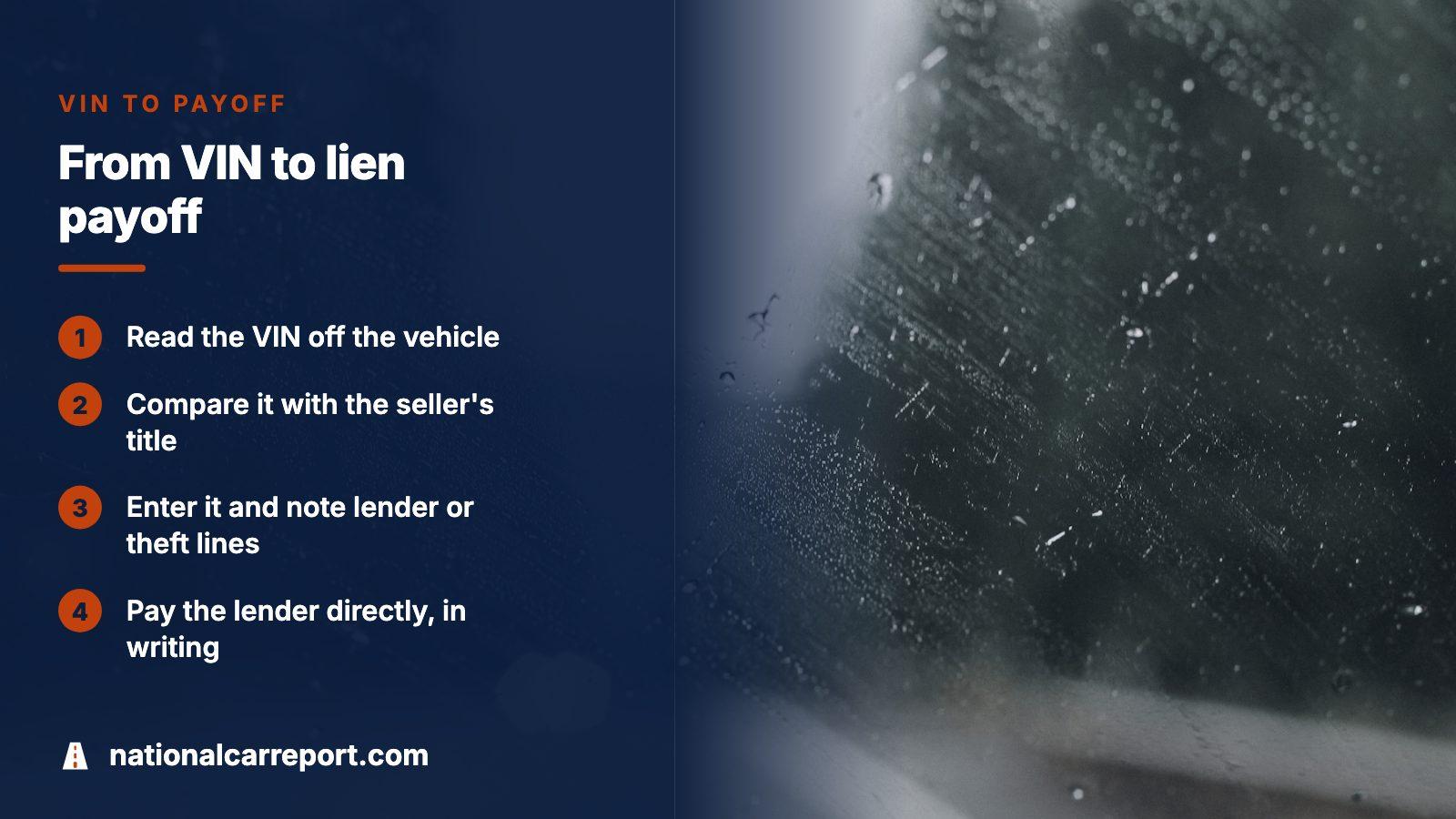
- Read the VIN off the vehicle in person. Kentucky's own lookup page names the dashboard corner visible from outside, the label inside the driver's door frame, and the title, registration and insurance card as places it appears.
- Compare those spots with each other and with the seller's title. A mismatch ends the conversation.
- Enter the VIN in the preview and write down any lender, theft or impound line.
- Ask the seller to name the lender and give you a written payoff figure with an expiry date.
- Agree in writing how the loan will be settled, preferably by paying the lender directly, before cash changes hands.
Reading what comes back
| Result | What it may mean | What to do |
|---|---|---|
| Lender named | A loan could still be open | Get a payoff letter and pay the lender |
| Nothing named | Nothing reached the sources searched | Ask for the title and confirm independently |
| Theft, no recovery | The car may still be reported stolen | Stop and report it if you know where the car is |
| Impound entry | A yard once held the car | Ask who paid and whether it was sold for charges |
| Title in another name | The seller may not be the owner | Wait until the names match |
| Loan paid, lender still listed | A release may not have been filed | Request the lender's release in writing |
Why an empty result still leaves a question
The federal title database that backs many consumer reports reports on five indicators: where the car is titled and when it last was, any brands, the odometer, total loss and salvage history. A lender does not appear in that list. Its own consumer page calls the report intentionally concise and tells shoppers to add an independent inspection and other sources before buying.
So a quiet lien line from any history service, ours included, means nothing turned up in the data searched. It cannot show that a Kentucky clerk has no lien on file. Treat it as one input, then confirm with the title, the seller's lender and, for a larger purchase, the state.
Repair, tow and repossession claims in Kentucky
Not every claim comes from a bank. A mechanic's lien reaches only a car the shop is holding, after the agreed repair bill has gone at least 30 days unpaid. A tow yard can sell a car whose towing or storage charges stay unpaid past 45 days. Before either sells, the owner and lender must be written to by certified mail, and 3 newspaper ads must name the VIN.
- Repossessing lenders file an affidavit, an application and a signed security agreement with the county clerk
- Buyers from a police impound need a bill of sale on the agency's letterhead
- Both kinds of business need to be on record with the Secretary of State
If a car's story includes a long repair or a tow, ask for the sale paperwork. A tidy car can still come with unpaid parties behind it.
What a finished payoff should look like
When a loan is paid, the lien still has to come off the record. The Cabinet's rebuilt-title page spells out one version of this: the lienholder submits a lien termination statement at the county clerk's office, and that is what lets the lien be released. A spoken promise that the bank was paid is not that statement.
Ask for the lender's release or a payoff letter showing a zero balance. Compare the VIN printed on it with the car one character at a time, and confirm the lender named is the one on the title. If the seller's lender is slow, keep your proof of payment and ask again in writing. A duplicate title is not a shortcut: the clerk's application for one requires picture ID and a notary.
What the check costs and what to do next
The VIN preview is free. If it shows something worth a closer look, a single payment buys the full report on that car, and packs are there for shoppers comparing several. It never renews on its own. You will find today's rates on the pricing page.
Then test the result against what the seller told you. A lender that appears should appear in their story. A theft or impound line needs an explanation you can verify, and a title that will not surface needs a reason. After a private sale, remember Kentucky expects the title transferred within 15 days, so do not sign anything you would not want on the clerk's counter.
Where this information comes from
- Kentucky DRIVE: Vehicle Titling — Supports the clerk's role with lien statements, the mechanic, tow and repossession rules, and the 15-day transfer window.
- Kentucky DRIVE: Title History Requests — Supports who may request a record, form TC96-16A and what the records cover.
- Kentucky DRIVE: Rebuilt-Salvaged Titles — Supports the lender's lien termination statement to the clerk.
- Kentucky VIN/HIN Lookup — Shows the state's lookup covers tax data and lists where a VIN is found.
- NMVTIS: Understanding a Vehicle History Report — Supports the five indicators a federal title report covers and its advice to add other checks.
Sources and photos: Facts checked against the sources above in November 2026. Photos by Zoshua Colah, Cole Keister and Martin Fennema on Unsplash; diagrams by NationalCarReport.
Keep reading
- Vehicle Lien Check by VIN: Nationwide Lien, Theft and Impound RecordsThe same check for a car from any state.
- DMV Lien Release Search: How to Confirm a Lien Is GoneHow to tell whether a lender has truly let go of its claim.
- Buying a Private-Party Car That Has a Lien: Safe StepsHandling a deal where the seller still owes money.
- PricingOne report or a pack, paid once, with no subscription.
Frequently asked questions
Is there an official Kentucky lien search by VIN?
Not one the Transportation Cabinet lists for the public. Its vehicle pages cover tax lookups, title history requests and fraud reporting. Liens are filed through the county clerk, so request the title and the lender's name from the seller, then run a VIN preview to look for anything that conflicts with their account.
Can I do a Kentucky car lien check with a license plate?
We do not run plate lookups, and liens attach to the vehicle, so the VIN is the key. With only a plate in hand, get the VIN from the seller or from the car's paperwork, then match it to the number on the vehicle before searching.
Does a clear VIN result prove a Kentucky car has no lien?
No. It means nothing appeared in the records searched, and the federal title system does not list lenders among its five indicators. Use a clear result as one data point, then confirm with the title and the lender's written payoff, especially on a higher-priced car.
Who clears a lien from a Kentucky title?
The lienholder. In the Cabinet's wording, a recorded lien is released when the lender gives the county clerk a lien termination statement. If a loan was paid but the lien lingers, keep proof of payment and ask the lender in writing to send that statement.
What if the title has gone missing?
Slow down. A lender could be holding it, or the seller might be applying for a duplicate at the county clerk. Ask which, and hold back full payment until you have a title naming the seller or the lender's release.
Now check the car itself
The guide explains what to look for. The report shows what this VIN has on record.