THE SHORT ANSWER
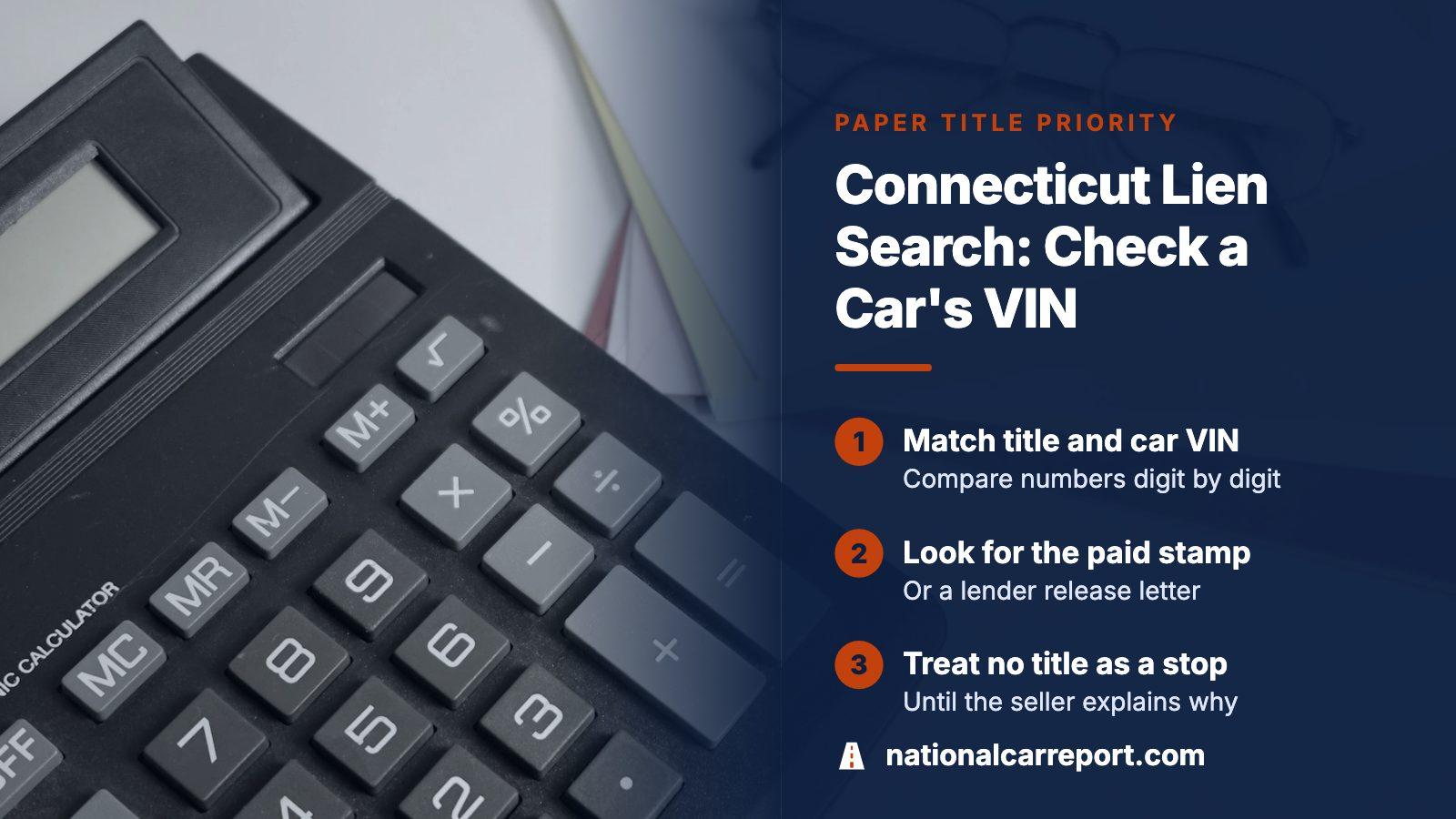
To check a Connecticut car for a lien, run its VIN through the preview, then have the seller put the paper title in your hands. A lender shows up there, and a loan that is paid off should come with a title stamped paid or a release letter. Connecticut has no electronic lien system, so the paper matters more than elsewhere.
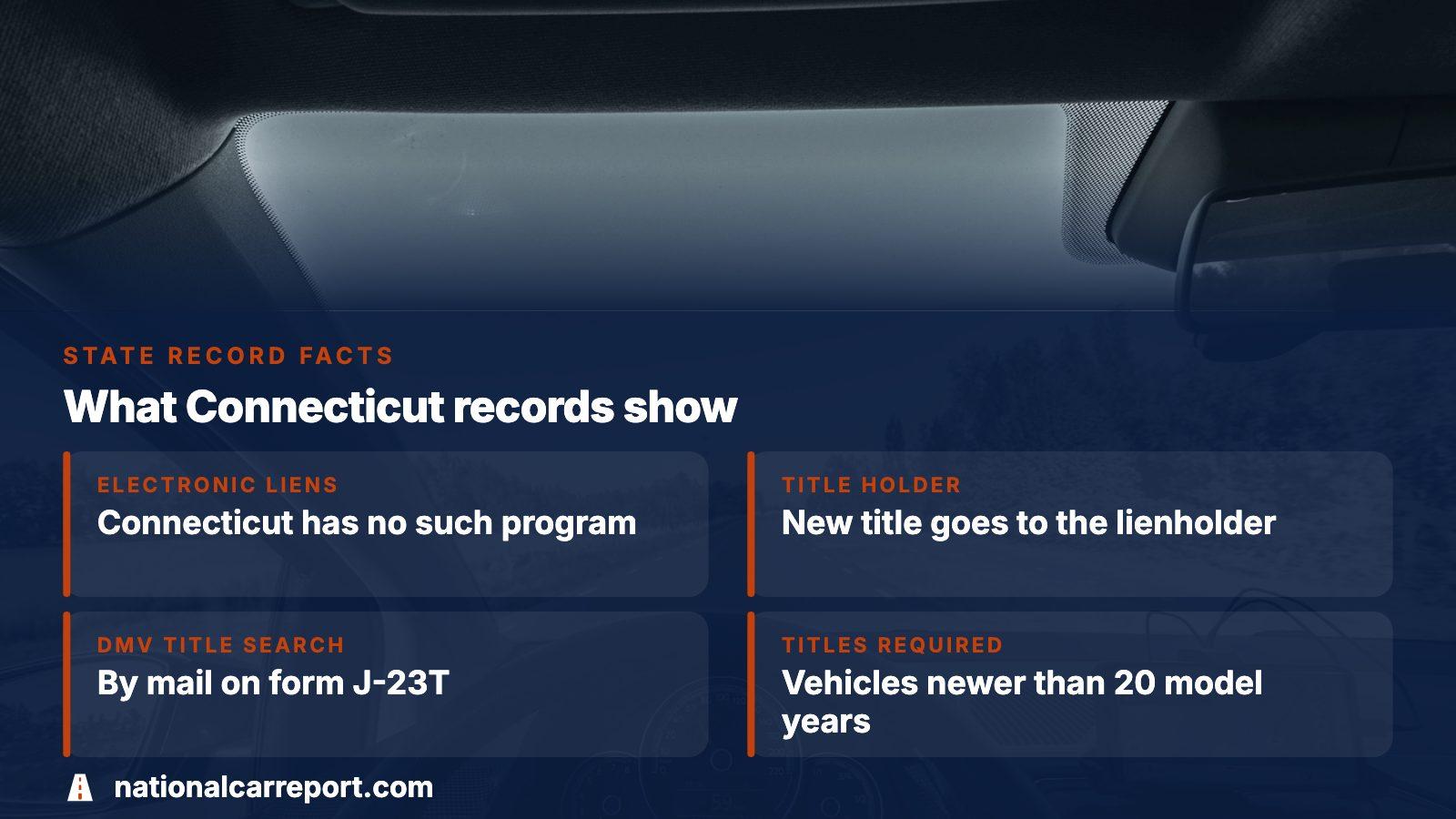
- Electronic liens
- Connecticut takes part in no electronic title or lienholder program
- Title holder
- A new title goes straight to the lienholder
- DMV title search
- By mail on form J-23T, $20 by check or money order
- Titles required
- Only for vehicles newer than 20 model years
What a VIN run tells you about a Connecticut car
NationalCarReport exists for the records that decide whether a car is truly the seller's to hand over: lender claims, theft reports and impound custody. A Connecticut plate on the bumper does not change those questions. A sedan financed in Hartford and sold in New Haven carries its loan with it.
Run the VIN and read three lines before anything else. Is a lender named? Is there a theft entry with no recovery after it? Did a tow lot ever hold the car? Each answer gives you a specific thing to say to the seller. No account is needed, so run it from your couch and save the drive.
Running the check, step by step
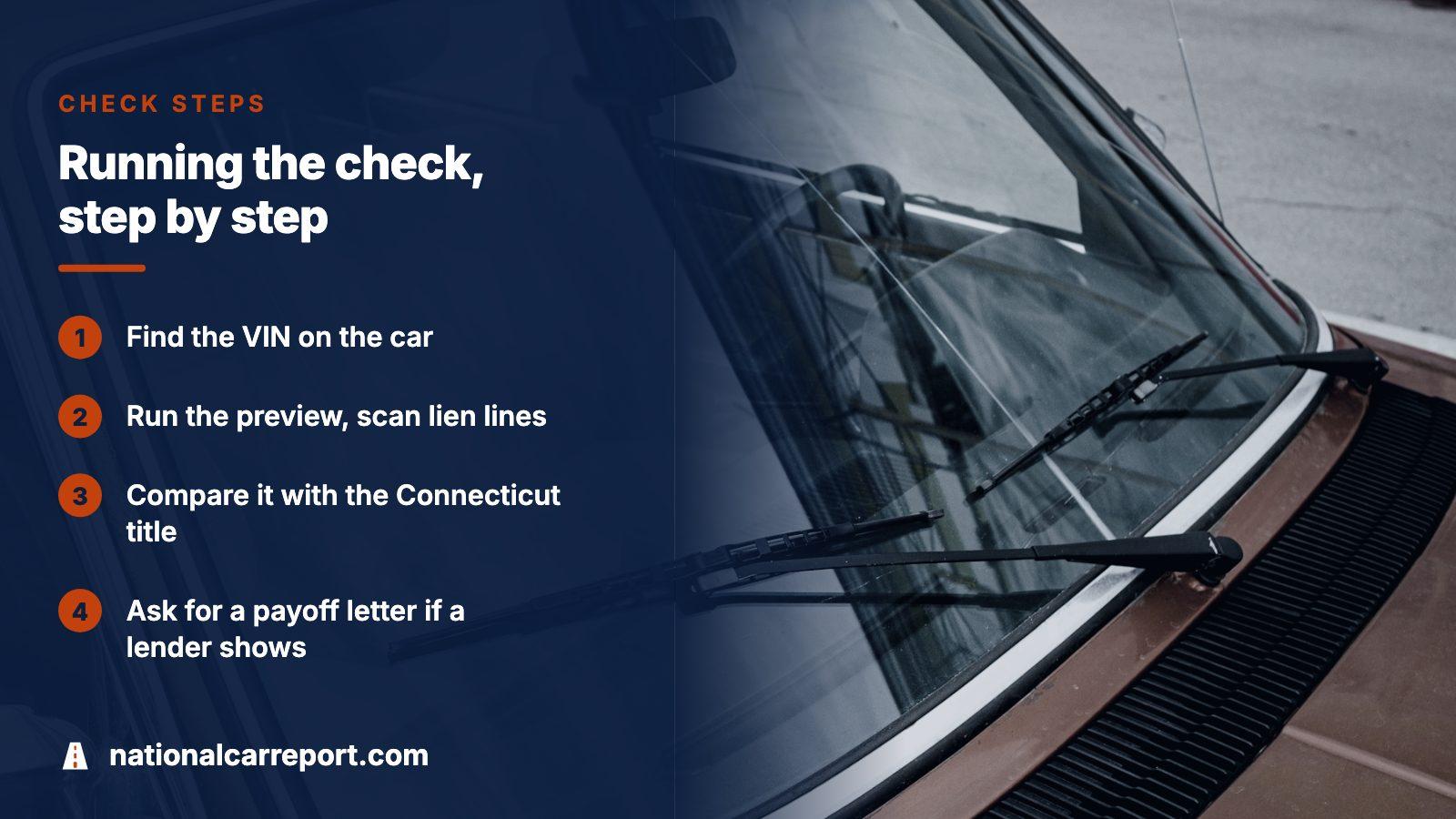
You need the 17-character number. Read it off the windshield or door jamb if you can, since a number typed into an ad can be off by one character, or off on purpose.
- Find the VIN on the car.
- Type it into the preview and scan the lien, theft and impound lines.
- Compare that number with the one printed on the Connecticut title.
- If a lender appears, ask the seller for a payoff letter or a release.
- Open the full report only when the preview leaves questions or the car passes your first look.
If the preview shows nothing, that is one data point and not a clearance.
What the Connecticut DMV will and will not give you
The DMV's title services page lists three things: a replacement title, adding a lienholder, and a title record or history. The title search is a mail request. It confirms the name of the owner of record, and you can note a wish for odometer readings or the complete ownership history in the miscellaneous section of form J-23T.
The page does not describe a title search as a lien lookup, and I found no public online lien screen on the pages I opened. I could not confirm one either way, so I will not promise it. What the DMV does say is that the request needs the make, year and VIN, a registration number or name, and an ID copy, with a $20 check or money order made out to the DMV. Certification costs an extra $20.
Why the paper title is your best lien evidence
Connecticut says plainly that it takes part in no electronic title or electronic lienholder program, and that it cannot receive an electronic title or lienholder record. Elsewhere a lender may hold a digital record you never see. Here the lien lives on paper, and the state sends a new title straight to the lienholder listed.
- Ask to see the title and match the VIN stamped on it against the car's own.
- Look for a named lienholder on the face of the document.
- If the owner says the loan is paid, look for the lender's paid stamp.
- No title in hand is a stop sign until the seller explains why.
A title held by a lender usually means the seller still owes money. Not always a dealbreaker, though it changes how and where the payment goes.
Paid-off loans: stamped titles and release letters
Many sellers say the car is paid off. The DMV spells out the proof. A borrower with a settled loan need not ask for a fresh title without the lender. Holding the title stamped paid by the lienholder is enough for a later sale or transfer. So a stamped title is legitimate evidence, and a seller who shows one is not being sloppy.
What the DMV asks of a release letter
When a title has been replaced while a lien exists, the DMV asks for a lien release letter alongside the duplicate title application. Treat the same document as your own proof: it should name the lender, identify the car by VIN and say the loan is settled.
If a seller offers only a promise, ask them to call the lender with you on the line and request the letter.
Red flags specific to this check
| Result | Possible meaning | Your move |
|---|---|---|
| A lender named in the preview | A loan that may still be open | Ask for the payoff letter before any money moves |
| Seller has no title | Lender holds it, or it is lost | Walk away until the paper exists |
| VIN on title differs from the car | Wrong paperwork, or a swapped identity | Stop and verify the number in person |
| Theft entry with no recovery | The car may not be sellable | Do not buy; contact police |
| Impound record on the car | A tow or storage claim may have existed | Ask for proof it was cleared |
The Attorney General's office also advises caution with any seller demanding payment in advance by wire, changing the terms midway, or keeping the car far from where the seller is.
Dealer sale or private sale
Connecticut law requires dealers to let you or a mechanic you choose inspect a used car before you buy it. A dealer can also register the vehicle for you. A private sale is different. The Attorney General notes that the DMV does not regulate private sales, and that problems with a privately sold car become a civil matter in small claims or Superior Court.
That is the practical reason to run the VIN first in a private deal. If a lender surfaces after the sale, you are the one sorting it out, in court if it comes to that. Registration also calls for a Bill of Sale on form H-31 alongside your proof of ownership, so a seller who resists signing paperwork is telling you something.
When a lender still holds the title
Some purchases happen while the loan is open. If the original title is being held by a lienholder, the DMV describes a courtesy registration lasting six months. For a car moved in from another state, the DMV supplies a letter of request so the lender mails the out-of-state title to its Title Unit in Wethersfield, which then holds it for any DMV office you visit.
Cars brought in from elsewhere have 90 days after you establish residency to move the registration. A lender's name in the preview deserves a direct conversation before you commit.
Older cars may have no title at all
Connecticut does not require a title for vehicles more than 20 model years old. A vehicle bought in the state that is newer than that does need one. For an older car, registration needs the previous owner's registration, a request for supplemental assignment of ownership on form Q-1, or a Bill of Sale.
For a classic with no title there is no lender stamp to look for, so the VIN run and a direct question to the seller carry more weight. Ask whether the car was ever financed, and run the number anyway.
Price and the steps once the preview is done
Viewing the preview is free. Unlocking a full report is a single charge, with bundles available when several vehicles are on your list. The pricing page carries today's options, and no renewal ever happens.
A federal NMVTIS report sticks to five indicators, from title state through salvage history, and lender data is not one of them. Pair any history report with a mechanic's inspection, which the Attorney General also recommends. Then settle the paper: title in hand, lender cleared, Bill of Sale signed.
Where this information comes from
- Connecticut DMV: Make changes to a car title — Supports the lienholder, stamped-title, title search and no-electronic-title points.
- Connecticut DMV: Proof of ownership requirements — Supports the 20-year title rule, courtesy registration, out-of-state title letters and the Bill of Sale.
- Connecticut Attorney General: Buying a used car — Supports the dealer inspection right, private sale limits and scam warnings.
- NMVTIS: Understanding a vehicle history report — Supports the five indicators a federal title report covers.
Sources and photos: Facts checked against the sources above in November 2026. Photos by Cht Gsml, Max Tokarev and Sander Jeurissen on Unsplash; diagrams by NationalCarReport.
Keep reading
- Vehicle Lien Check by VIN: Nationwide Lien, Theft and Impound RecordsThe same lien check for a car from any state.
- Connecticut Title Check: Five Steps to Run Before You PayHow Connecticut titles and title records work.
- DMV Lien Release Search: How to Confirm a Lien Is GoneHow to tell whether a lender has truly let go.
- PricingOne report or a pack, paid once.
Frequently asked questions
Does Connecticut have an online lien search?
I did not find one on the DMV pages I opened. Its title search is a mail request that confirms the owner of record. Because Connecticut has no electronic lien program, the paper title and the lender's paid stamp or release letter are the evidence to ask for.
How do I check a Connecticut car for a lien by VIN?
Take the VIN off the vehicle, run the preview, and read the lender, theft and impound lines. Then match it against the Connecticut title and look for a named lienholder. If anything shows up, ask for a payoff letter before paying.
What proves a Connecticut car loan is paid off?
The DMV says an owner may keep the title that the lender stamped paid and use it for a future sale or transfer. A release letter from the lender is the other proof. Either one should match the car's VIN.
Can I buy a car if the lender holds the title?
It can be done, but slowly. When a lienholder holds the original title, the DMV can give a courtesy registration good for six months. Settle the payoff directly with the lender so the title moves to you, and avoid handing the seller cash with nothing in writing.
Do older Connecticut cars have titles?
Connecticut does not require a title for vehicles more than 20 model years old. Registration then relies on the previous registration, form Q-1 or a Bill of Sale. With no title there is no stamp to check, so run the VIN and ask about any past financing.
Now check the car itself
The guide explains what to look for. The report shows what this VIN has on record.