THE SHORT ANSWER
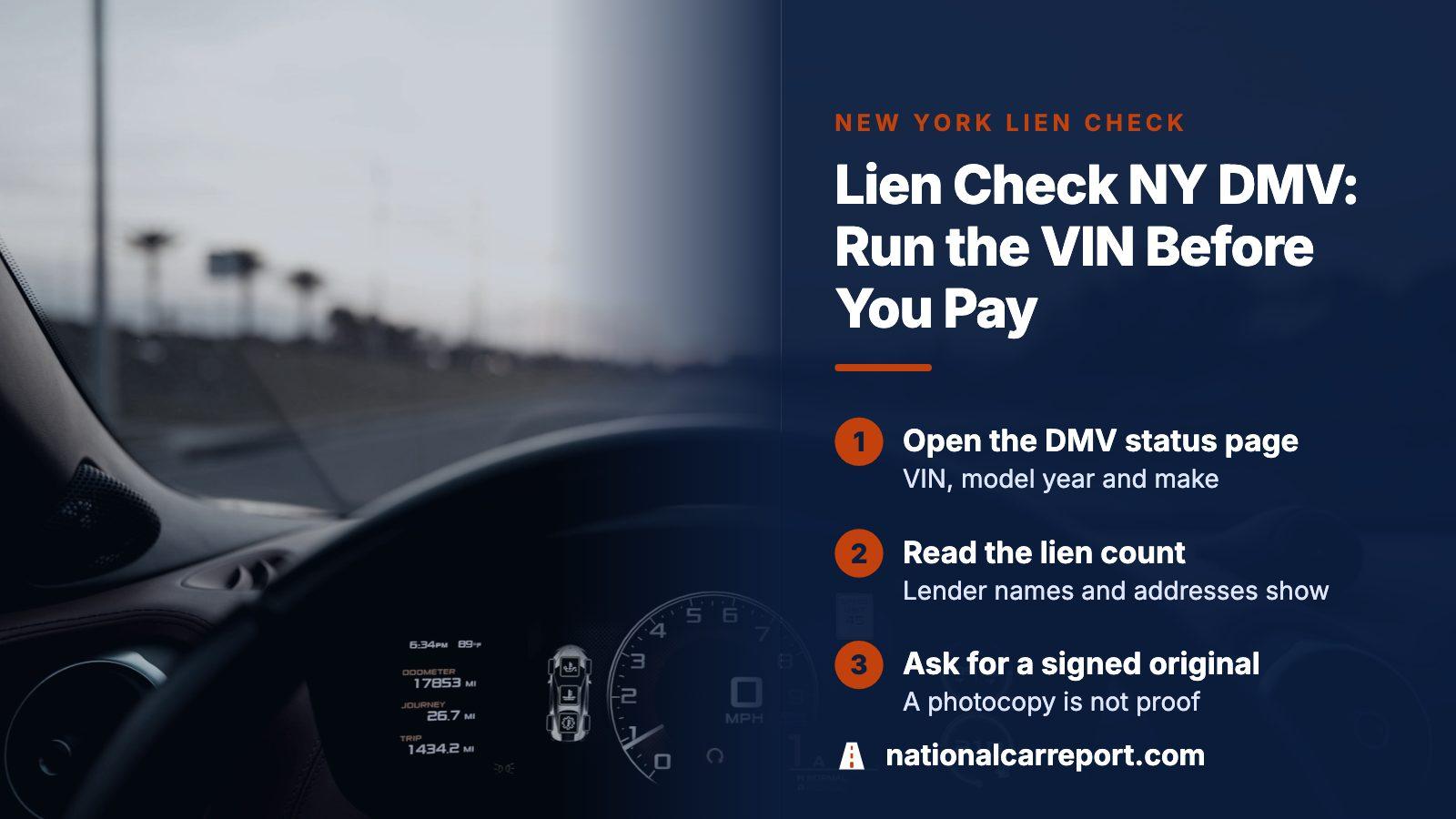
To run a lien check on a New York car through the DMV, open its Check a Title or Lien Status page and enter the VIN, model year and make. It reports the title's print date, how many liens exist and each lender's name and address, with no owner details. Then run the VIN preview here for lien, theft and impound records, and ask the seller for the title and a lender's release if any lender is listed.
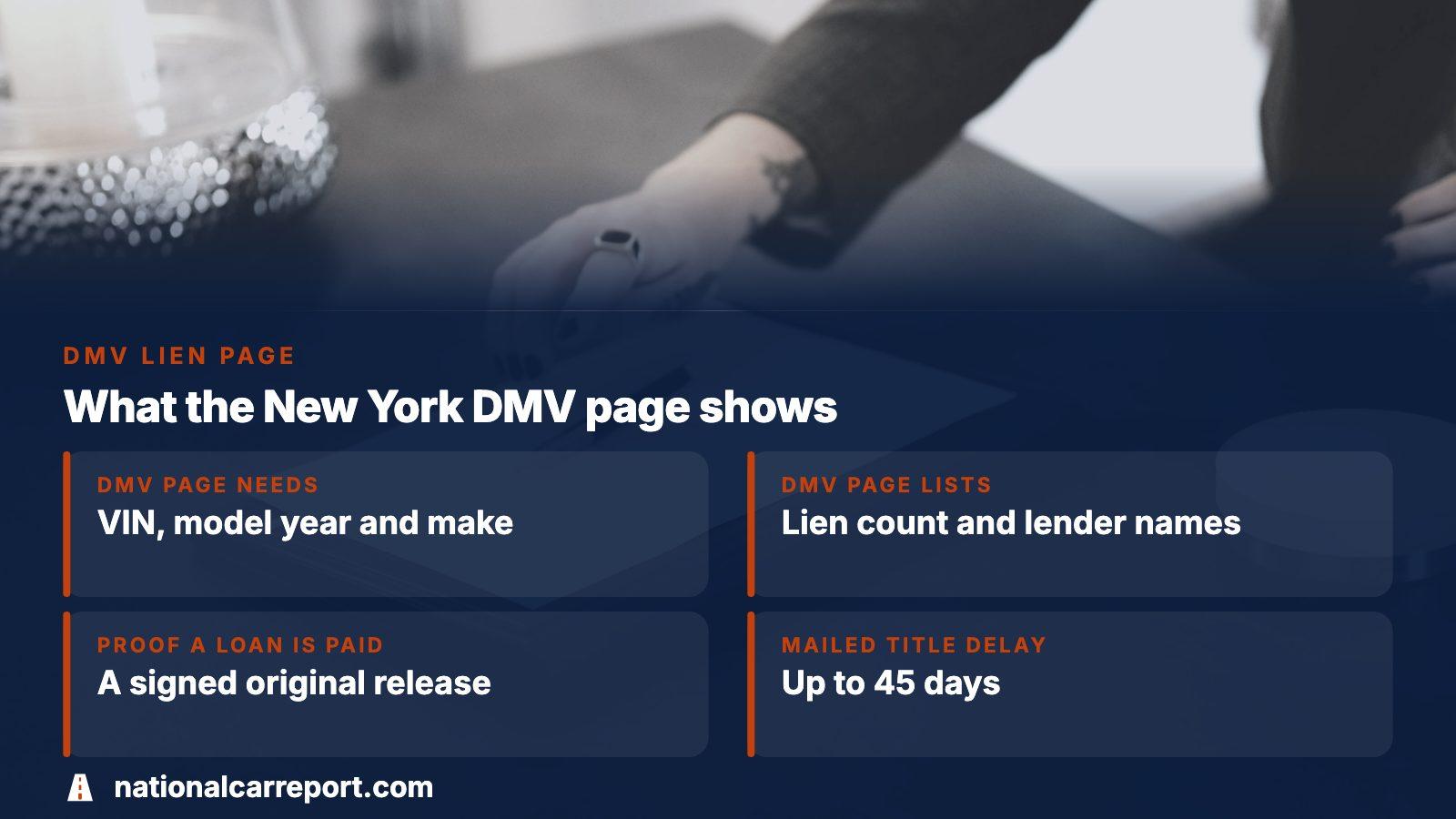
- DMV page needs
- VIN, model year and make
- DMV page lists
- Print date, lien count, each lender's name and address
- Proof a loan is paid
- A signed original release, never a photocopy
- Mailed title delay
- Up to 45 days
What one VIN search can tell you about a New York car
NationalCarReport looks at a car the way three different parties do. A lender may have recorded a lien, police may have logged a theft, and a tow yard may have kept the car on its lot. All three attach to the VIN, so one search gathers what was reported anywhere, including another state where the car was financed, stolen or towed before it came to New York.
- Liens, shown where a lender's claim was reported
- Theft, and whether the car was recovered
- Impound records from tow and storage yards
- Title brands such as salvage or rebuilt
The DMV's title and lien status page, field by field
New York DMV runs a Check a Title or Lien Status page. It asks for the VIN, the model year and the make, and answers with the date the title was printed, how many liens are on record, and each lender's name and address. Owner details never appear, so you can use it holding only the car's information.
Printed is not delivered
That date is when DMV printed the title, and delivery by post may run to 45 days. A seller still waiting for paper may be telling the truth, but compare the date with their story and see the document before paying.
Lenders get a tool on the same page: when a lien they paid to file does not show online, form MV-910 asks DMV to look into it. A lender you expected but cannot find is a question for the seller.
Running both checks in order
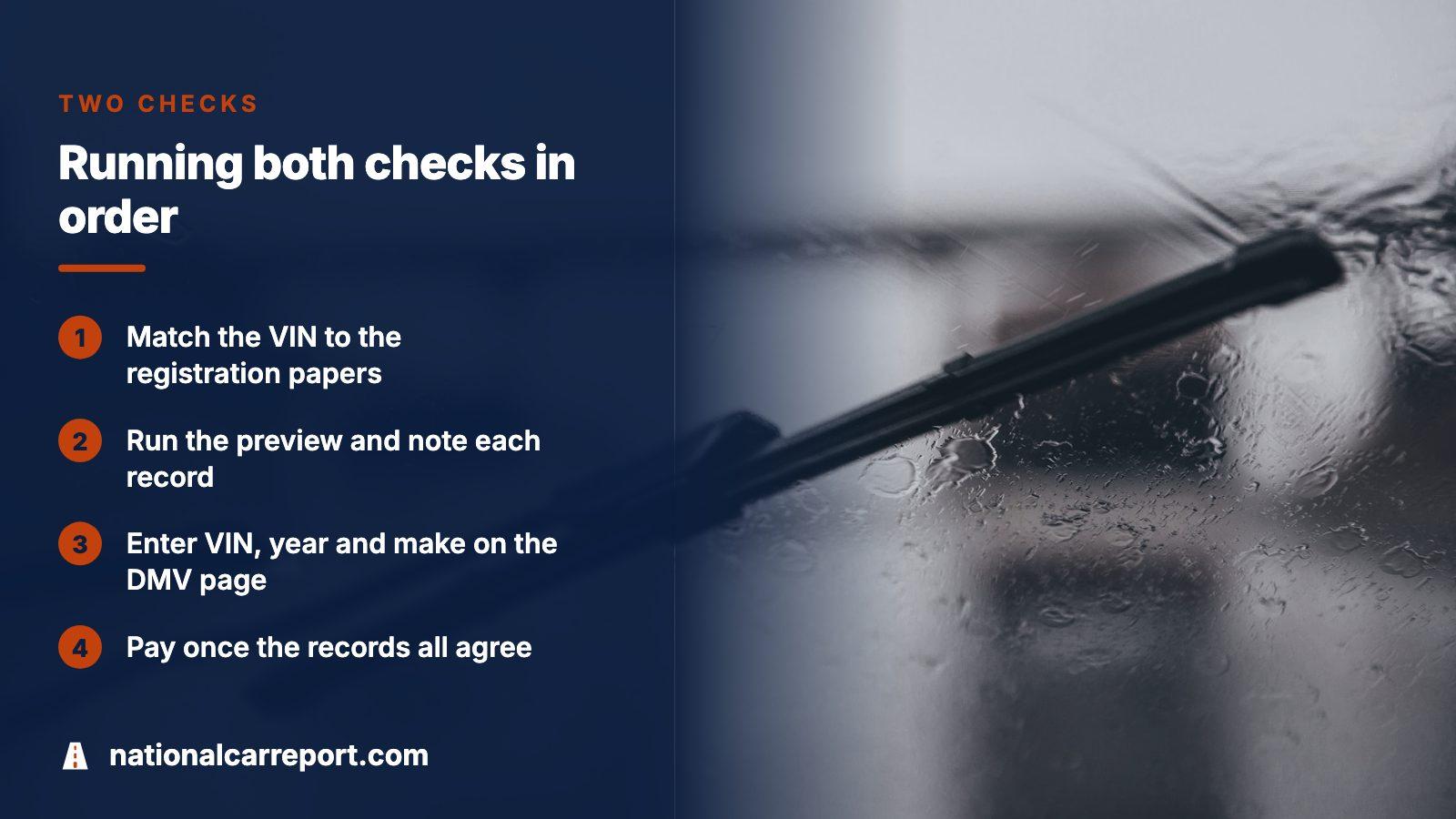
- Take the VIN from the vehicle, then match it to the registration papers and the title. A difference means stop.
- Put the VIN through the NationalCarReport preview and note each lien, theft or impound record.
- Enter VIN, model year and make on the DMV page. Write down the lien count and the lenders.
- Ask to hold the title. Read the front for lender names and addresses, and for any altered, erased or crossed-out entry.
- Ask the seller whether money is still owed, and ask each listed lender for a release.
- Pay once the seller's account, the title, the DMV page and the report all line up.
Reading the results
| What you see | What it suggests | Your move |
|---|---|---|
| DMV lists a lender, seller says it is paid | The claim is still on record | Ask for the original release before money moves |
| Report shows a lien, DMV page shows none | The sources disagree, or the lien came from another state | Hold payment and question both the seller and the lender |
| Theft record, no recovery | The car may still count as stolen | Do not buy; tell police if you know where it is |
| Impound record | The car sat in a tow or storage yard | Ask what was owed and who paid |
| Title signed over to the seller, never issued to them | The seller cannot pass ownership on that paper | Wait until the seller gets a title in their name, form MV-82TON |
A clear result is a screen
A clean preview means nothing was reported. The federal title system says it exists to guard against fraud and to keep stolen cars from resale, and its home page is silent on liens. The FTC says a report can never replace having someone independent inspect the car.
What counts as proof that a New York loan is paid
DMV accepts only signed originals. One is a Notice of Recorded Lien, form MV-901, that the lender sends with an authorized officer's signature showing the lien satisfied. The other is a letter on the lender's letterhead that names the vehicle, says the lien is satisfied and carries that signature. A private individual acting as lender needs the letter notarized.
A seller does not have to clear the title before selling. The original title plus the original release can change hands, and your application must include that release. If it does not, the lender remains on your new title. DMV's buyer brochure warns that without proof of payoff a lender can repossess from the person who bought.
Paid is not released
Nothing obliges an owner to request a clean title after the last payment, so a title can still name a lender after the debt has ended. The release settles it, and DMV turns away photocopies.
When a lender is still owed
An open loan need not kill the deal, provided the money reaches the lender. Ask the lender for a written payoff amount, pay that sum to the lender directly, and hand the seller the remainder. Collect the original release, then bring it and the signed title to DMV.
- Out-of-state title kept by a lender: registration is possible in New York, but no New York title issues until the lien is satisfied.
- Electronic release by the lender: DMV mails no fresh title on its own, so the seller sends in the old one with proof and the fee, or asks for a duplicate.
- Your own financing: your lender records its lien and pays the recording fee, and it cannot bill you for it.
Title problems that surface after you pay
A clear lien result does not finish a New York purchase. A motor vehicle office refuses a title whose odometer or damage disclosure is incomplete. In a private sale of a car within its first 8 model years, DMV holds back registration and a new title until the damage disclosure is signed, and you sign it as well. A fine of up to $2,000 applies to damage left undisclosed.
A bill of sale proves nothing without a title behind it, or a transferable registration for model year 1972 and older. DMV's private-sale form is MV-912, and the seller completes their part of form DTF-802 so tax follows the true price. Buy privately and DMV will not hear a complaint about a defective car, so inspect the car as well.
What it costs and where to go next
You pay nothing for the preview, which shows what the VIN returns. The report itself is a one-time purchase with no renewal, and the pricing page lays out a single report or a bundle for comparing several cars. The sample report previews the layout. When the preview is clear and the DMV page fits the seller's account, meet somewhere the title can be examined, take the original release if a lender appears, and proceed only if every document agrees.
Where this information comes from
- NY DMV: Check a title or lien status — Source for what the state page asks for and returns, the mailing delay and the lender inquiry form.
- NY DMV: How to remove a lienholder from a title — Covers acceptable proof of payoff, mailing the originals, and what happens when a car is sold with a lien.
- NY DMV: Certificate of title — Explains where lenders are recorded, out-of-state titles held by lenders and the rule on releases.
- NY DMV: Let the buyer be aware — Private-sale advice on unsatisfied liens, disclosures, the bill of sale and the lack of DMV complaints.
- NY DMV: Acceptable proofs of ownership for vehicles — Shows why a bill of sale alone fails and how older cars and signed-over titles are handled.
- NMVTIS: National Motor Vehicle Title Information System — Describes the federal title system's purpose; the page does not mention liens.
- FTC: Used cars — Advises a history report and an independent inspection, and points buyers to approved providers.
Sources and photos: Facts checked against the sources above in November 2026. Photos by Dennis Eusebio, Thibault Valjevac and Annika Wischnewsky on Unsplash; diagrams by NationalCarReport.
Keep reading
- Vehicle Lien Check by VIN: Nationwide Lien, Theft and Impound RecordsThe nationwide version of this check, for a car from any state.
- DMV Lien Release Search: How to Confirm a Lien Is GoneHow to confirm a lender has really let go of its claim.
- Impound Lookup NYC: Find a Towed Car, Release It, Check a VINTracking down a car that was towed or held in New York City.
- PricingOne report or a pack, paid once, with no subscription.
Frequently asked questions
How do I do a lien check in New York through the DMV?
Enter the VIN, model year and make on the DMV's Check a Title or Lien Status page. You get the title's print date, the number of liens and each lender's name and address, and no owner details. Add a VIN preview for lien, theft and impound records, then examine the paper title before you pay.
Can I run a New York lien check by license plate?
The DMV page wants a VIN, model year and make instead of a plate, and NationalCarReport searches by VIN as well. Ask the seller for the number or copy it from the vehicle, and check it against the title. A seller who will not let you see it has given you a reason to leave.
The seller says the loan is paid, but the title shows a lender. Now what?
Ask for the original release, either the lender's MV-901 notice or a signed letter on its letterhead. DMV takes only signed originals, and a person acting as lender needs a notarized letter. Without it your application leaves the lender on your new title, and the lender may be able to repossess the car from you.
How long does clearing a lien from a New York title take?
After a payoff the owner can mail the original title, the original proof and a $20 check or money order to DMV Title Services. A lien-free title comes back by post in 60 to 90 days, and a DMV office cannot hand it over. A seller who skips this step can still sell with the original title and original release.
Does a clear result mean nobody can claim the car?
No. A report reflects only what its sources were told, and the federal title system's own page says nothing about liens. Treat a clear preview as encouraging, then confirm with the DMV page and the paper title. A report also adds theft, impound and brand records that a title may not show.
Now check the car itself
The guide explains what to look for. The report shows what this VIN has on record.